Messing about in boats since 1975. Online Since 1997.
Home | Intro | Our Design Process | Stock Design Info | Motor Yacht Designs | Sailing Yacht Designs | Prototype Designs
Plans List | Articles | Our CAD Design Stream | Maxsurf | SITE MAP..! | Site Search | Design Team | Contact Us
Please see the AVAILABLE BOAT PLANS web page
The 36 Meter Luxury Charter Pinisi
'KLM' Dunia Baru
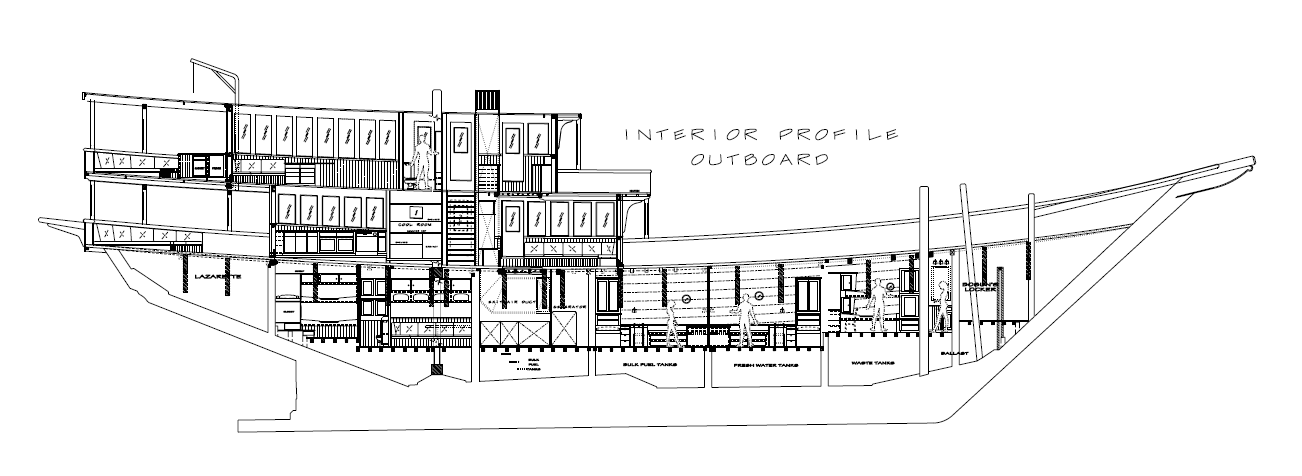
Click for Larger Images (Photo Courtesy of Dennis Anderson)Exterior Profile | Interior Profile | Bridge Deck Layout | Main Deck Layout | Lower Deck Layout
Text, Drawings and Vessel Design Copyright © 2006 - 2016 Michael Kasten
Photography Copyright © 2010-2014 Dennis Anderson (except where noted)
All Rights ReservedThe Design
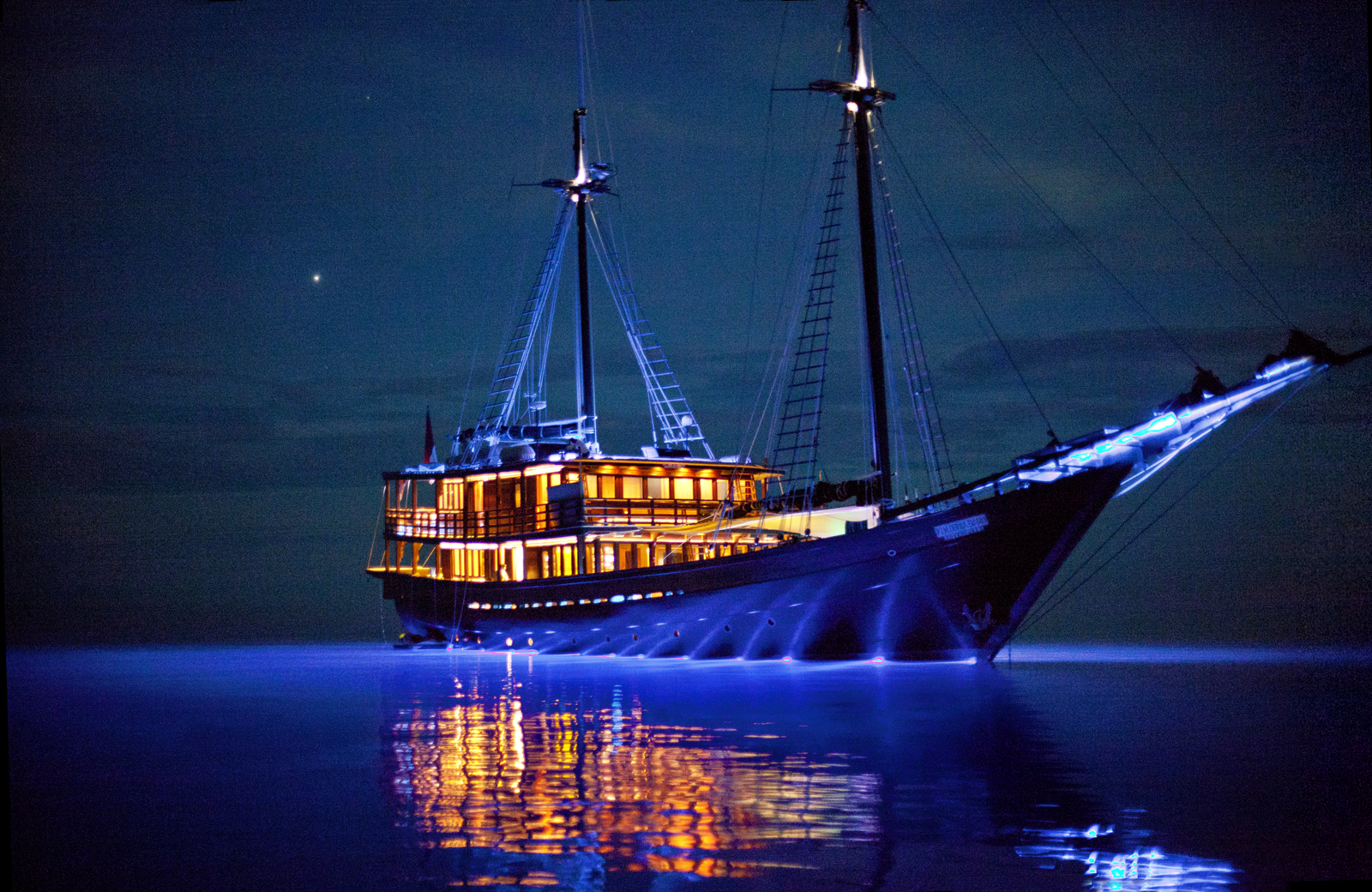
The 36m Dunia Baru shown above and in the images below has been modeled after the traditional Indonesian Kapal Layar Mesin - literally translated as "boat-sail-machine." In the West, we usually refer to this combination as a "Motor Sailor." In Indonesia they are just called "KLM."
Most KLM are used as cargo vessels throughout Indonesia, and although they retain the forward mast and bow shape of the original Pinisi types, the cargo vessels do not carry a second mast. Thus the forward sails on most KLM are intended as backup propulsion, and the spars serve for loading cargo.
On the 36m Dunia Baru, a two mast 'Pinisi schooner' type of sailing rig has been provided. As originally drawn the sail area was modest so that wooden spars could be used. In the sail plan shown below the sail area has been made larger, the masts taller, and the rig makes use of steel spars throughout. The larger sail plan is an excellent improvement. For a discussion of the rationale for using steel spars, please see our article on Sailing Pinisi vs KLM.
Vessel particulars are:
- 36 Meters Length on Deck (118')
- 29.5 m LWL (96.8')
- 11 m Beam (36')
- 3.6 m Draft (11.8')
- 450 Metric Tons Displacement
- 900 hp Yanmar Diesel
The hull structure is Borneo ironwood (eusideroxylon zwageri) locally called Kayu Ulin. The superstructure and interior are teak and other tropical hardwoods. The structure and machinery are designed to the standards of Germansicher Lloyds and the Biro Klasifikasi Indonesia for wooden vessels. Many charter Pinisi operators make this claim, but there are very few for which the claim is legitimate.
The requirements of the MCA LY2 rules with regard to subdivision and stability are met with a substantial margin. Our aim is that the vessel actually be built to Class - which will be an inspiration to all who sail on her.
Dunia Baru Sail Plan - Click for Larger Image
The Traditional Kapal Layar Mesin...
These craft are very common throughout Indonesian waters, and are used as cargo vessels. They are built nearly everywhere in Indonesia in one form or another, and in sizes ranging from 25 meters to over 50 meters. The KLM are in fact the "semi-trucks" of the Indonesian archipelago, just as the sailing Pinisi had been before them.
The KLM are heavily based on the older sailing types of Pinisi (also spelled Pinisi) - so much so that the KLM are often called Pinisi. The KLM bow is identical to the older sailing vessels - complete with the sailing Pinisi foremast, standing-gaff sail, gaff tops'l, jib sails and bowsprit. From amidships aft though, the KLM differ from the sailing Pinisi altogether.
A traditional Sailing Pinisi has a pointed stern and overhanging aft deck like that on our 38m Sailing Pinisi. By contrast, the KLM hull has a motor vessel stern. In other words the KLM stern is wide and the "run" aft is straight and relatively flat. We refer to this as having a 'counter-stern' with a 'horseshoe' transom at the end.
The KLM 'transom' is shaped very much like that of a US west coast fishing seiner, the stern being a broad 'U' shape in plan view. The stern on the US wooden seiner and the stern of the KLM are both built up of wooden "lifts" rather than being planked with "staves" as would be more common on a yacht. This kind of construction is extremely robust.
Aft of amidships the working KLM often have a two story superstructure, ordinarily beginning about two thirds of the deck length from the bow, in other words, considerably less long than on the design you see above. On cargo craft, the lower story is at deck level and is used for the galley and crew, while the upper story contains the bridge and captain's quarters. There are many local variations.
A few photos of traditional KLM types can be found on our Indonesia Pictures web page. For a complete introduction to the history of the traditional Indonesian Pinisi types as well as the relatively newer KLM types, please see our Pinisi History web page.
The KLM as a Yacht...?
In order to create a luxury yacht using the traditionally built KLM as inspiration, the main task was to arrange the cabins for their new purpose and to refine the hull shape for use as a yacht.
The much more burdensome cargo hulls have a reputation for having a rather harsh and unkind motion when not deeply laden with cargo. Since a yacht need only carry a load of fuel, water, food, passengers and water toys, the shape can and should be made much more fine. Our aim has been to provide a greater degree of comfort, to improve the performance under power, and to increase the operational safety of the ship.
Our additional goal was to blend the excellent Konjo / Bugis boat building traditions with several requirements of the West, primarily to achieve greater comfort, more robust structure, improved stability, and much greater longevity.
To achieve this, a number of structural improvements over the typical cargo vessel construction were required. They were not dramatic changes in terms of the construction methods, but they were definitely a big change in terms of finesse and overall quality. For more information about how we have accomplished such goals with these vessels, please see our Pinisi Building web page.
The local cargo Pinisi are given very low power. For example, an equivalently sized cargo KLM would rarely have more than around 350 hp, sufficient for 5 or 6 knots under power. But for the Dunia Baru we wanted better performance, so power is provided by an 830 hp Yanmar diesel, sufficient power for over 10 knots, depending on conditions. Of course a larger engine could be provided in order to achieve full theoretical hull speed, however above around 10 knots the power requirements, fuel use and machinery cost become excessive.
Can One Build a New Wooden Yacht Economically...?
Yes, and of course that is the ultimate goal...!
Unfortunately, due to the very low cost of building the wooden structure for these vessels, there will always be a steady supply of misguided Westerners who approach the local boat builders with the idea of turning one of their locally built craft into a yacht or charter boat at the lowest possible cost. Most often the result is extremely poor - mainly due to very inadequate planning and non-existent project management.
These half hearted attempts to create a yacht will inevitably result in an ill-conceived and poorly executed vessel, i.e. one that has not been 'designed' nor built to any standard, nor even effectively 'managed' during construction. Although the local builders are very capable of producing excellent results with their own local vessel types, when those indigenous vessels get arbitrarily modified by various 'owner requests' during construction, the final product can be shockingly bad - even to the point of being unsafe.
Consequently there is a very large difference between those vessels and the likes of what we have outlined here...!
How to Do It Right...?
Planning...!
When one of these vessels is planned well, and is subsequently finished according to the plans and specifications, the result can be a world class yacht.
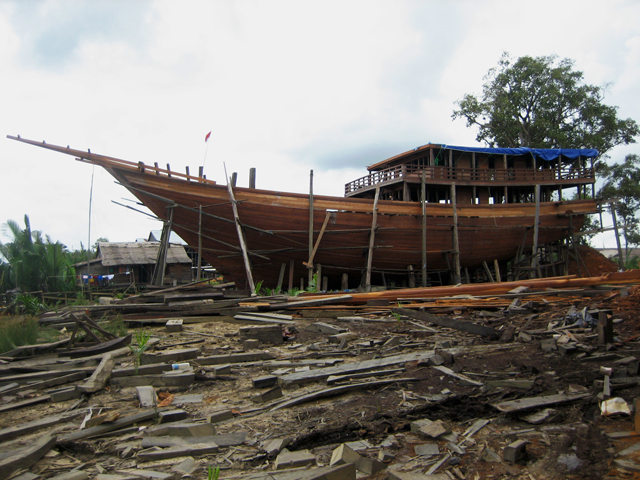
To kick off the construction of the Dunia Baru, I traveled to Indonesia during 2006 in order to meet with the owner at his home in Java. We then traveled together to the building site in Sangkulirang, Kalimantan Timur in order to guide the builders through the lofting process, and to oversee construction of the mould frames so that we could achieve the intended shape.
Once the vessel was launched, it was then transported to Surabaya and Bali for completion of the systems and interior finish.
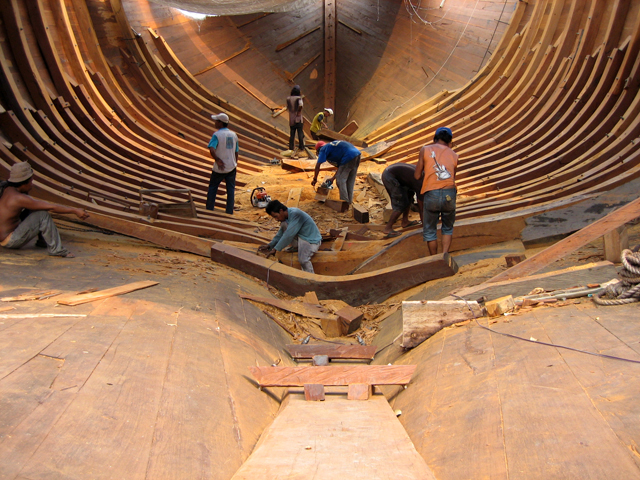
Click for Larger Images (Photos Courtesy of Mark Robba)
I have greatly enjoyed our journey through the design and building process with the owner and his building team, all of whom have worked hard to make the Dunia Baru a stunningly fine new private charter yacht.
The mission statement for this vessel was that when finished, it is to be the ultimate example of what is possible with these craft. As is evident in the photos shown here, that is precisely the outcome. This is the natural result of proper design, good planning, top quality indigenous boat building skills, first rate timber, excellent systems integration, hard work, a good business plan, and an owner who has been dedicated to making this the finest Indonesian Pinisi in existence.
For more information about the design and building process that we recommend, please visit our Pinisi Building web page.
The Intent...
For the interior, the request was that the interior layout enable the vessel to be used in either of two modes:
- As a personal world-traveling yacht for a private owner and guests, or
- For use as a charter yacht with "managed ownership."
By "managed ownership" we mean that the yacht is privately owned, but is managed by a charter company who is able to charter the vessel when it is not being used by the owner. In exchange for its use, the charter company takes care of the vessel's maintenance and repairs, and provides the owner with an income stream.
Done correctly, this is a rather ideal way to own a boat - no maintenance, it pays its own way, and the owner can step aboard a well maintained vessel nearly any time and simply enjoy their time aboard rather than having to manage the vessel's upkeep.
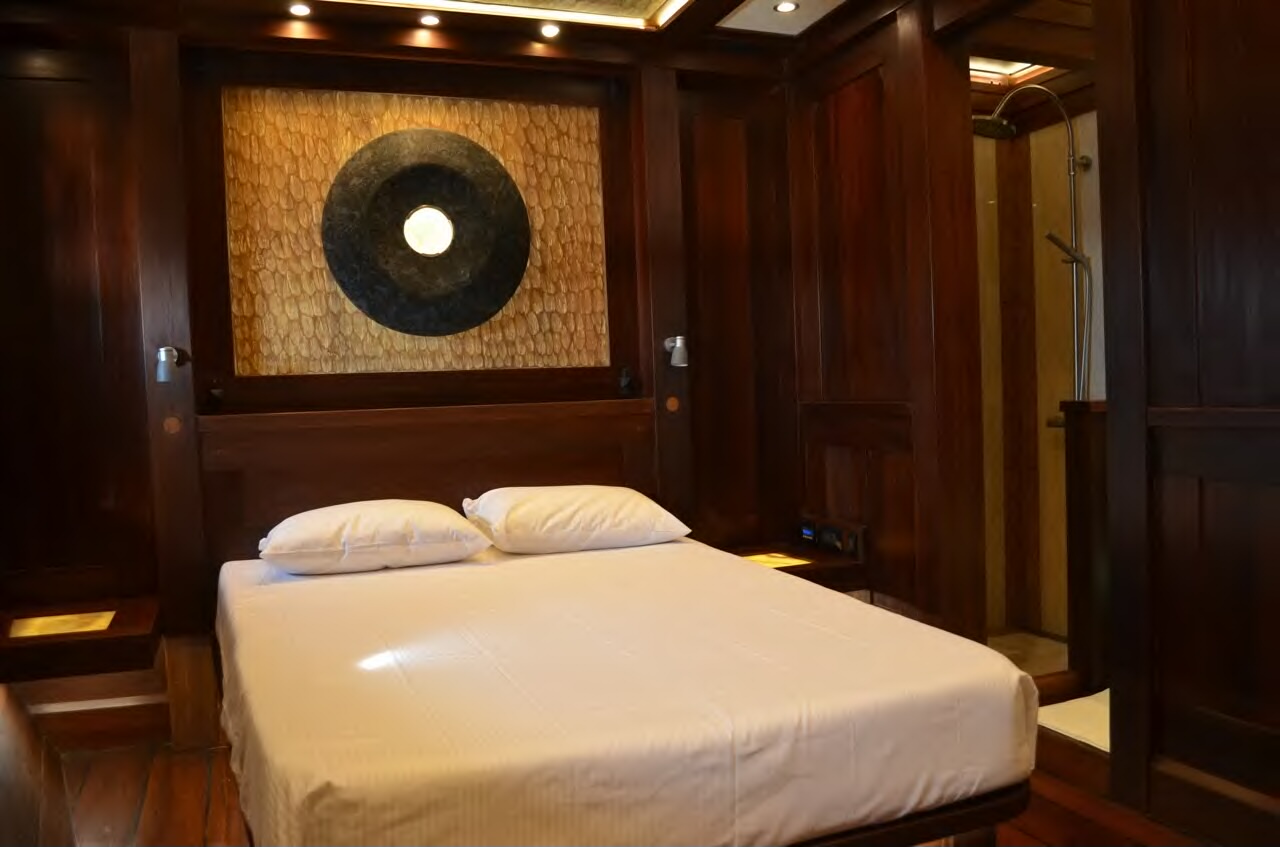
Comfort, open spaces, and privacy have been primary goals inside and out. Given the overall size, the layout is not at all crowded. Since the vessel will for the most part be sailing in the tropics, excellent ventilation has been given the highest priority. Each cabin has a private head and shower and all accommodation spaces are air conditioned.
The Layout...
The requirement in this case was to achieve generous guest cabins below, and to provide an owner's private "grand suite" on the upper deck. Briefly, the layout is described as follows:
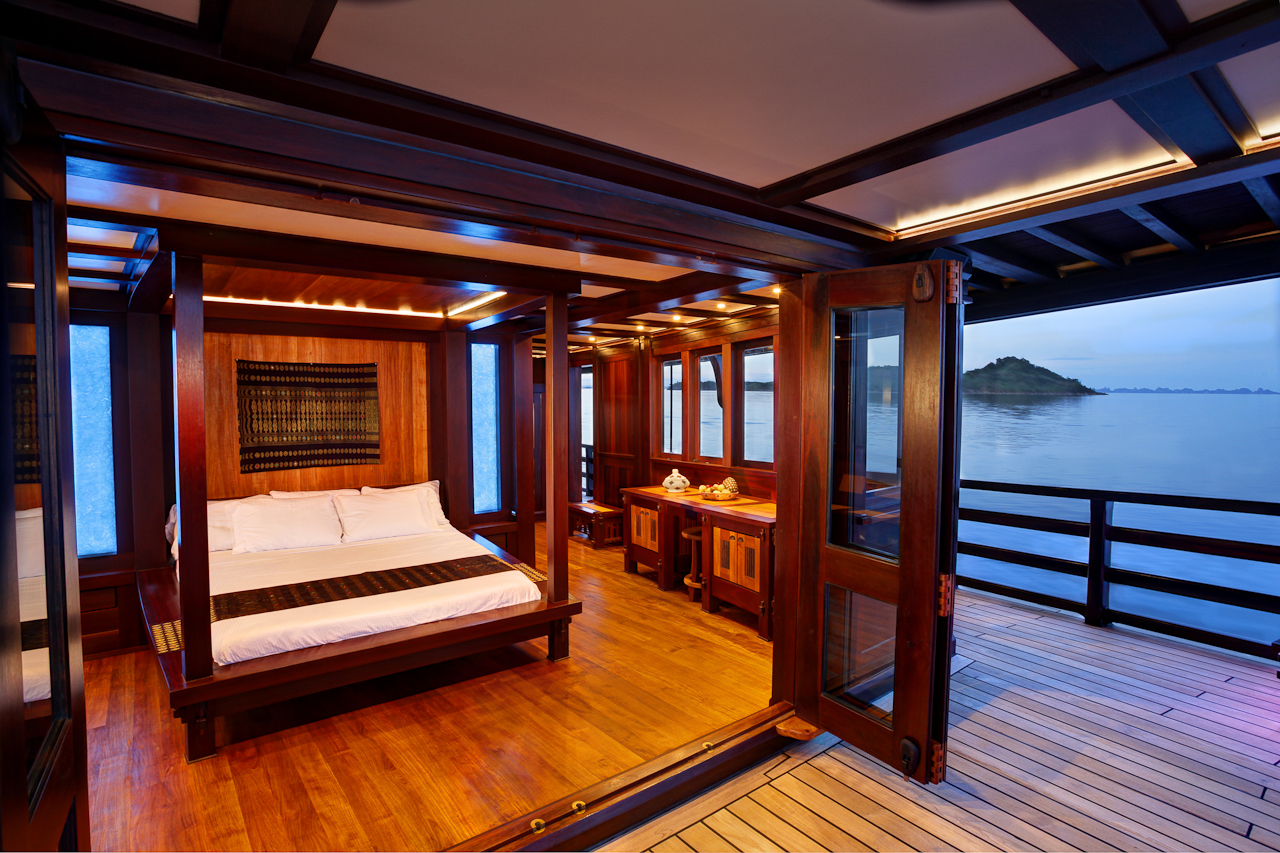
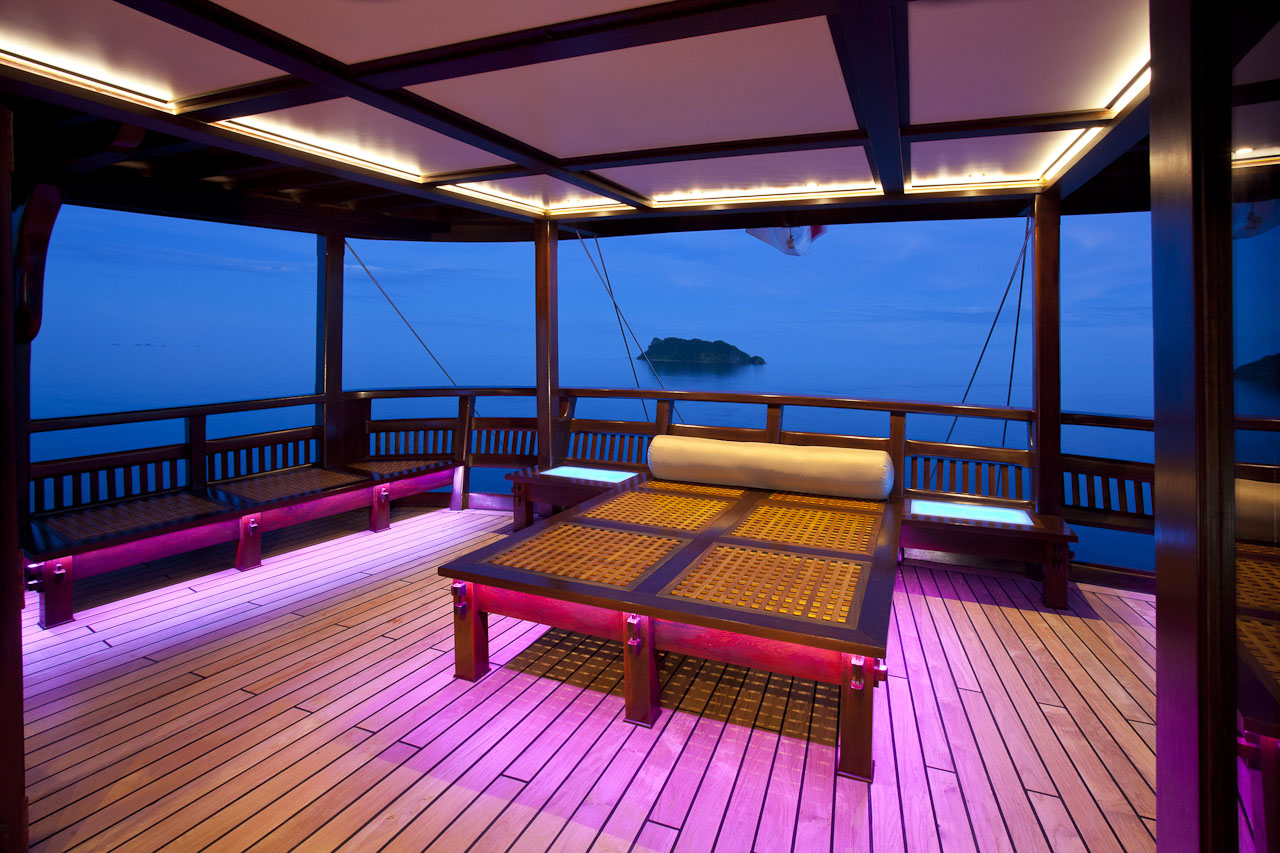
Bridge Deck: On the Bridge Deck is a large promenade deck forward of the bridge, the bridge itself, a captain's cabin, and a grand suite and aft veranda for the owners. From there the galley and saloon are readily accessible on the Main Deck below, essentially becoming an extended part of the owner's personal space.
This allows the owner to occupy the vessel as a home on the water with each essential region accessible without having to impose on or pass through any guest areas, yet also allows guests to share the galley and saloon on the Main Deck without compromising the privacy of the owner.


Click for Larger Images (Photos Courtesy of Dennis Anderson)
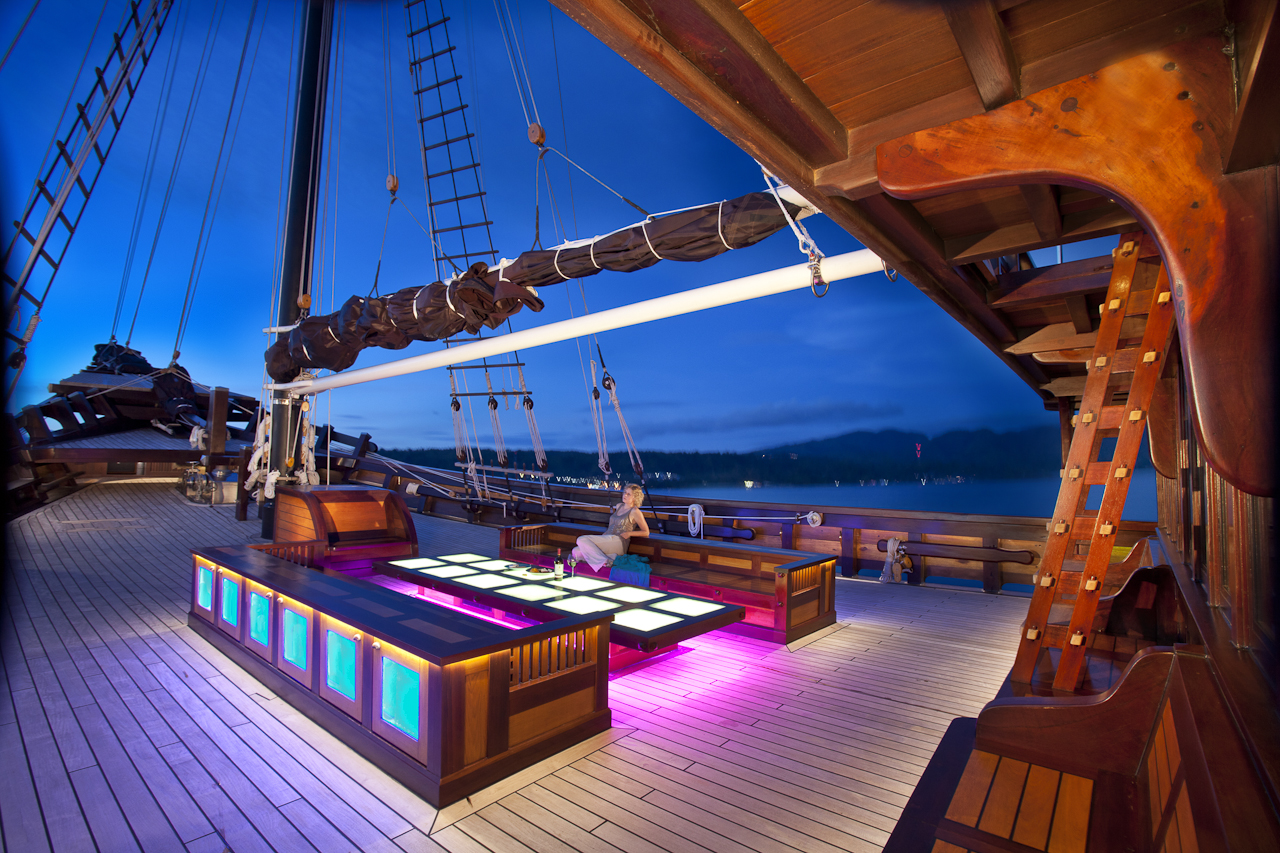
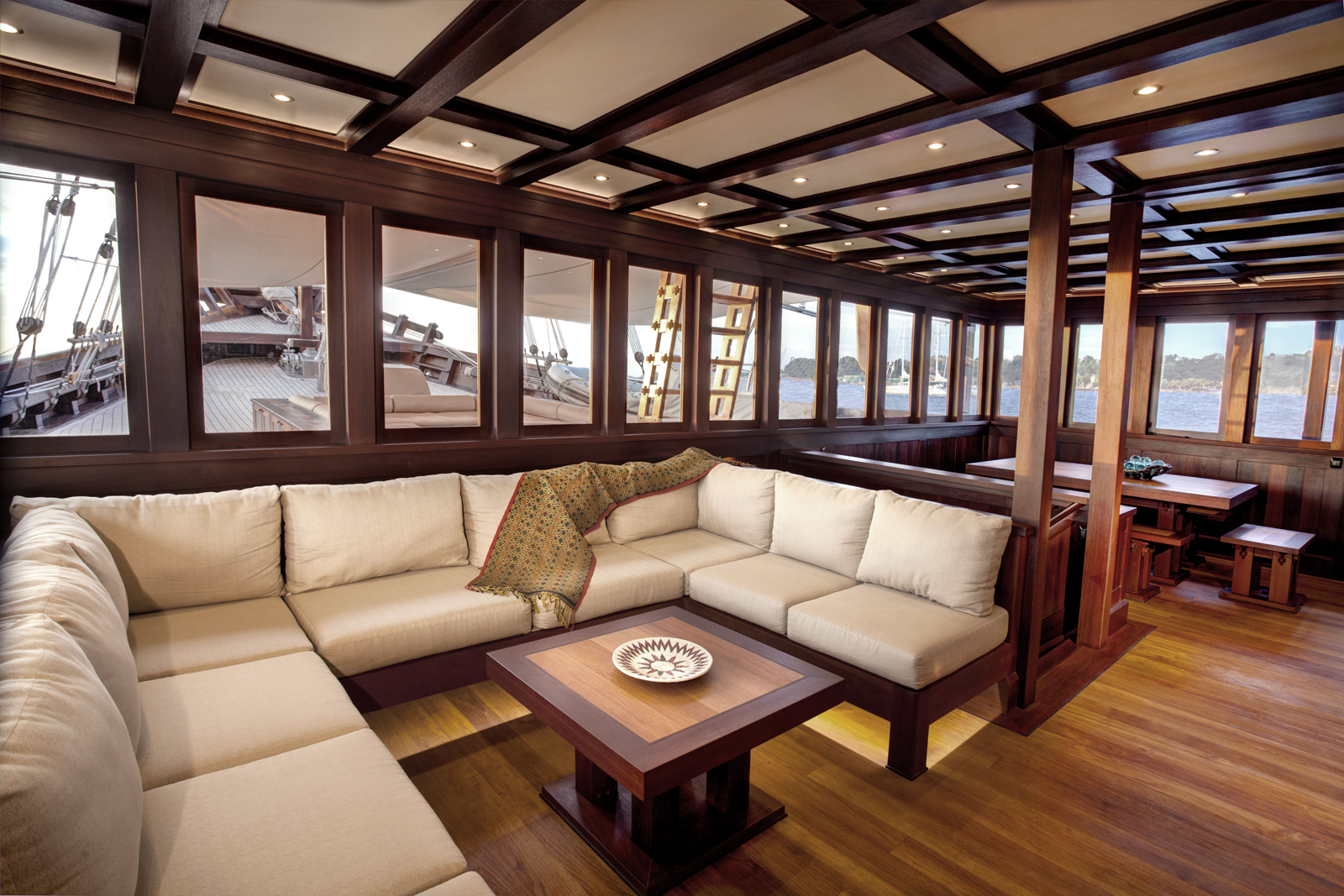
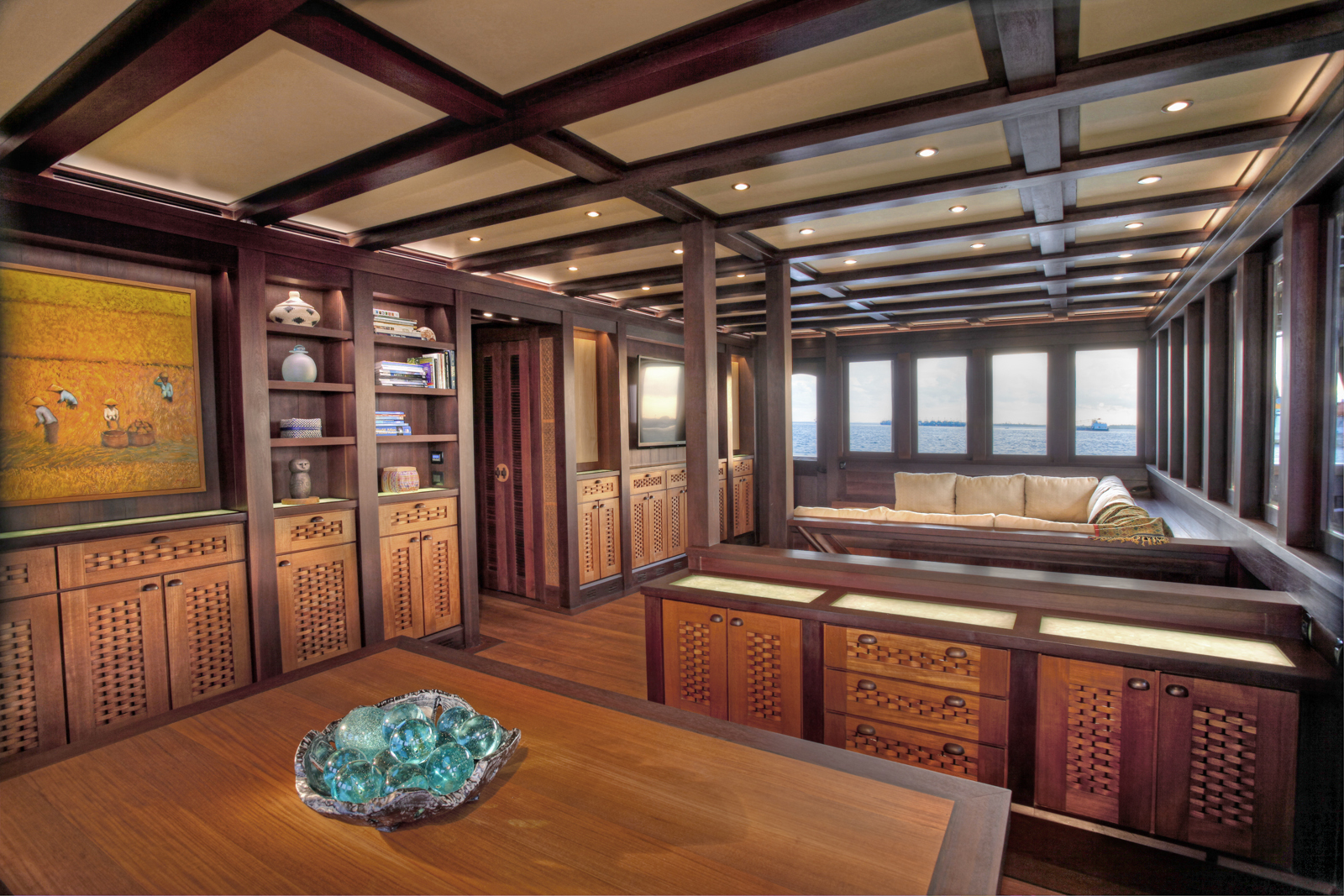
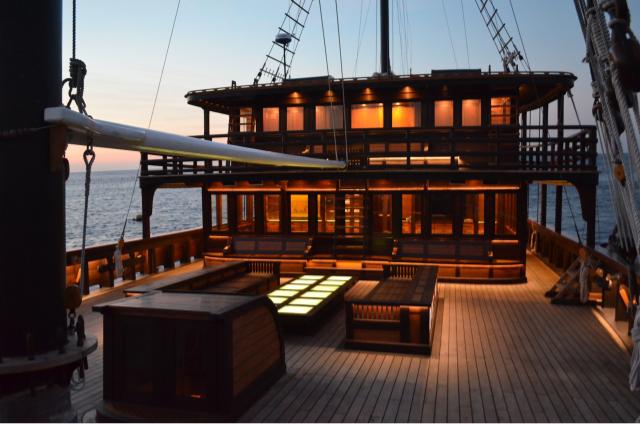
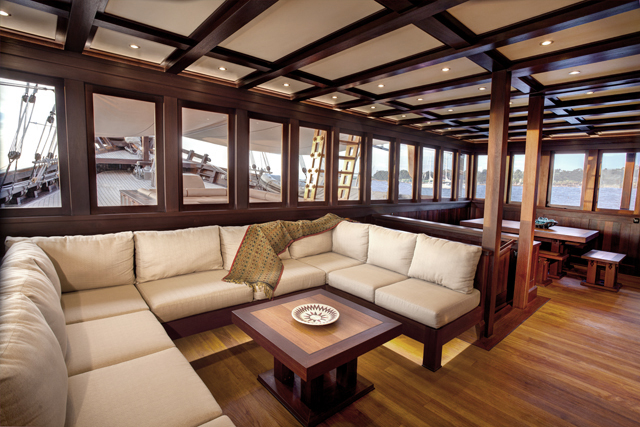
Main Deck: On the main deck, we reserved the fore deck for entertaining outside - where most of one's tropical living will be done anyway. On the main deck just aft of amidships, we have arranged for a generous lounge in the forward end of the house where the view is best. Aft of that, there is a large galley with a walk-in refrigerator. Right aft on the main deck is a covered 'veranda' arranged as an open air lounge for dining.



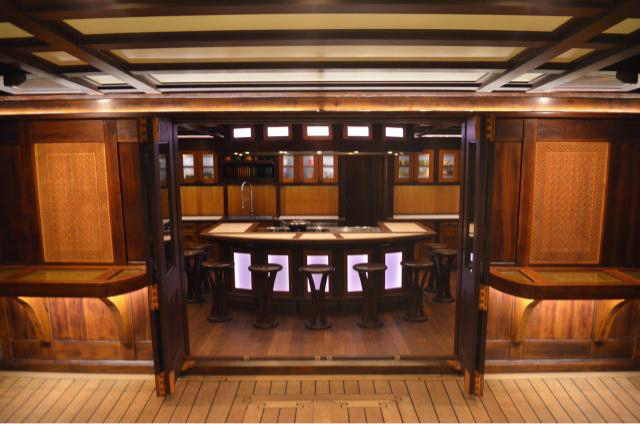
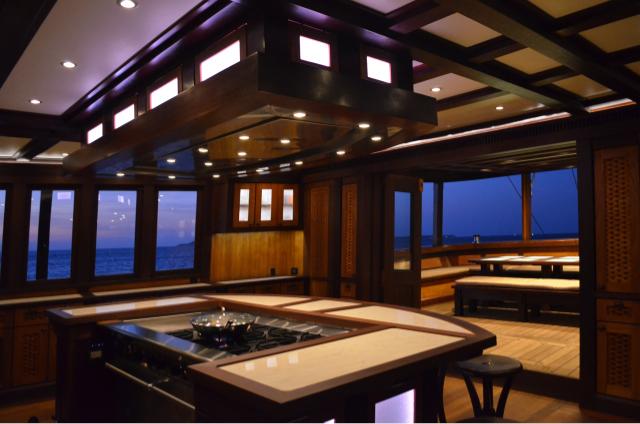

Click for Larger Images (Photos Courtesy of Dennis Anderson)
Below: Below decks forward are four large guest suites and accommodations forward for two stewards and a laundry room. The stewards' bunk room is also viewed as being an ideal cabin for teenage guests who may be aboard with their parents - allowing them privacy yet good access to the other guest cabins. Below decks amidships is the engine room, located right below the lounge. Below and aft are cabins for the crew.
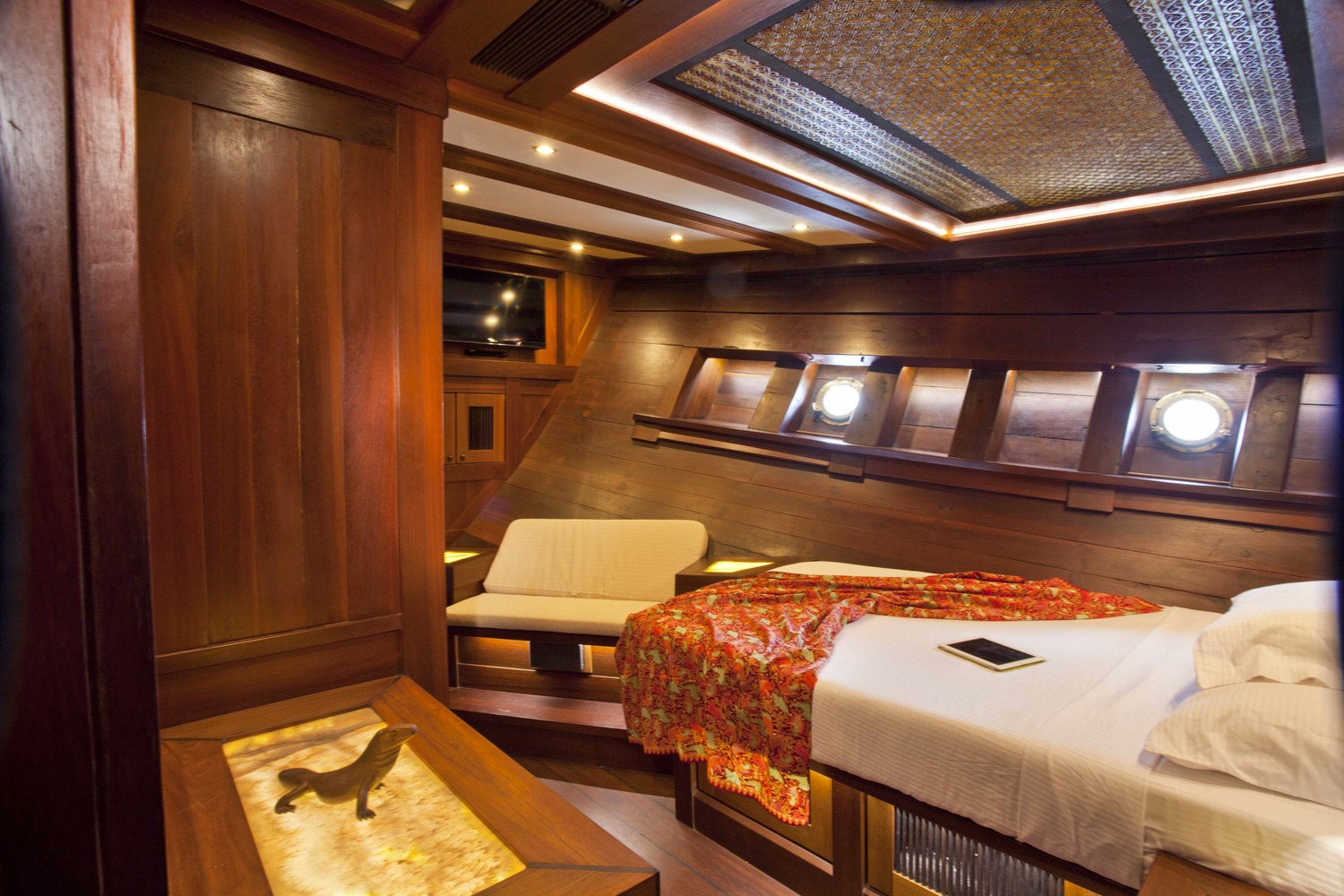
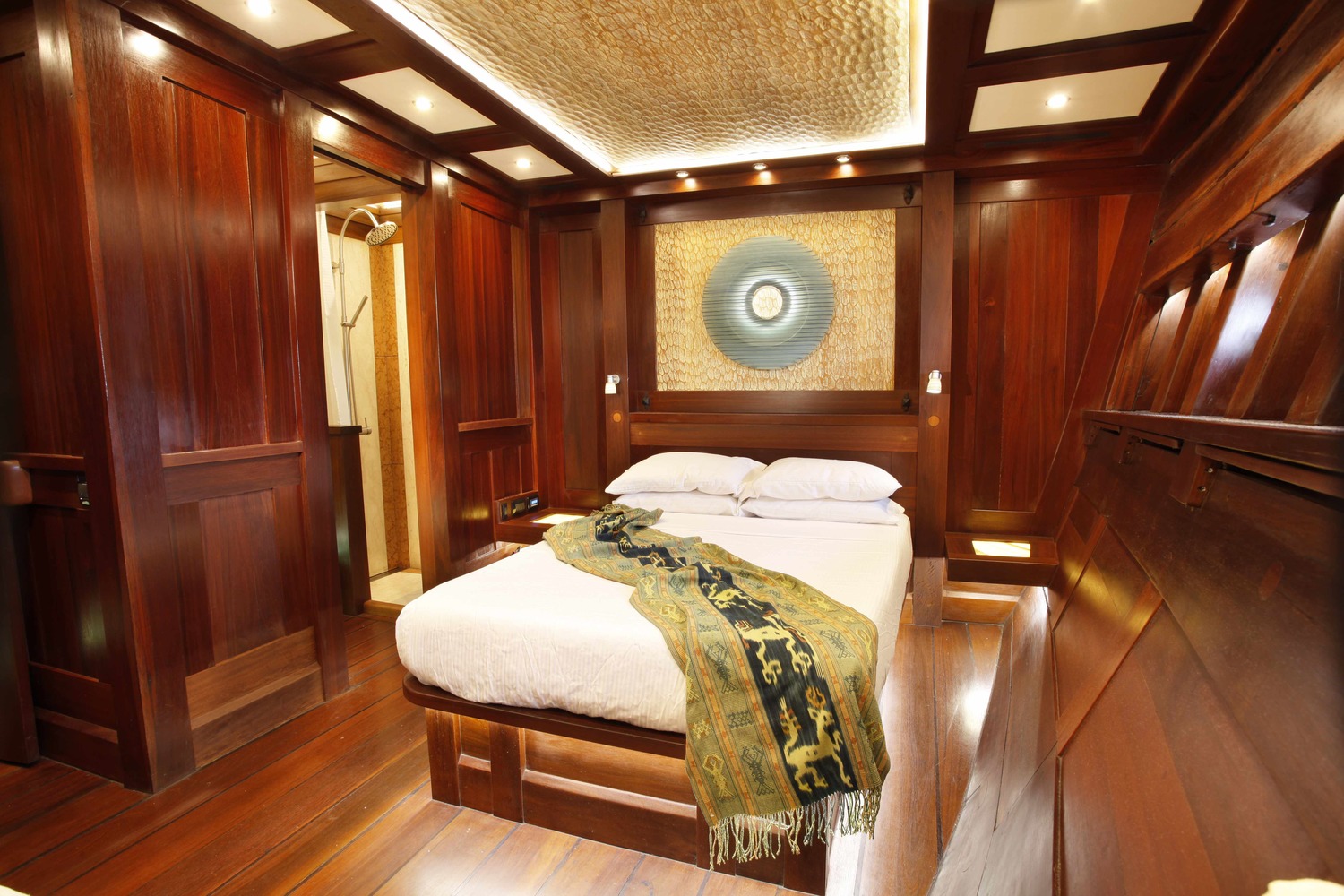

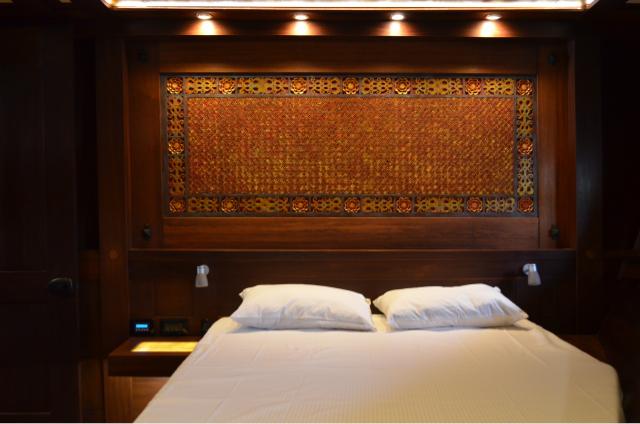
Click for Larger Images (Photos Courtesy of Dennis Anderson)
In all, there is sufficient accommodation space for a ship's complement of two owners, ten guests, a cook, cook's assistant, captain, mate, engineer, second engineer, dive master, dive assistant, two deck hands, and two stewards. This amounts to 12 crew - the preferred arrangement for chartering in Indonesia. For private use, such a large crew may not be necessary, although if you wish to be thoroughly pampered... you can be!
Summary
Our work with these craft has resulted in having created some of the most successful designs among the Indonesian charter fleet.
Silolona, the first Indonesian Pinisi of our design, won accolades from SEA Yachting Magazine and was listed among the top 10 super-yachts in Asia-Pacific Boating magazine's annual roundup of "Asia's Top 30 Superyachts" during both 2004 and 2005. Silolona was also featured in the May 2006 Superyachts Magazine; achieved a cameo appearance and blurb in Vogue magazine; appeared in several boating magazines in the EU; and enjoyed a brief write-up in the New York Times called The Traditional Pinisi - And Then Some.
Our work on the 36m Dunia Baru has extended that legacy into entirely new territory. As the Dunia Baru plies the waters of South East Asia, she will achieve even greater recognition - and rightly so... Recent cameos of the Dunia Baru have appeared in Superyachts and Yachting magazines. We will be seeing considerably more of the Dunia Baru in the yachting press.
The owner's stated mission when we started work on the Dunia Baru design was: "This vessel will be the 'ultimate' Indonesian Pinisi."
That was a tall order indeed, but there no doubt in terms of build quality, systems planning and installation, fine joinery, and attention to detail throughout, that the owner's mission has been fully realized. So much so that the captain of the Dunia Baru, Erens Limampulo, says of the vessel: "The quality of the work on Dunia Baru is extraordinary. Not only is she technically tunning, but there is an element of the boat that is also very romantic... she is modern, but beautiful. There is no question that she is the finest ship in all of Indonesia."
I find this to be perfectly stated, and very much a reflection of our Modern Classic approach to yacht design.
As noted on the Dunia Baru web site, the Dunia Baru was launched in December 2013, and while she is traditional in style, in reality she is anything but. Built from Indonesian teak and ironwood by Konjo Boat Builders in Borneo, her interior and marine systems were completed in Bali, her sails were made in Thailand, her rigging is from the United Kingdom and her marine systems are to ABYC standards, ensuring unparalleled levels of service and reliability. Dunia Baru’s crew is entirely Indonesian.
See the excellent video clip of Dunia Baru on VIMEO.
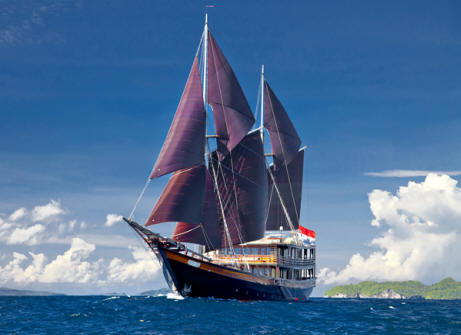

DUNIA BARU - Click for Larger Images (Photos Courtesy of Dennis Anderson)More Information...
Yet another vessel of our design that has achieved a high level of recognition is the 38m Amandira. Connoisseur's website calls AMANDIRA The Dreamboat of Indonesia. As an Aman Resorts vessel AMANDIRA will be appearing often in the yachting press of Asia.
If this or a similar yacht is of interest, we offer a thorough design service. Our preference is to take advantage of traditional building methods to the maximum extent possible, but to bring the construction standard up to a classification society compliant structure, combined with a sea-kindly hull form and a human-friendly interior. We offer our custom design services to create new concepts to suit a variety of requests and then follow up with our local knowledge in order to facilitate construction.
For complete information about our work with these vessels please see the following links, or for more information please inquire.
Our articles about building an Indonesian Pinisi or KLM:
Pinisi History | Pinisi Building | The Ultimate Charter Pinisi
Sailing vs. KLM Types | A Cargo Pinisi as a Yacht...?
Pinisi and KLM designs that we have created or have planned:
30m Pinisi, DATU BUA | 36m Pinisi, SILOLONA
38m Pinisi, AMANDIRA | 50m Sailing Pinisi
27m DIVE Charter KLM | 30m Charter KLM | 33m Charter KLM
36m KLM, DUNIA BARU | 40m Charter KLM | 50m Charter KLM
Descriptions of our adventures with these boats:
Silolona "Homecoming" | Indonesia Boatbuilding Images
Five Schooners and Two Arabian Dhows Suited to Building in Indonesia
17m Flores Privateer | 20m Sulawesi Privateer | 31m Komodo Privateer
36m Tern Schooner | 36m Lombok Privateer | 45m Kalimantan Privateer
22m Arabian Baghala | 36m Arabian Baghala
Two junk rigged KLM types for construction in steel:
25m Lady Destiny | 55m Lady Destiny
Please see the AVAILABLE BOAT PLANS web page.
Home | Intro | Our Design Process | Stock Design Info | Motor Yacht Designs | Sailing Yacht Designs | Prototype Designs
Plans List | Articles | Our CAD Design Stream | Maxsurf | SITE MAP..! | Site Search | Design Team | Contact Us