Messing about in boats since 1975. Online Since 1997.
Home | Intro | Our Design Process | Stock Design Info | Motor Yacht Designs | Sailing Yacht Designs | Prototype Designs
Plans List | Articles | Our CAD Design Stream | Maxsurf | SITE MAP..! | Site Search | Design Team | Contact Us
Please see the AVAILABLE BOAT PLANS web page
The 43' Classic Motor Yacht
"MOXIE"
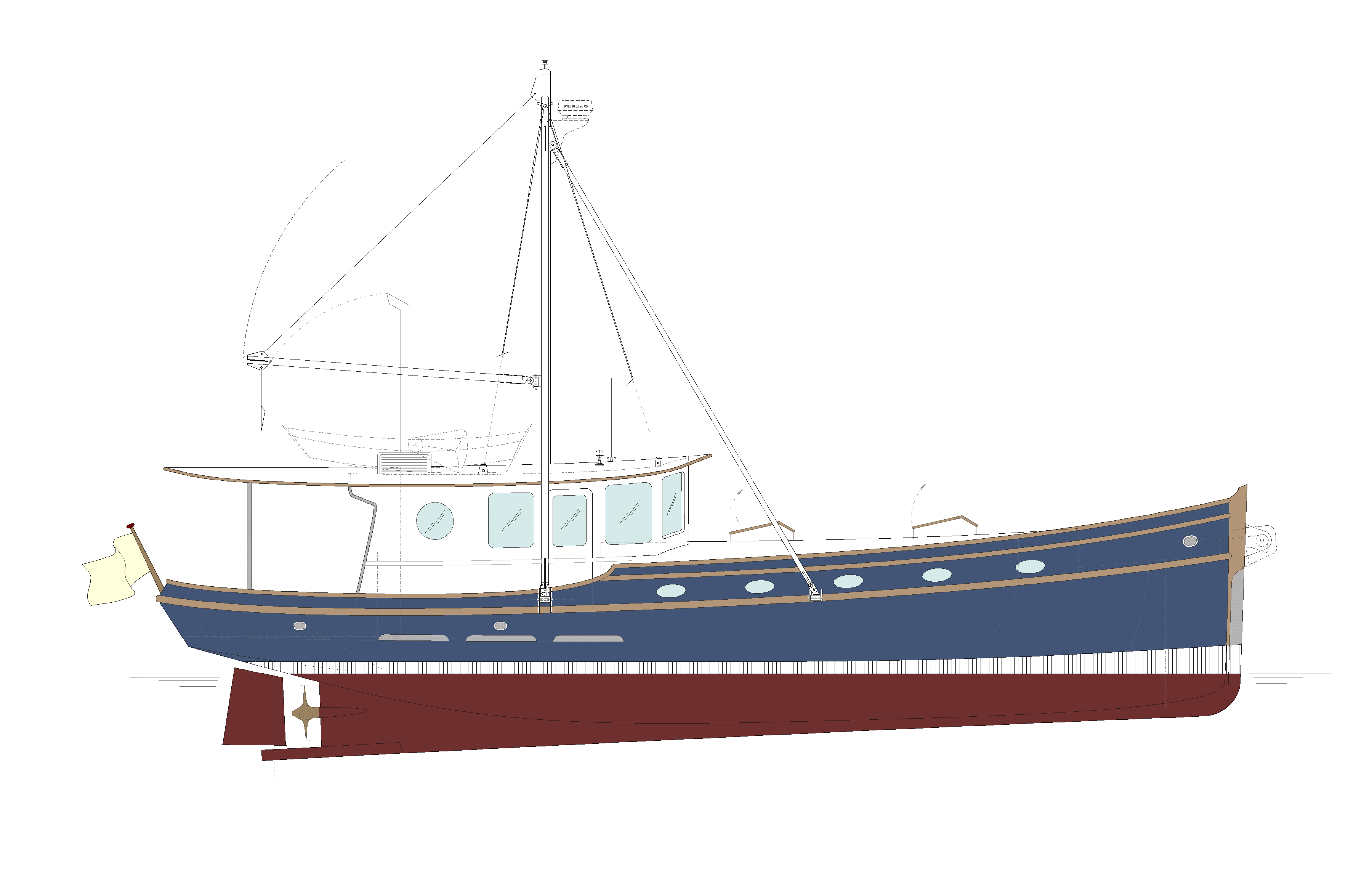
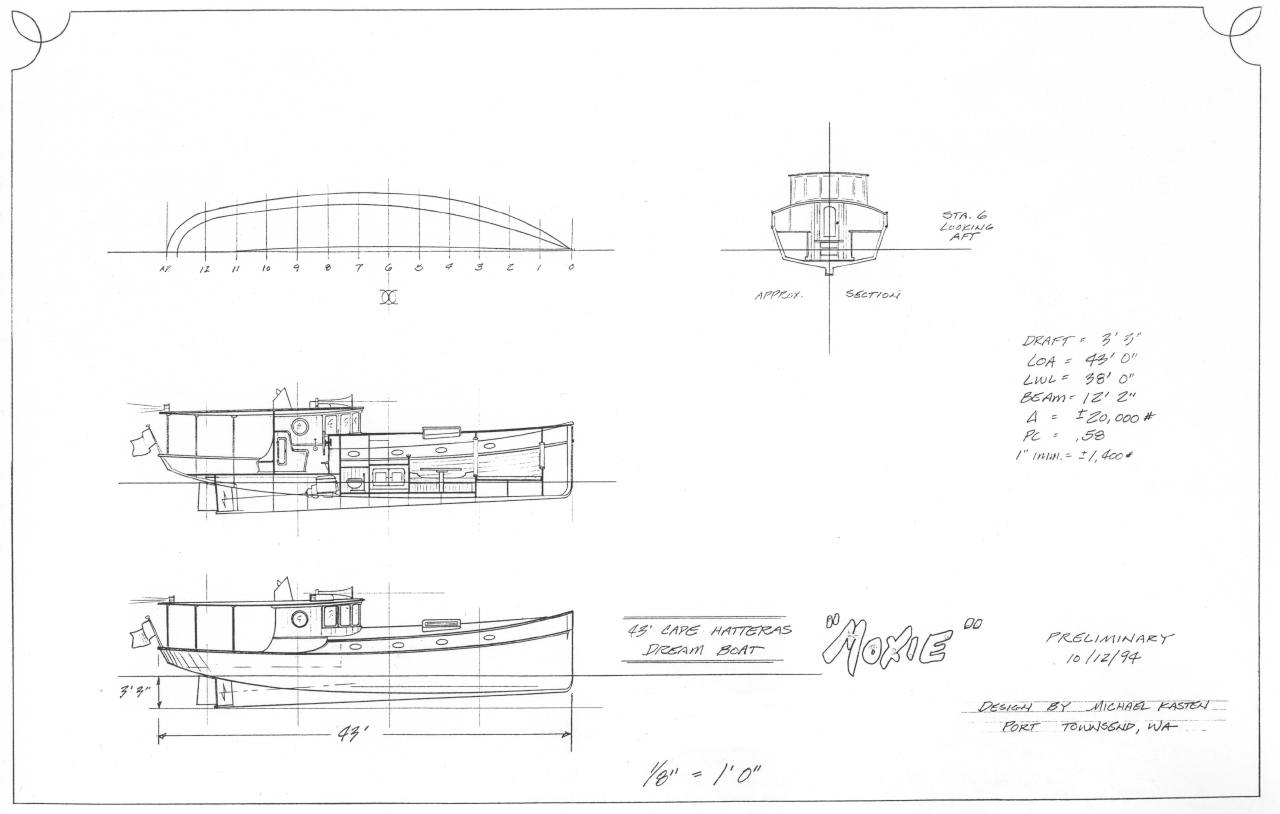
Preliminary Study Drawing | Larger Color Profile
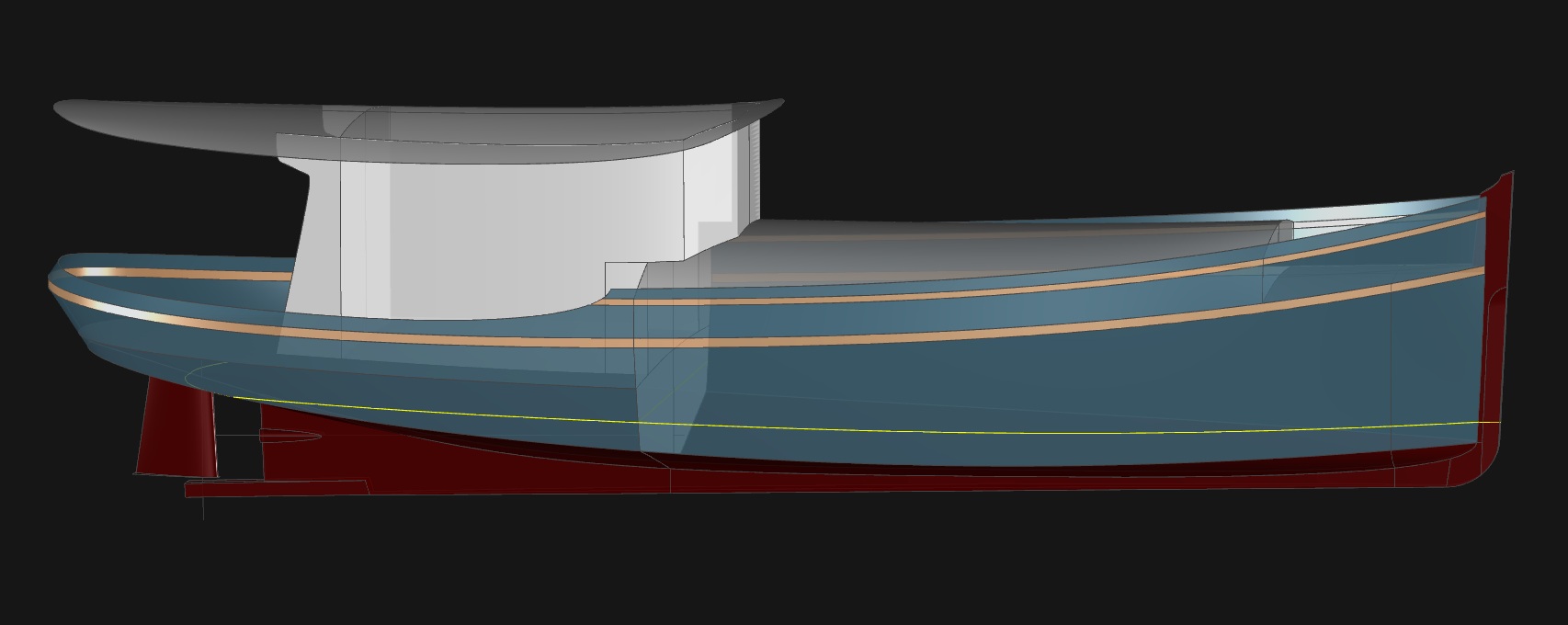
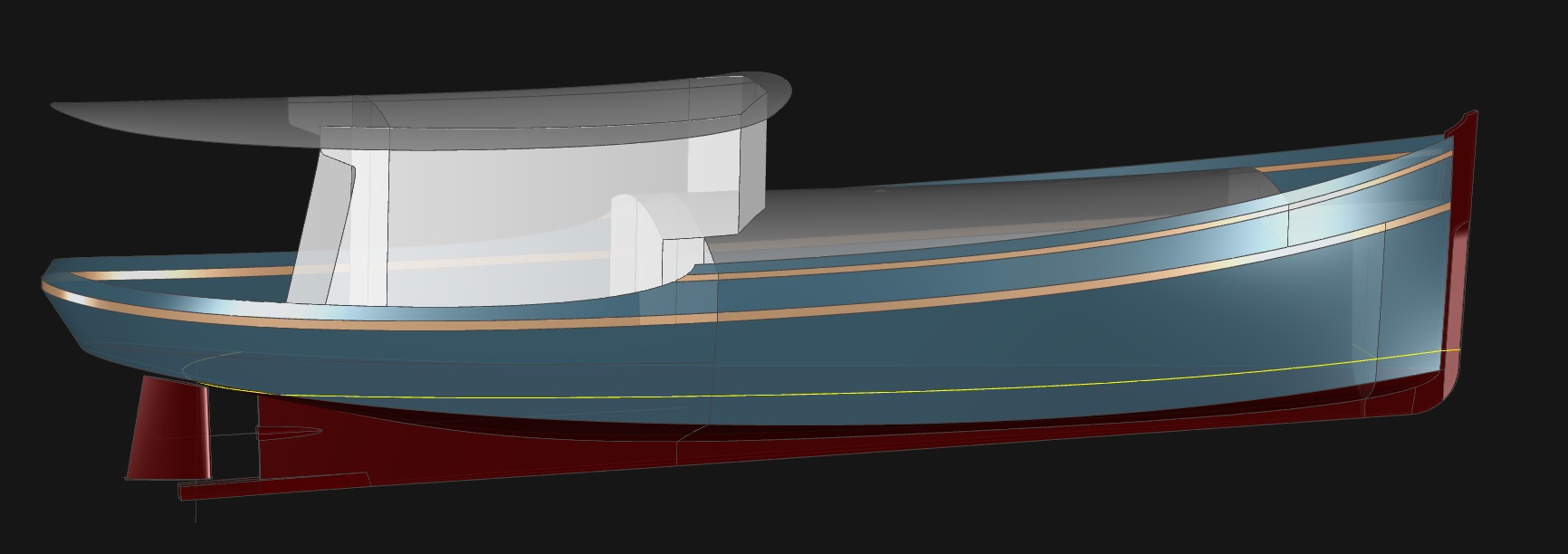
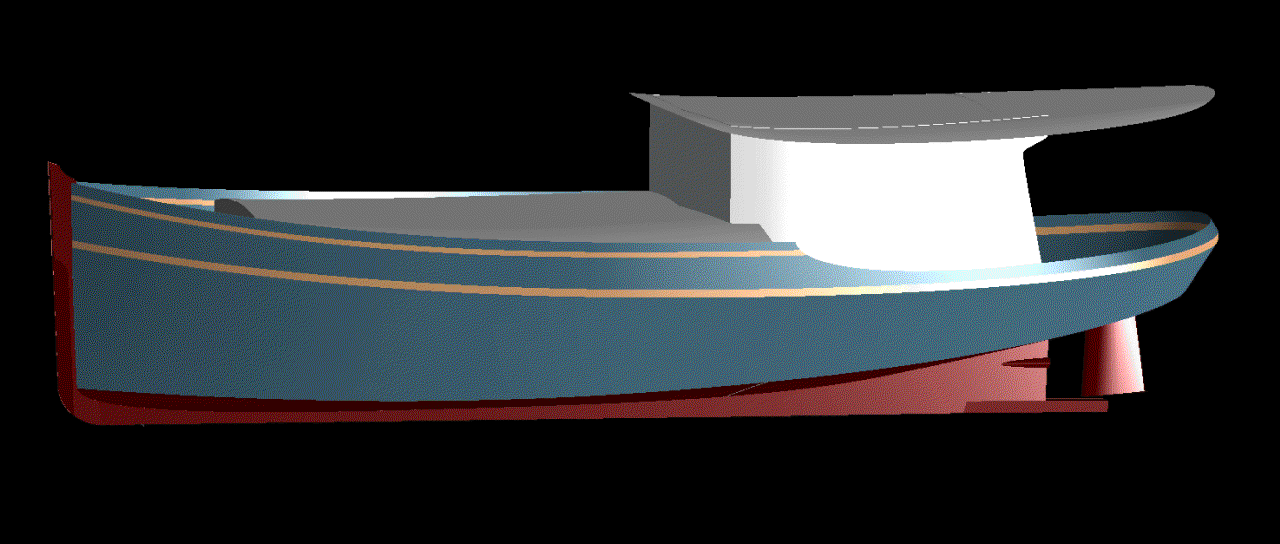
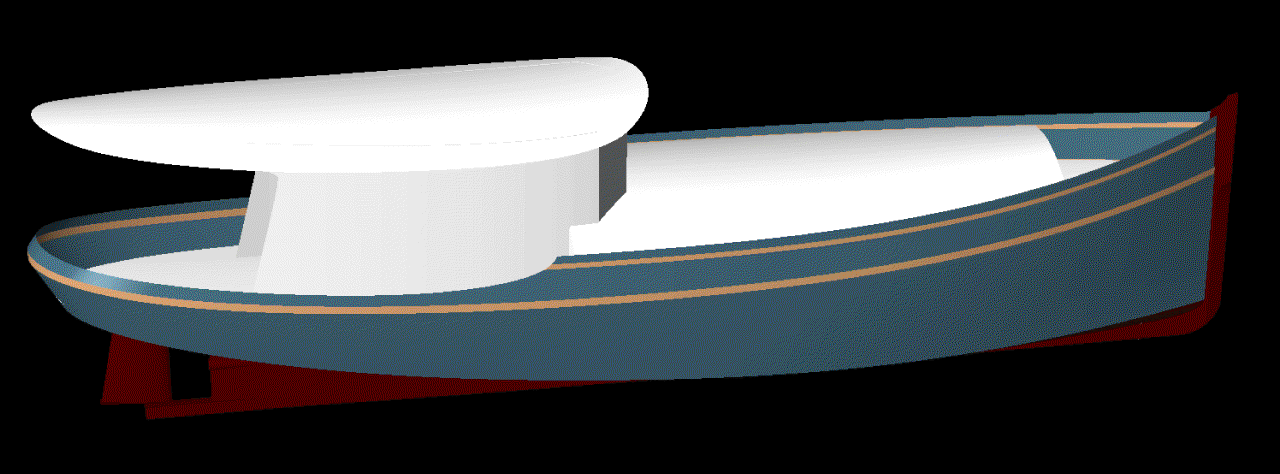
Final Model - Port | Final Model - Starb'd
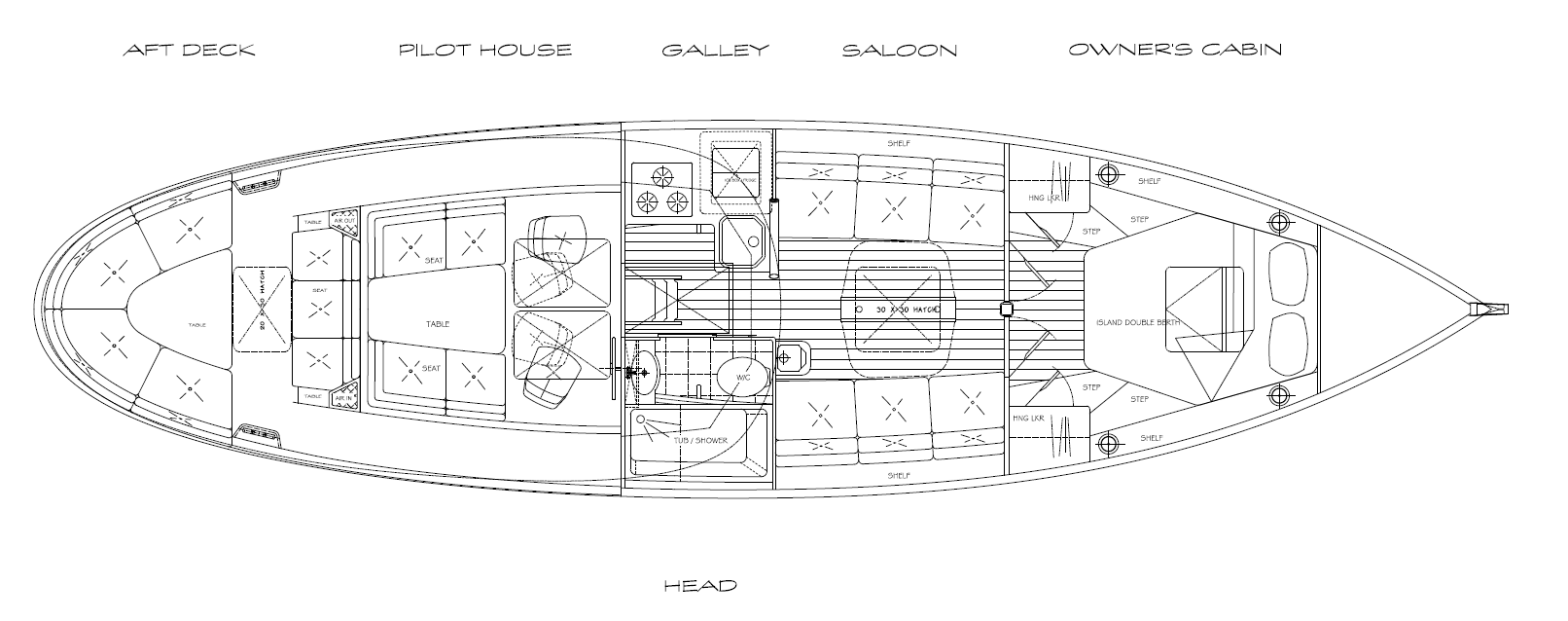
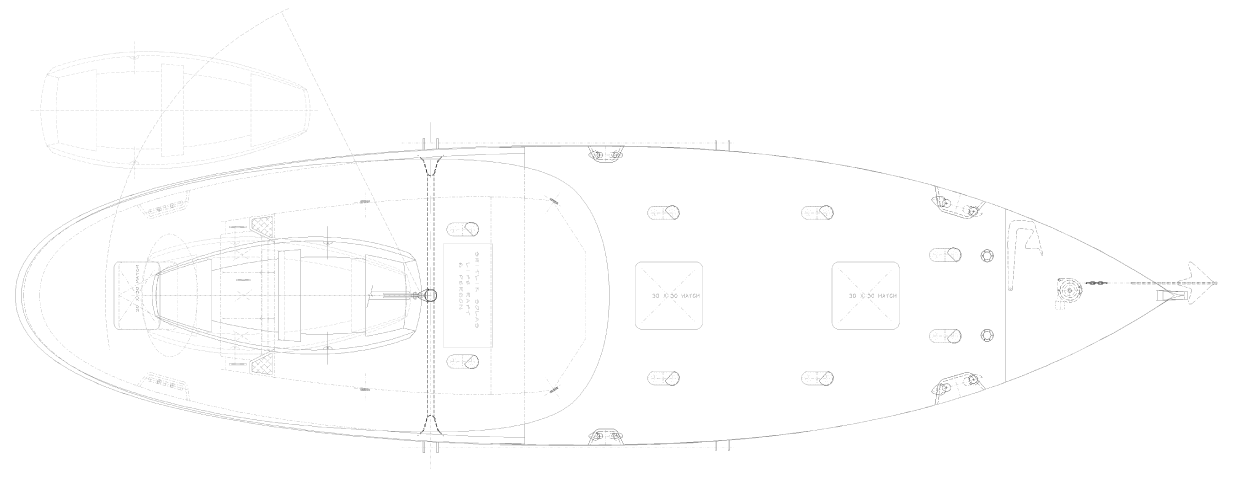
Deck Plan | Intermediate LayoutCopyright 2005 - 2012 Michael Kasten
General Concept
Moxie is a design that I worked out primarily for my own use. Moxie and her larger sisters Quinn and Renegade represent my idea of the ideal type of Power Yacht. For a place like the San Francisco Bay estuaries, the Columbia River, Puget Sound, the incredible cruising waters extending from Seattle to Juneau, the US Intra Coastal Waterway or the canals of Europe, a more perfect power boat would be difficult to imagine.
Moxie is long and lean, so has a low propulsion horsepower requirement, therefore conservative fuel use. Due to the extremely simple shape and light displacement, Moxie would be very inexpensive to build for the amount of living space provided. Moxie has plenty of room for a couple and their occasional guests.
Vessel particulars are:
- 43' - 6" Moulded LOA
- 11' - 2" Moulded Beam
- 39' - 0" WL Length - Half Load
- 3' - 9" Draft - Half Load
- 8' - 7" Air Draft - Half Load
- 22,350 Lb Light
- 27,000 Lb at DWL
- 31,850 Lb Loaded
Layout
The layout for Moxie has gone through several modifications. The large Fore Deck allows plenty of space for sun tan adventures and for stowing a shore boat or other gear. And one of the primary inspirations for the originally planned layout for Moxie was to have a large aft party deck.
You'll observe a genesis of different interior ideas between the Preliminary Study Drawing and the Final Interior Layout. The choice was made to extend the pilot house slightly in order to have a dinette within yet to still have a generous aft deck. With either layout the intent is that the aft deck can be screened in or possibly enclosed by a canvas / vinyl dodger in cooler weather.
Below and forward the layout has also gone through a few iterations... Following the Preliminary Study Drawing fairly closely is the Intermediate Layout, both of which are as minimalist as possible in order to keep boat size within limits. Then ocomparing the Intermediate Layout with the Final Interior Layout, we find a slightly smaller galley, but a vastly improved sleeping cabin and a larger head compartment.
What I like about the Final Interior Layout is that it makes use of an “Island Berth” up forward. This is friendly in use, especially as you get older so you don’t have to be an acrobat to get in and out of the sack. It also avoids the inevitable conflict when a berth is located to one side, requiring that one partner sleep against the side of the ship and must then climb over the other partner to exit. It also achieves a balanced galley and head layout. There is even a bathtub / sit down shower to keep the shower water off the other surfaces in the head. For living aboard over any length of time, the tub / shower would be a highly desirable feature.
It has become apparent that if MOXIE were lengthened to 45 feet on deck (two feet longer) it would be possible to use the same galley and head layout that were used on the ROBERTA JEAN. That would be an excellent improvement, allowing the galley and head to become larger. In particular this would be welcome for the galley.
What about guests...? The settees also double as single berths. The portside berth could be made to extend and create a double berth. The dinette in the pilot house can be made into a double berth by lowering the table. The aft-facing aft deck seat can sleep one. And... the aft wrap-around seat can sleep two or three with the table lowered. That adds up to sleeping for TEN... a silly notion, but certainly possible. At anchor in good weather, sleeping on the screened aft deck would be quite nice.
Click for Larger ImageConstruction
Although originally conceived for all aluminum construction, Moxie would be a candidate for construction in steel. If built in steel, the hull, aft deck and pilot house sides would be 10 ga. steel, and the fore deck and pilot house top would be cold moulded wood.
Moxie would be well suited to composite construction or all plywood construction using epoxy/fabric sheathing. This would give the vessel a strong and light weight structure. With attention to detail, much of the wooden internal structure such as stringers could be left visible, saving weight and providing a very handsome interior.
Whether built with composite, plywood or metal construction, the entire vessel can be built using flat panels, since all surfaces are developable. With any of these construction materials one can easily arrange for all parts to be NC cut by router or plasma arc. Via the computer generated hull model shown in the above links, the sheathing, frames and webs can be quickly placed, then the stringer cut-outs placed in each frame. The resulting "boat kit" would make for very fast assembly.
If composite construction is preferred and it is desired to do a single lay-up for the hull, it would be very simple to create external mold frames and even to cut the mould sheathing using an NC router. The various NC cutting techniques leverage the work already done to create the computer model, allowing structure to be very easily defined directly from the computer model.
Click for Larger ImagePower And Range
Range under power per the Beebe method is approximately as follows.
At passage making speeds of around 7 knots, the engine power requirement will be around 19 hp. With 450 gallons of diesel fuel, assuming a 12% reserve and a specific fuel consumption of 16 hp/gal/hr, Moxie's range per the Beebe method is calculated to be around 2,500 miles. Slowing down just slightly, this is sufficient range to make for Hawaii from the US West Coast.
An engine of 75 continuous hp is targeted. This is exactly the power output of the 4045 DFM John Deere 4 cylinder diesel. An engine of only 65 hp would push Moxie along at a "normal" hull speed of 8.5 knots. Moxie, due to being long and sleek, has a relatively high speed potential for her size of nearly 10 knots. The engine provided will therefore ideally be between 75 and 90 hp in order to take best advantage of the hull shape.
In Summary
For a couple seeking a comfortable life afloat, Moxie offers the basics along with several modest luxuries. In terms of finding the perfect personal power yacht the boats in the 'Moxie' family are my own first choice. The primary appeal of this design type is the excellent accommodations made possible by the large flush fore deck, and the long covered aft deck. It all adds up to being able to provide "the life of Riley" afloat...
Concept designs in the Moxie family have been preliminarily developed in sizes ranging from 32' to 64' LOA, and they are all equally appealing. Two designs in the Moxie family have been fully detailed in order to expand on the Moxie concept: the 49' Quinn for construction in aluminum, and the 50' Renegade for steel. They both have a layout specifically intended for two people to live aboard in comfort.
Of course as the vessel becomes larger, the layout possibilities become more numerous. For example, expanding Quinn to 53 feet or Renegade to 54 feet would provide the possibility of a second stateroom or office.
A 32' version called "Mandy" is intended to have the same accommodation plan below forward as the Greatheart 36, except that Mandy would have a large aft deck instead of the Greatheart aft cabin. The Mandy 32 prototype has a preliminary displacement of 10,600 lb, a beam of 10.5 ft, and a DWL of 28.5 ft.
Another prototype was developed at 36' called "Molly." Check out the Molly 36 web page for more information on the layout, particulars, and a few images.
For more information on these vessels, please feel free to contact us. Also, you may want to check out the Article written about the 43' Moxie design by Steve Knauth in Soundings Magazine here.
Click for Larger Image
Other designs in the "Peregrine / Renegade / Moxie" Family:
36' Molly | 43' Moxie | 49' Quinn | 50' Renegade
61' Peregrine | 82' Peregrine | 100' Amazon | 164' Peregrine
60' Pennywise Trimaran | 70' Peregrine-on-Thames
Please see the AVAILABLE BOAT PLANS web page.
Home | Intro | Our Design Process | Stock Design Info | Motor Yacht Designs | Sailing Yacht Designs | Prototype Designs
Plans List | Articles | Our CAD Design Stream | Maxsurf | SITE MAP..! | Site Search | Design Team | Contact Us