Messing about in boats since 1975. Online Since 1997.
Home | Intro | Our Design Process | Stock Design Info | Motor Yacht Designs | Sailing Yacht Designs | Prototype Designs
Plans List | Articles | Our CAD Design Stream | Maxsurf | SITE MAP..! | Site Search | Design Team | Contact Us
Please see the AVAILABLE BOAT PLANS web page
The 50' Trawler Yacht
"Vagabond"
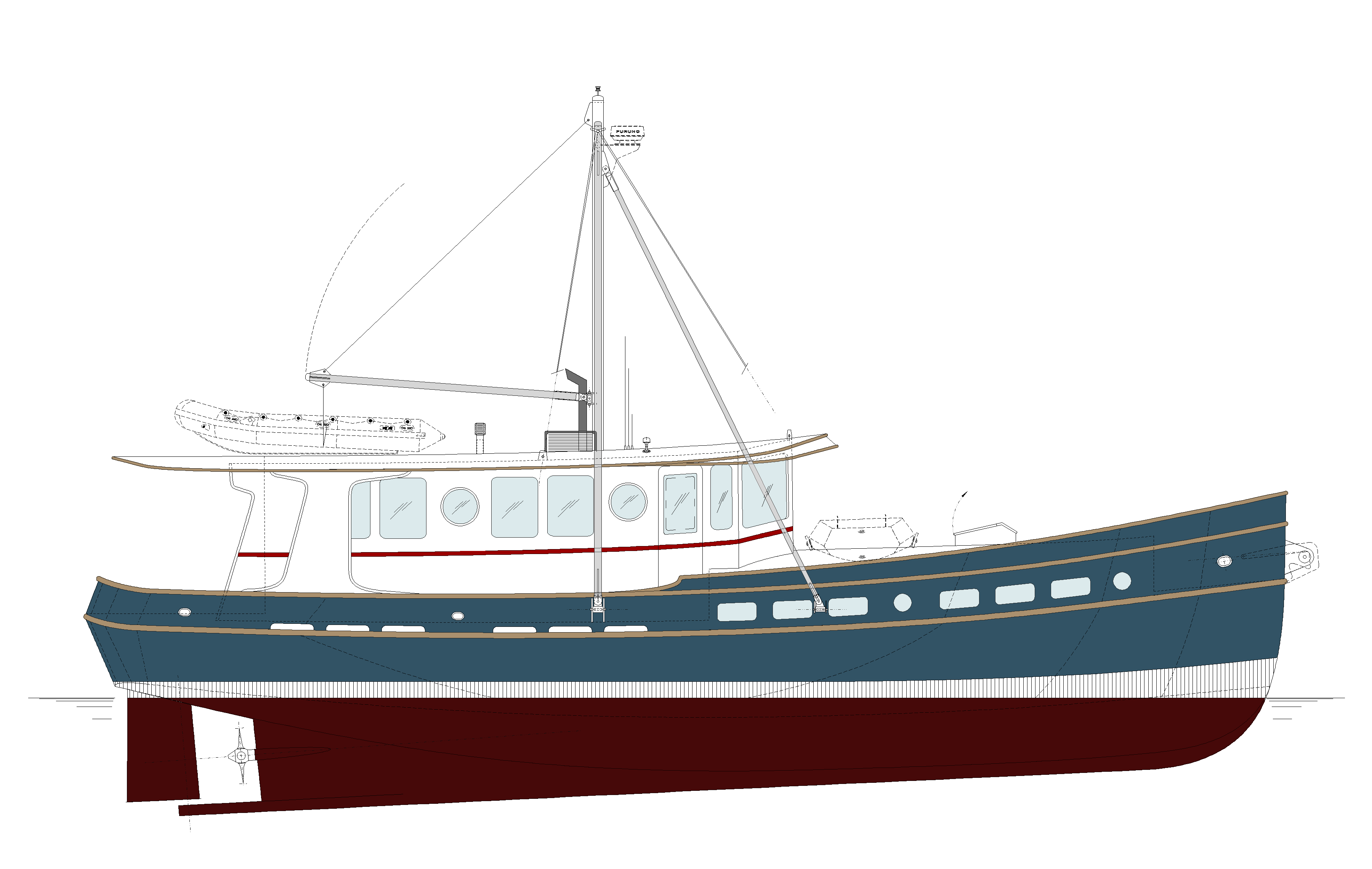
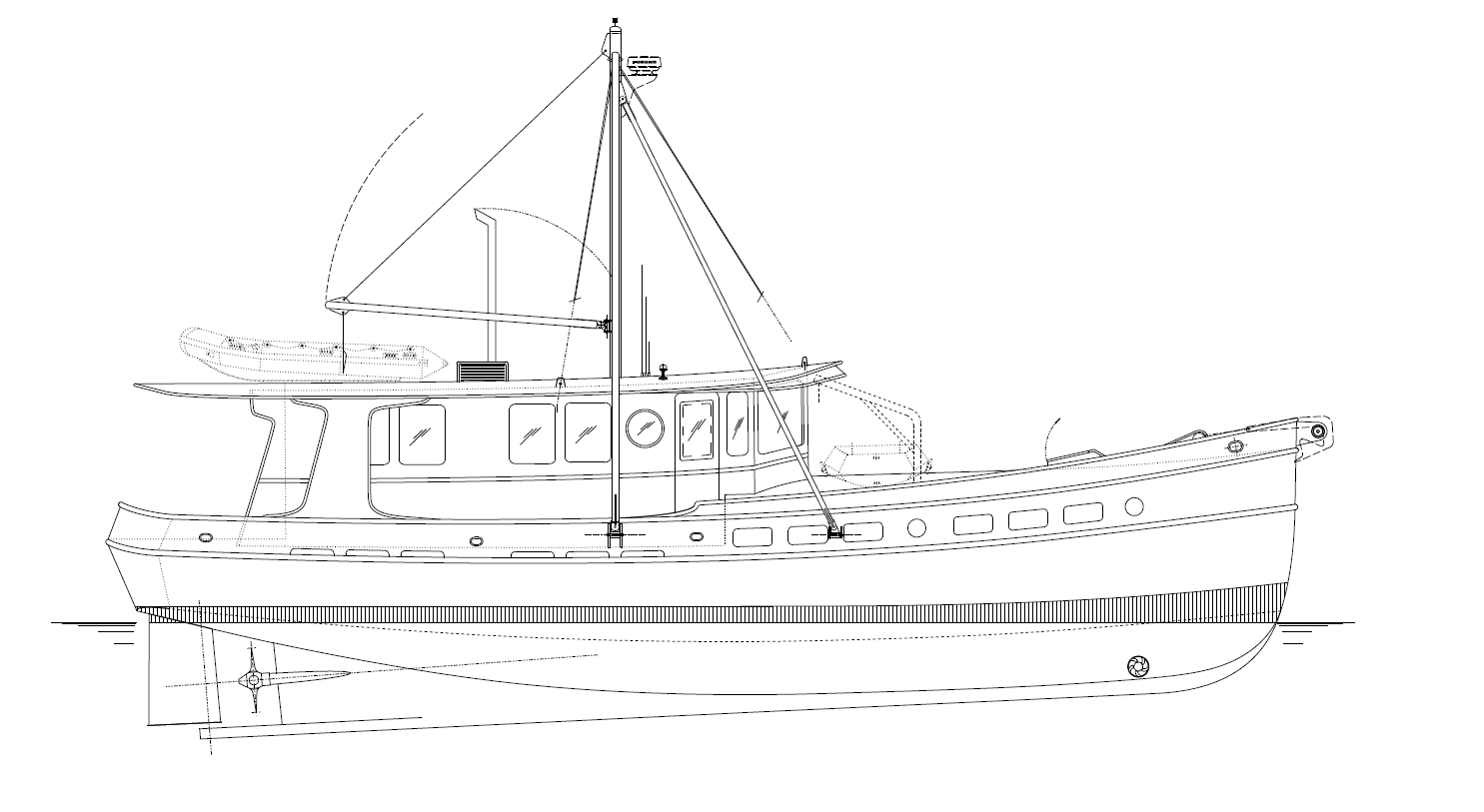
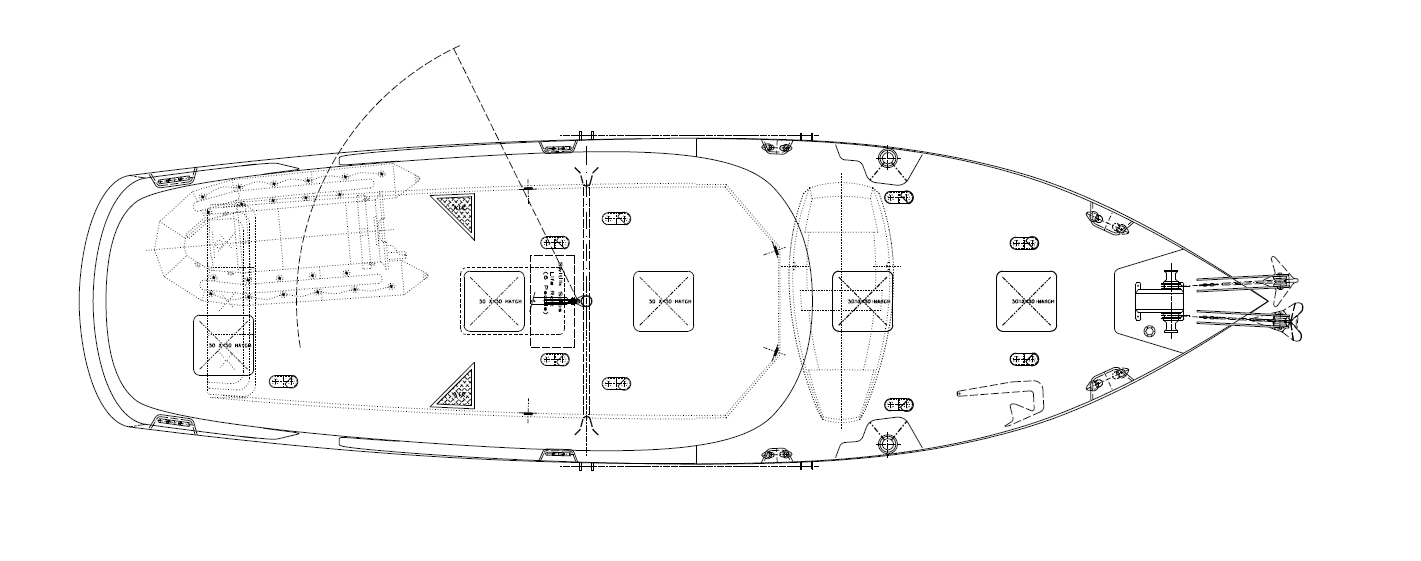
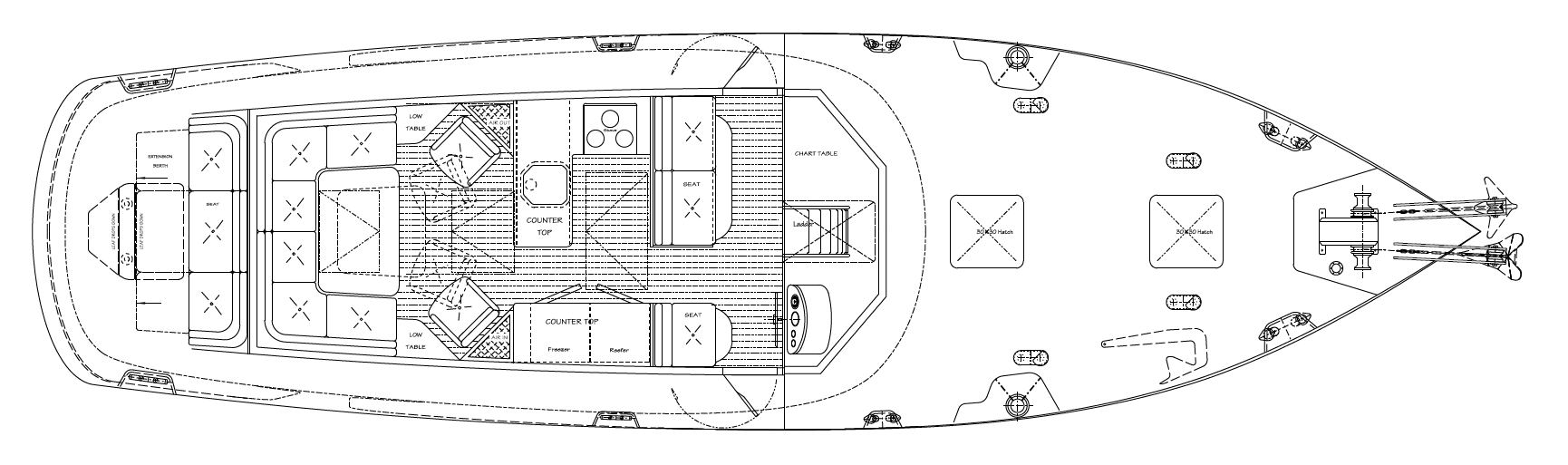
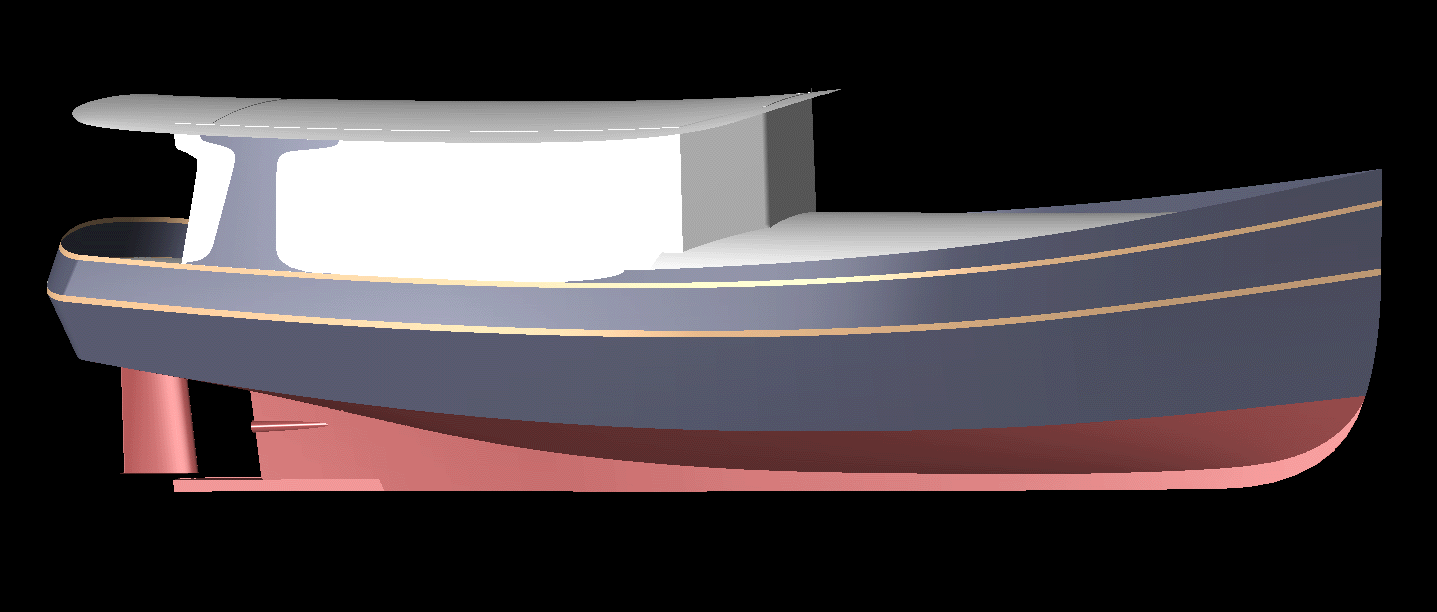
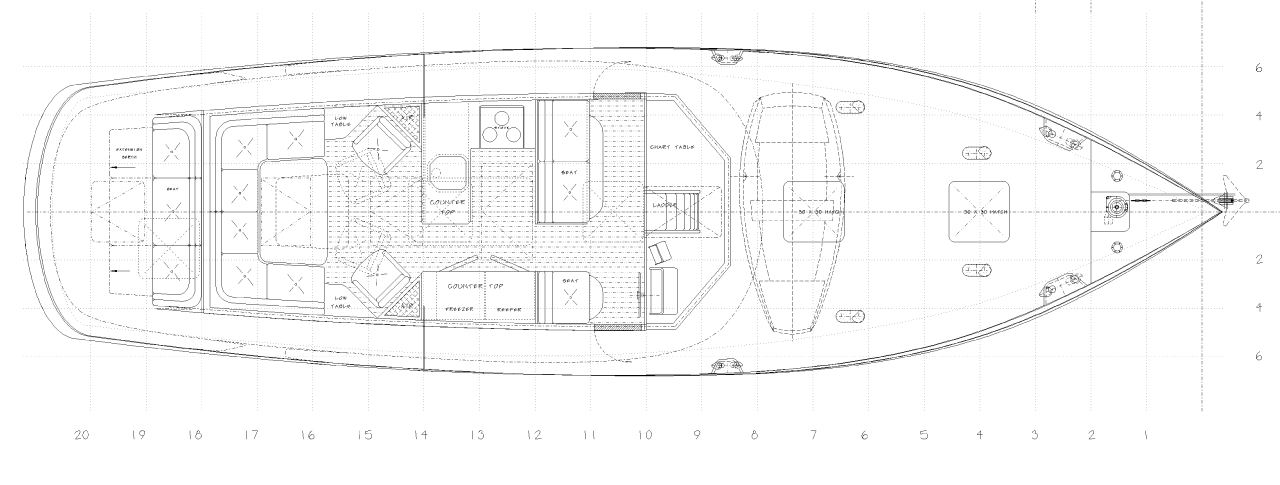
Click for Larger ImageExterior Profile | Exterior Deck
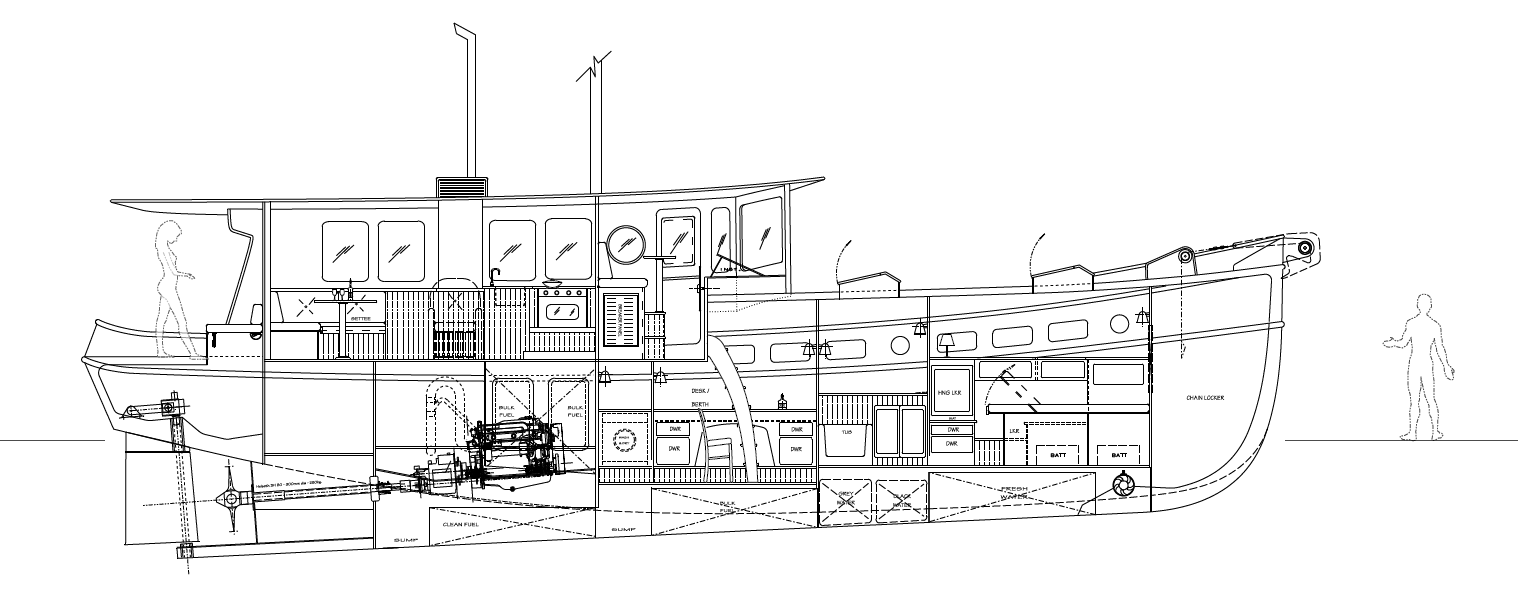
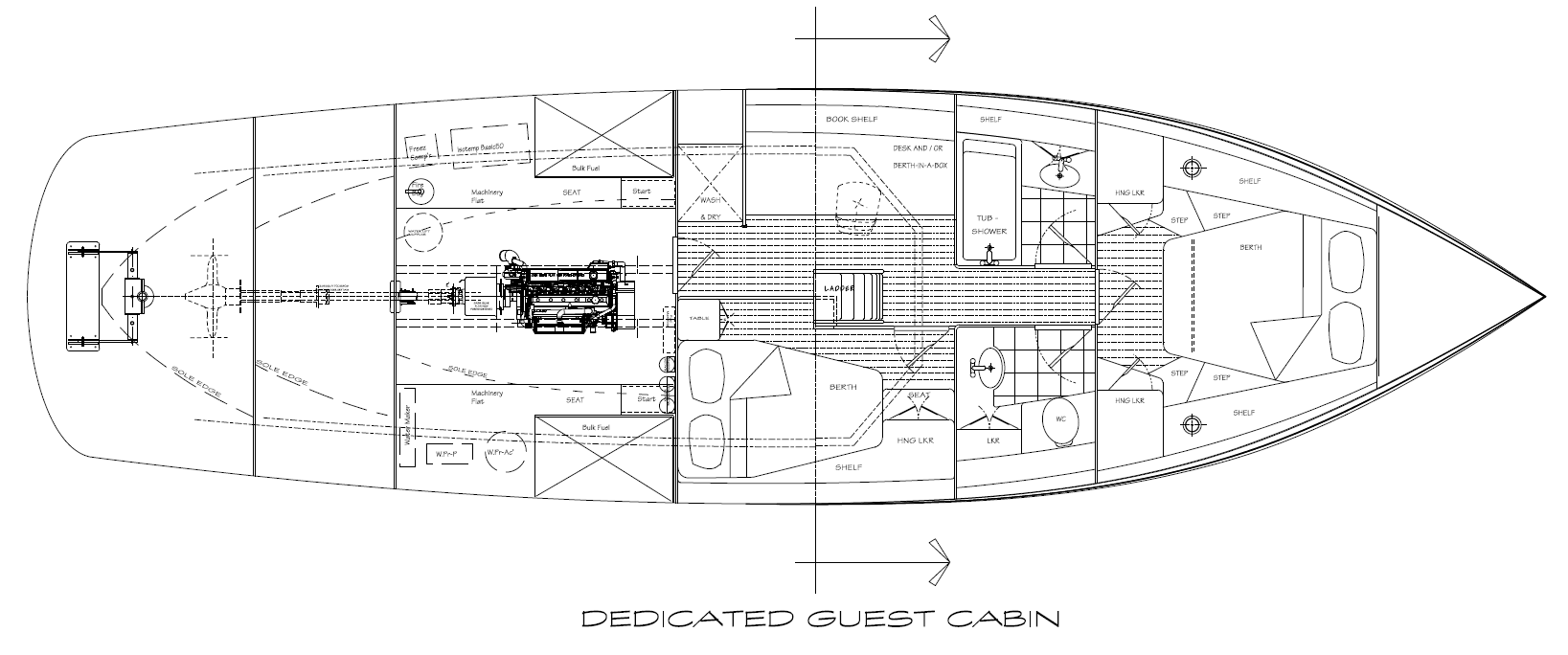
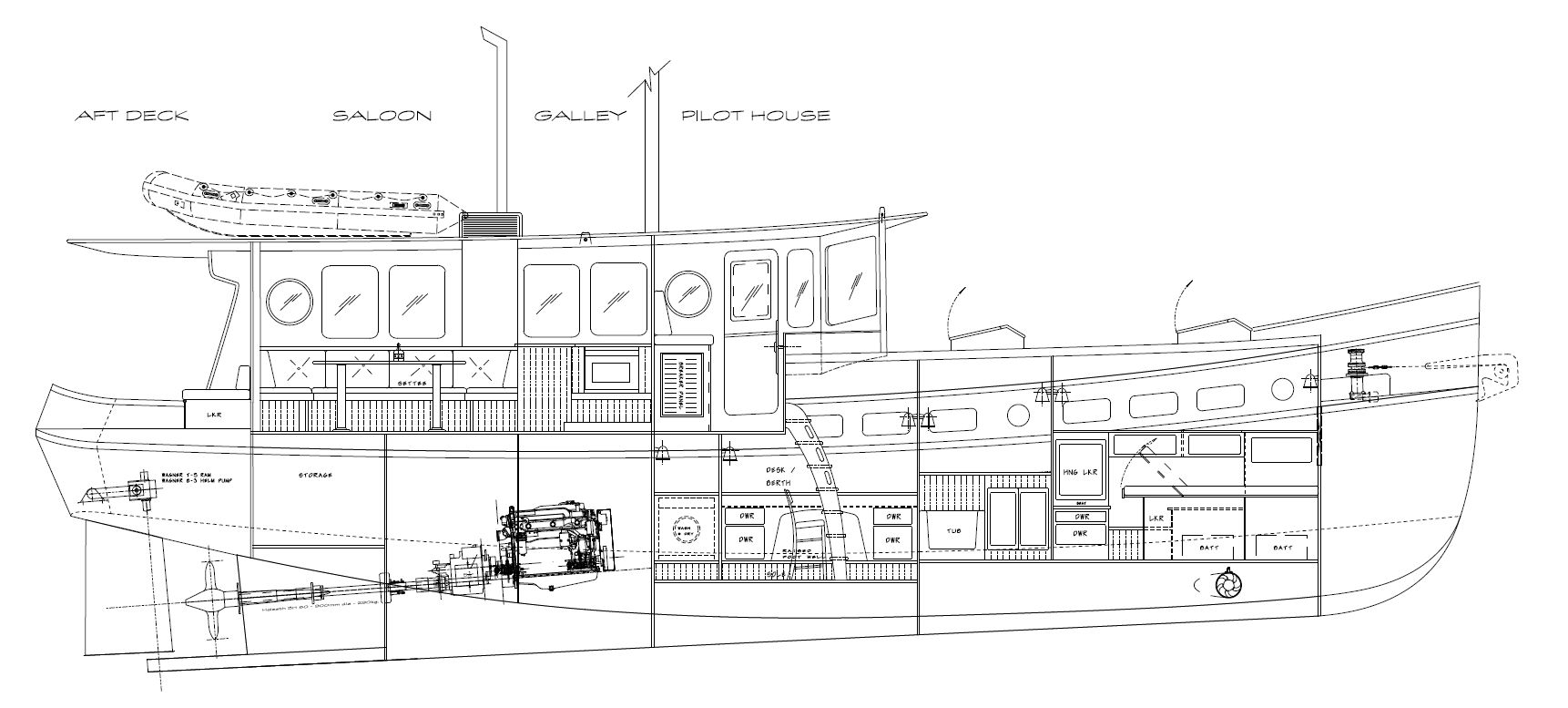
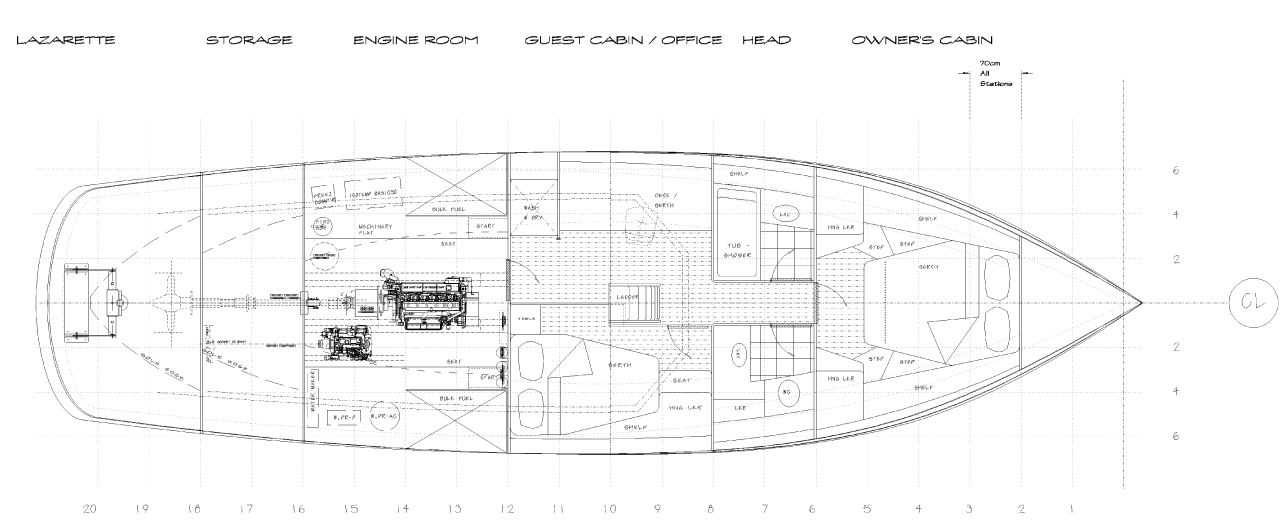
Interior Profile | Interior Plan Aft | Interior Plan Below | Alternate Plan Below
Preliminary WIDEBODY Interior Profile | Preliminary WIDEBODY Interior Plan Aft
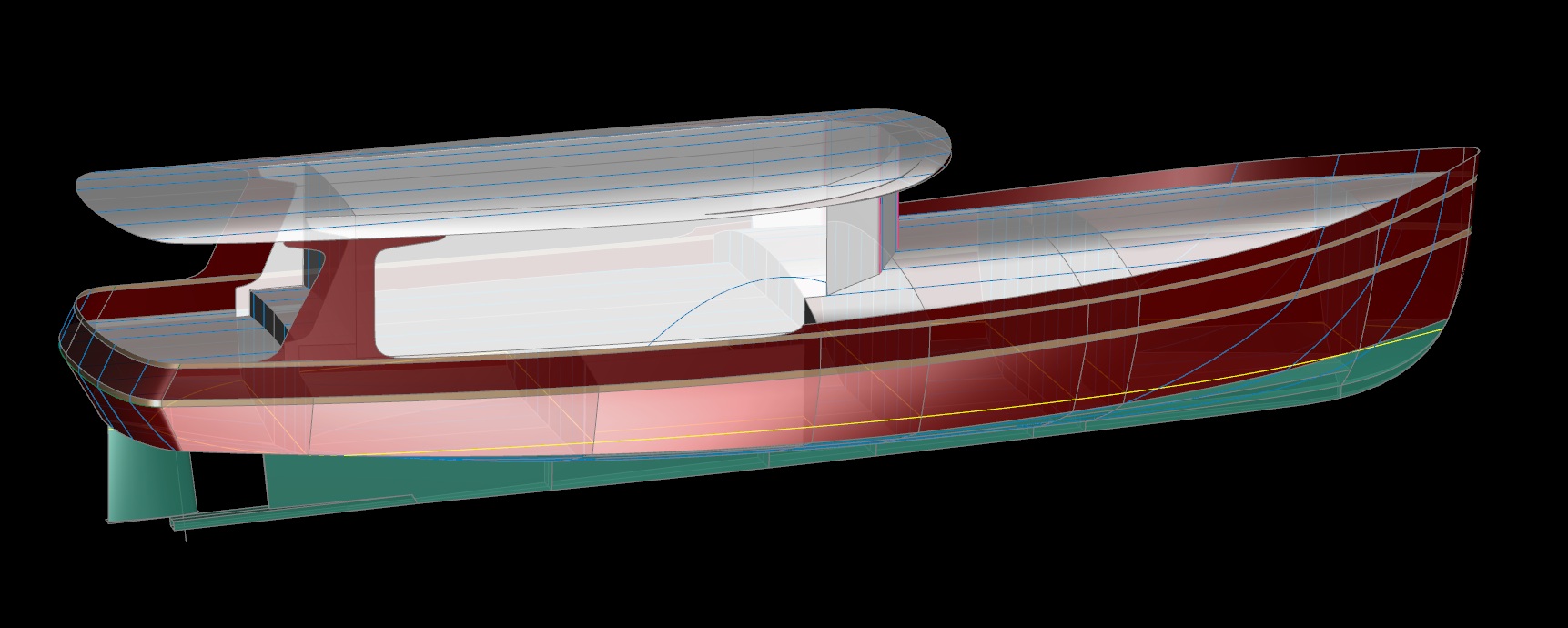
Rendered Perspective Forward | Rendered Perspective Aft | The PramCheck out the Vagabond 70 (Nomad) Below
Copyright 2005 - 2014 Michael Kasten
General Concept
The Vagabond 50 shown here is the same design that is featured in the newly released fourth edition of Voyaging Under Power, edited by Denis Umstot.
I created the Vagabond 50 design for my own use as my own ideal 50' trawler yacht for voyaging, for permanent living aboard, and for cruising the canals of Europe. Additional goals were to do so economically, and to have a flexible interior layout for our own use, as well as to accommodate occasional guests in comfort. Naturally, one of my requirements was to have a generous office space and study where new designs can be imagined..!
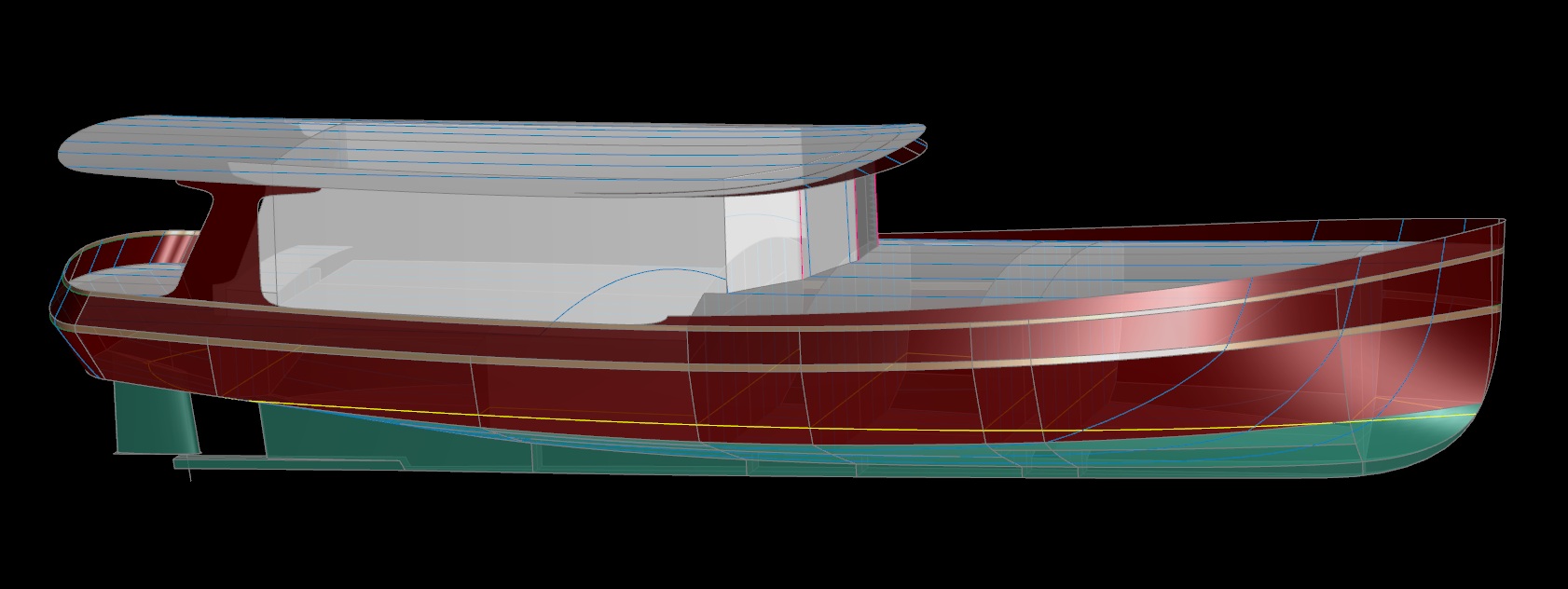
The Vagabond 50 has borrowed the excellent attributes of our 46' Gulliver hull design, but here we have lengthened the waterline for increased speed and more accommodation space below. As with the Gulliver and the Greatheart series, the Vagabond 50 hull form has been adapted from working West Coast fishing vessels. The intent has been to capture the excellent sea keeping qualities of those working craft, but to refine the lines into 'yacht' form in order to achieve an easily driven hull having relatively much lighter displacement.
Particulars are:
- 50' LOD
- 45' - 7" DWL
- 13' - 7" Beam
- 4' – 11" Draft light
- 5' - 2" Draft loaded
- 45,500# light
- 59,700# with tanks full, ready for a voyage.
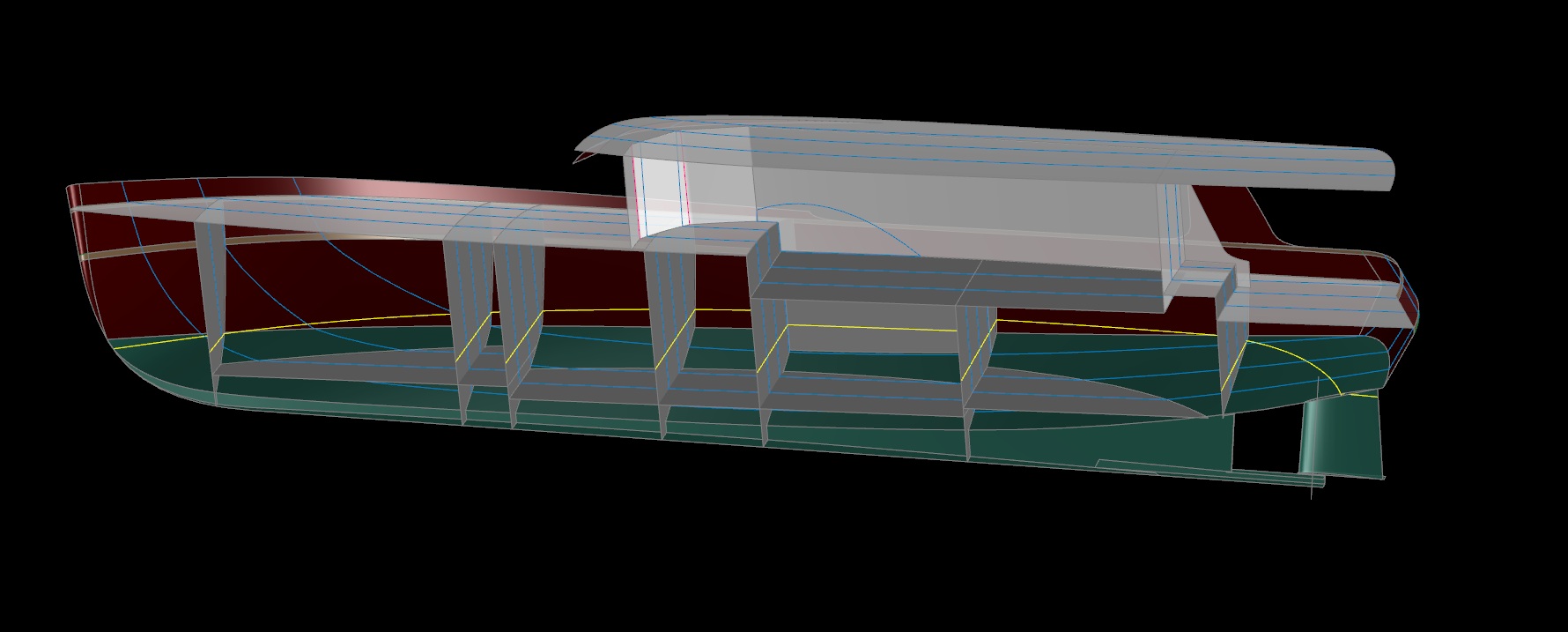
Hull, decks and cabin are planned for steel construction with scantlings according to the ABS Rule. The house top is cold molded plywood, laminated into a single large structure then sheathed in GRP. Plating, framing and other internal structures are intended to be detailed for NC cutting, including integral tanks, engine girders and bulkheads.
Power & Range
The engine specified is a John Deere 6 cylinder diesel for 175 hp at 2,400 rpm, mated to a Twin Disc gear using a 3:1 reduction to drive a 34" propeller. The "cruising speed" for long range voyaging with this hull is assumed to be around 8 knots. Theoretical hull speed is around 9.5 knots, however due to having relatively light displacement the hull should reach around 11 knots with the planned horsepower.
Using 1,250 USG of fuel and keeping a 12% reserve, the Beebe algorithm shows range in the average load condition to be around 3,200 NM at 7.8 knots. Other range prediction methods yield a slightly higher result but we have noted the more conservative Beebe results here.
Exterior Arrangement
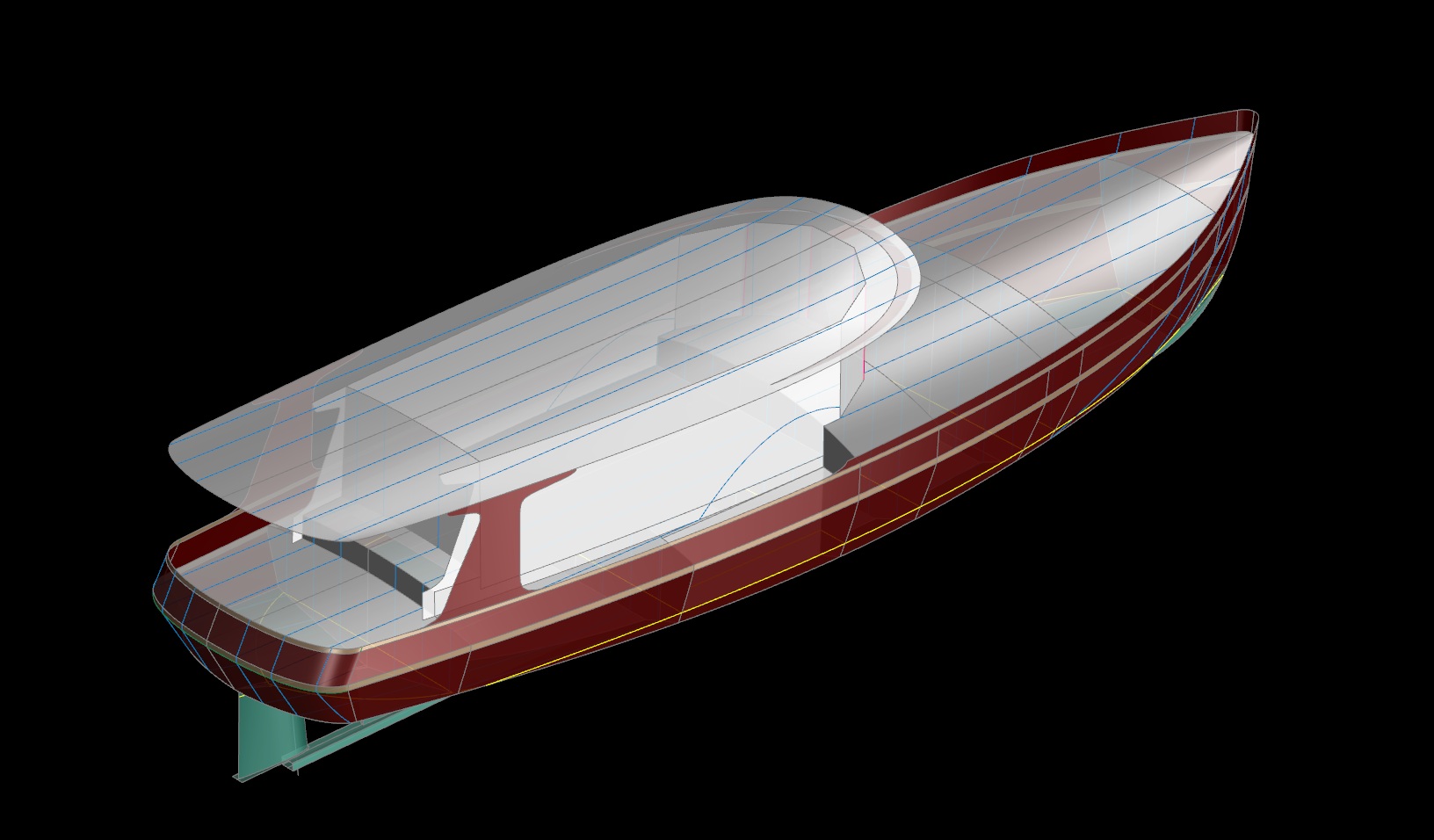
Deck structures provide 6' - 6" standing headroom throughout. The aft deck, side decks, and interior pilot house decks are all at one level. There are two exterior water tight doors. The side and aft decks are surrounded by substantial bulwarks, and the fore deck by a toe rail. The aft deck and the well-deck forward are surrounded by a welded steel pulpit. The side decks are surrounded by welded stanchions and Dacron or Dynex-Dux lifelines.
The fore deck spans the full width of the boat from bulwark to bulwark. This provides an enormous volume within the forward accommodations below. Davits allow placing a shore boat onto the fore deck. A substantial vertical capstan anchor windlass is located in the well-deck forward.
Right aft is an aft-facing seat that can be converted into a double berth for sleeping outdoors. The aft deck is planned in order to be easily enclosed by screens and / or vinyl - canvas, depending on the season.
A mast and paravane rig are located just aft of amidships. The mast is arranged with a boom to allow a second shore boat to be placed on the house top.
Interior Arrangement
The accommodations are intended to provide comfortable cruising for two to four people, plus an additional cabin to port which has been planned for use as an office.
Beginning aft on the main deck there is a generous cockpit with aft facing seats, fixed table, and movable folding chairs. The aft table can be arranged to lower to seat level, which would allow the aft deck seat to become an excellent double berth for sleeping outdoors. The aft deck can easily be surrounded by curtains or screens as needed for all weather use.
Inside, the pilot house is located at the forward end of the deck house, with entry doors to port and starb'd. Just aft of the pilot house is a large U-shaped galley to port, plus refrigerator and freezer to starb'd. Right aft in the deck house is a large wrap-around dinette and table, plus two easy chairs. The intent is that this will be the primary living space. It will be light and open and will have good views in all directions.
Beginning forward on the lower deck, the large owner's cabin is forward, for maximum privacy, for maximum distance from the engine room, and to be sleeping in the best spot for keeping an intermittent anchor watch during the night. The owner's cabin has a queen size berth, plenty of shelves and two good sized hanging lockers.
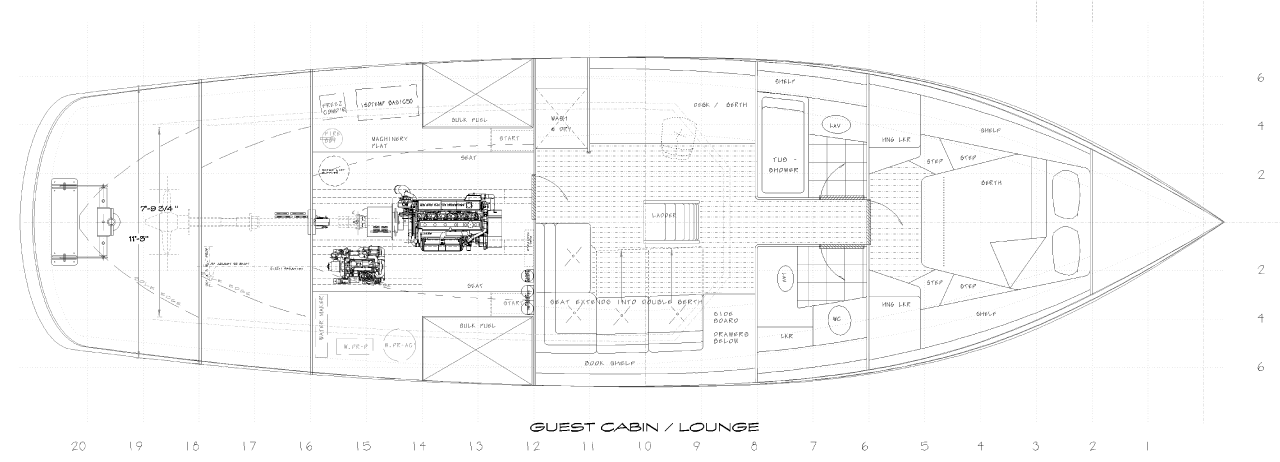
A hallway leads aft from there to access a shower and bath room (yes, a real bath tub...) to port, and a separate head and wash room to starb'd. Two cabins are located amidships. One is planned as a guest cabin to starb'd, and the other is planned as an office and laundry area to port. The office contains a 'berth-in-a-box' which serves as a large desk / drawing table. When extra sleeping is required, the desk top flips up and out of the way to reveal a standard mattress. My goal was to have full use of that cabin both day and night as needed...
An alternate layout for the 'midship area below turns the starb'd stateroom into a large lounge in order to extend the office space, and to provide a 'library / den / home theater' arrangement with wrap-around seating that can easily be transformed into a large double berth. With movable partitions and curtains, privacy for guests would be afforded. With this layout the 'midship cabin would be quite large, and would provide the ultimate in terms of dual use when guests are not aboard.
At the aft end of the hallway is a ladder to the pilot house. We chose in favor of a ladder rather than a stairway here in order to preserve the feeling of light and openness to the greatest degree possible. In the 'permanent-guest-cabin' layout, a fixed partition is located directly to starb'd of the ladder and a robust handrail is to be provided to port, each providing good support while climbing / descending. In the more open 'lounge / den' layout, a stout security handrail is to be provided on both sides.
The engine room is located below the galley / saloon sole and is quite large. Access to the engine room is through a door aft of the stairway and also via large opening hatches in the galley and saloon soles.
With all three cabins arranged for sleeping, plus a possible double berth on the aft deck, there is generous sleeping for seven or eight... not that you'd especially want to crowd yourself...!
Widebody Interior Arrangement
An alternate "Widebody" main deck layout is possible. On the "Widebody" Plan view we have taken the main deck-house sides out nearly to the bulwark, eliminating the side decks, and thereby widening the galley and saloon. This provides considerably more room in both galley and saloon, and allows a walk-through to the aft deck from the pilot house directly through the saloon inside. In the saloon, there is a much larger dinette located to port, and two easy chairs to starb'd. There is still the same pilot house arrangement, having two WT doors that emerge onto shorter side decks to port and to starb'd.
In the "Widebody" Profile view, we can see that all is the same throughout, except for the long dinette to starb'd. I have shown an aft-facing seat on the aft deck, which in this case would be located to port of the aft saloon door.
Design Summary
Overall it has been a primary goal to fit two staterooms and an office into a sea-going boat of around 50 feet on deck. The alternate interior layout below decks substitutes a nice "den" or library for the second stateroom to starb'd, but still allows that area to be converted into a temporary guest cabin. A third 'Widebody' layout expands the space within the galley / saloon nicely. I'm pleased to observe that the Vagabond interior has worked out so well without making the boat seem crowded regardless of the layout preferred.
An additional goal has been to enable easy canal cruising, therefore we have kept a relatively low profile. Air draft is under 10' - 9" in the half load condition, which opens the door to nearly all of the European canal system...!
In all, the design has intentionally been kept quite simple in terms of its structure and equipment, therefore should be economical to build, to maintain, and to travel with.
Design Genesis
As with our other designs in theis series, the hull form for the Vagabond has been adapted from real trawlers - US West Coast fishing vessels which have to operate in all weathers - including in the Gulf of Alaska, a place where the ocean is... well, not so nice. Our aim has been to retain the excellent sea keeping qualities of those working craft, and to refine their lines into 'yacht' form to achieve a more easily driven hull with relatively light displacement. See the following links for vessels in the Gulliver / Greatheart series...
Greatheart 36 | Vagabond 36 | Gulliver 46 | Greatheart 48 | Greatheart 54
Greatheart 60 | Swallow's Nest 60 | Braveheart 53 | Braveheart 63 | Swallows Nest 70In order to achieve a proportionately longer waterline and more interior space without increasing boat length, we developed another series of designs based on the same hull form, but with a more upright stem and transom. Combined, this reduces the overhangs and increases the WL length to gain more interior space with less overall hull length. Check out the following links for boats in the Vagabond series...
Vagrant 49 | Vagrant 70 | Vagabond 50 | Voyager 52 | Valdemar 53 | Valdemar 70 | 37m Peri Laut
For more information on this or other designs, please inquire
Vagabond 70 (NOMAD) - Click for Larger ImageNomad 70 Aft | Nomad 70 Forward | Nomad 70 Interior | Nomad 70 Above
Please see the AVAILABLE BOAT PLANS web page.
Home | Intro | Our Design Process | Stock Design Info | Motor Yacht Designs | Sailing Yacht Designs | Prototype Designs
Plans List | Articles | Our CAD Design Stream | Maxsurf | SITE MAP..! | Site Search | Design Team | Contact Us