Messing about in boats since 1975. Online Since 1997.
Home | Intro | Our Design Process | Stock Design Info | Motor Yacht Designs | Sailing Yacht Designs | Prototype Designs
Plans List | Articles | Our CAD Design Stream | Maxsurf | SITE MAP..! | Site Search | Design Team | Contact Us
Please see the AVAILABLE BOAT PLANS web page
Boat Parts Prepared for NC Cutting
What is NC...? It simply means Numerically Controlled...!
The role of the Maxsurf companion program, Workshop, is to create structure. From Workshop one can output parts via DXF, and then add detail within a dedicated CAD program such as Microstation or Autocad. In the CAD environment, parts are then nested to fit the plates from which the parts will be cut. For a concise outline of the NC file generation process, see the article describing our CAD Design Stream.
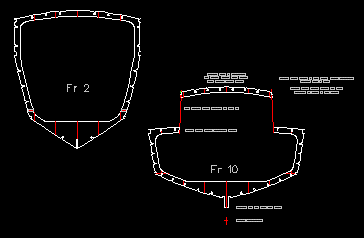
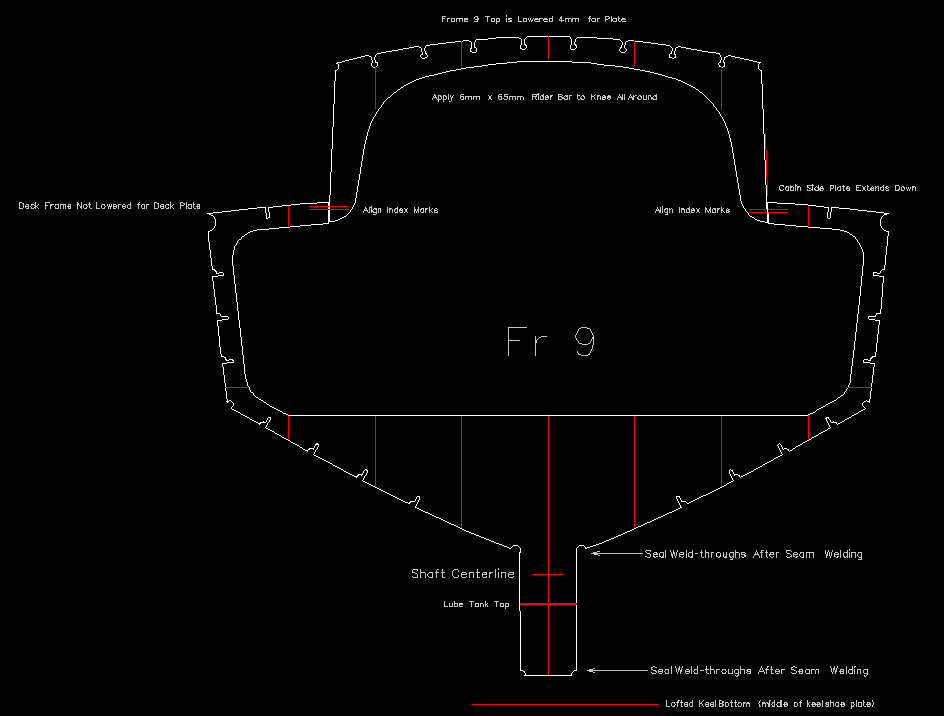
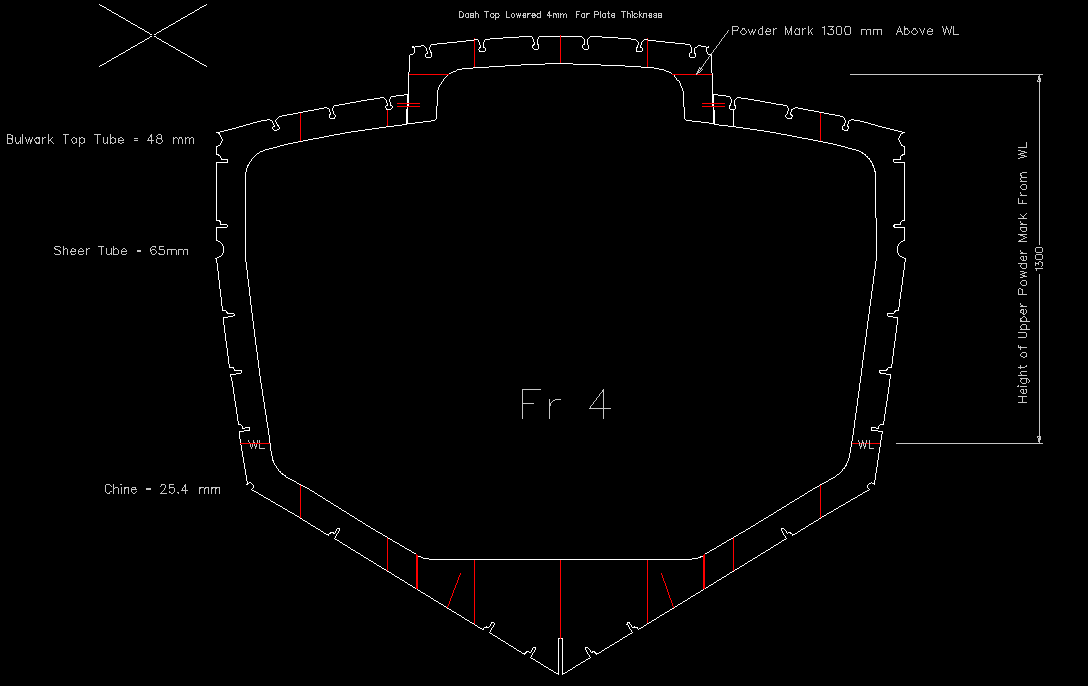
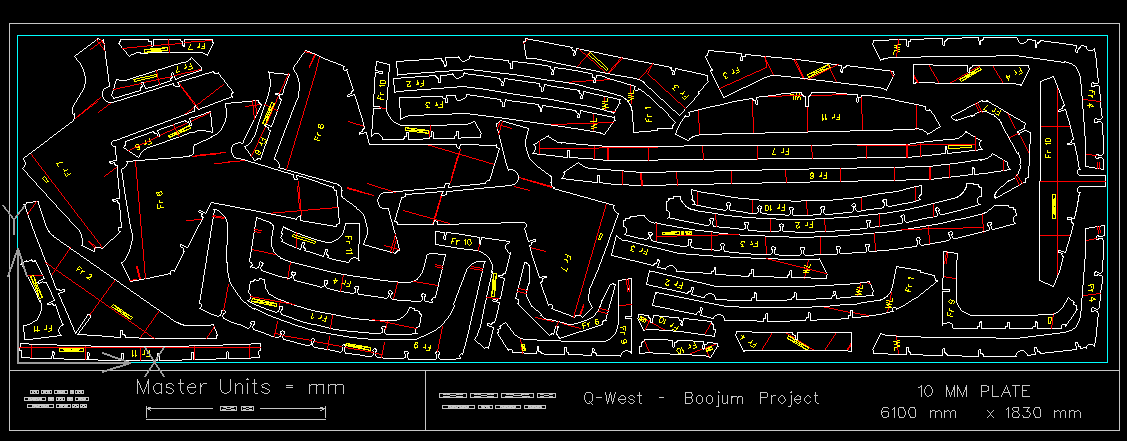
In the above image from Microstation, we see some parts for the small aluminum Tug-Yacht, Boojum, ready for nesting. The Nested Parts image is one of the cut files, ready to be sent as an email attachment to the metal cutters in New Zealand.
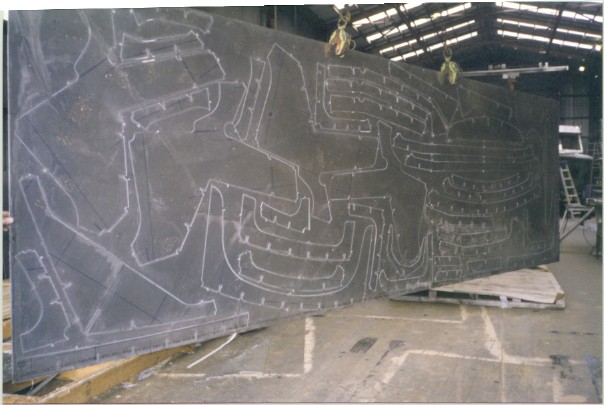
The Cut Plate image is the same nesting, having been plasma cut and shipped to the builder in Wanganui, New Zealand. The parts were left "tabbed" to the plate for ease of handling. The pre-cut pieces at this point are ready to be separated and assembled in order to create the vessel's frames.
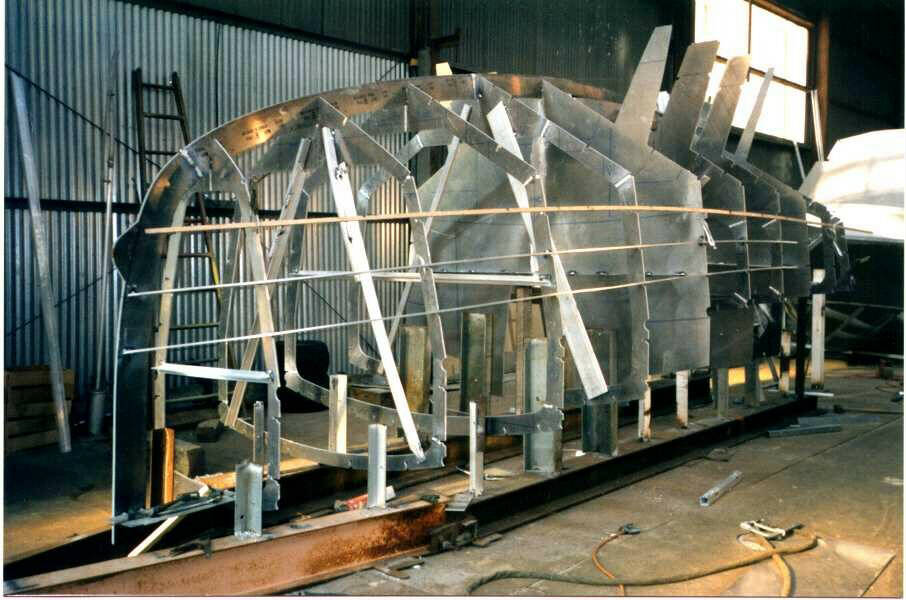
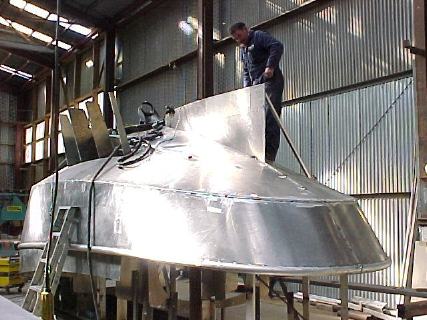
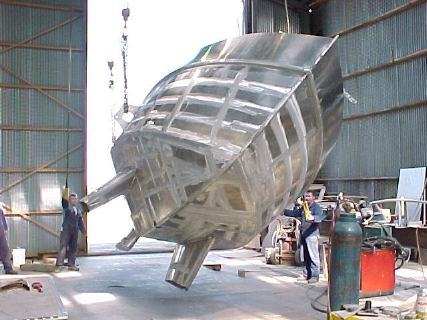
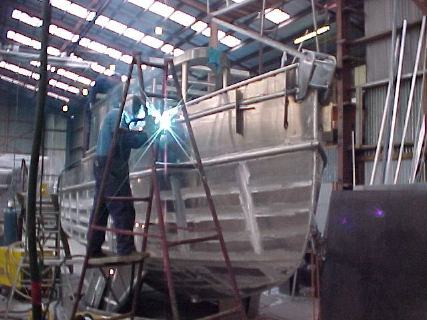
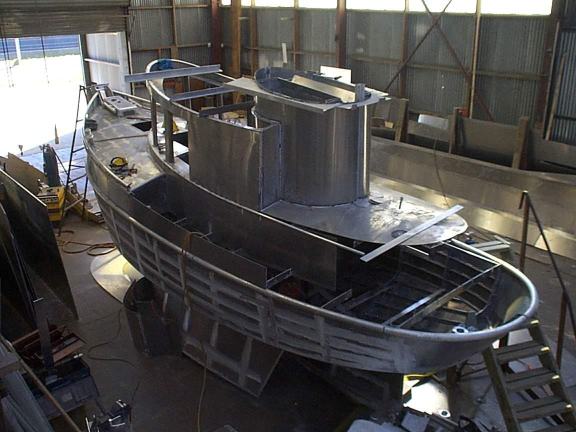
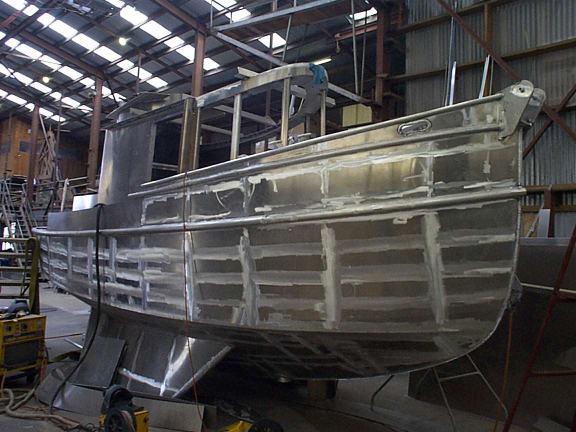
The Framing Erected image shows those same parts assembled into the frame of the boat, and stringers are being bent in. The images in the second series of links show images of the vessel nearing completion.
The original cut-files, as in the image shown above, are plotted to a smaller scale and become a guide for the builder to illustrate the assembly of the cut parts.
A pre-cut "boat kit" has the potential to save the builder quite a lot of labor, not only for the cutting itself, but for the lofting and layout of the parts. Done well and with attention to detail, this approach not only saves labor during construction of the hull, but also results in a much more accurately cut shape and a more fair weld-up of the hull.
With a GRP vessel, this approach can also yield substantial labor savings for mold construction. NC cutting can be used for mould making 'directly' by using a 5-axis router to cut the plug or mould right from the 3D design file. In terms of labor, this is extremely efficient and cost effective, there being very little manual labor involved in creating the tooling prior to the layup of the GRP part.
Alternately, NC cutting can be used effectively for GRP construction by detailing a plywood mould with the structure "inside-out" - in other words with the mould frames on the 'outside' of the mould sheathing. In this case the mould frames can be cut by computer driven router, complete with notches for stringers, etc. Even the mould sheathing can be NC cut...
For more information about this process, please see our NC Boat Building Advantages article.
Computer Modeling & Analysis Links
Our CAD Design Stream | Why Use NURBS...? | Maxsurf Information
NC Prototyping | NC Parts Cutting | NC Boat Building Advantages
Please see the AVAILABLE BOAT PLANS web page.
Home | Intro | Our Design Process | Stock Design Info | Motor Yacht Designs | Sailing Yacht Designs | Prototype Designs
Plans List | Articles | Our CAD Design Stream | Maxsurf | SITE MAP..! | Site Search | Design Team | Contact Us