Messing about in boats since 1975. Online Since 1997.
Home | Intro | Our Design Process | Stock Design Info | Motor Yacht Designs | Sailing Yacht Designs | Prototype Designs
Plans List | Articles | Our CAD Design Stream | Maxsurf | SITE MAP..! | Site Search | Design Team | Contact Us
Please see the AVAILABLE BOAT PLANS web page
The 96' Sailing Yacht
"ZEBULUN"
Sail Plan | Accommodation Plan | Deck Plan & Sections | Structural Perspective | Hull Form | Lines Perspective
Copyright 2001-2016 Michael Kasten
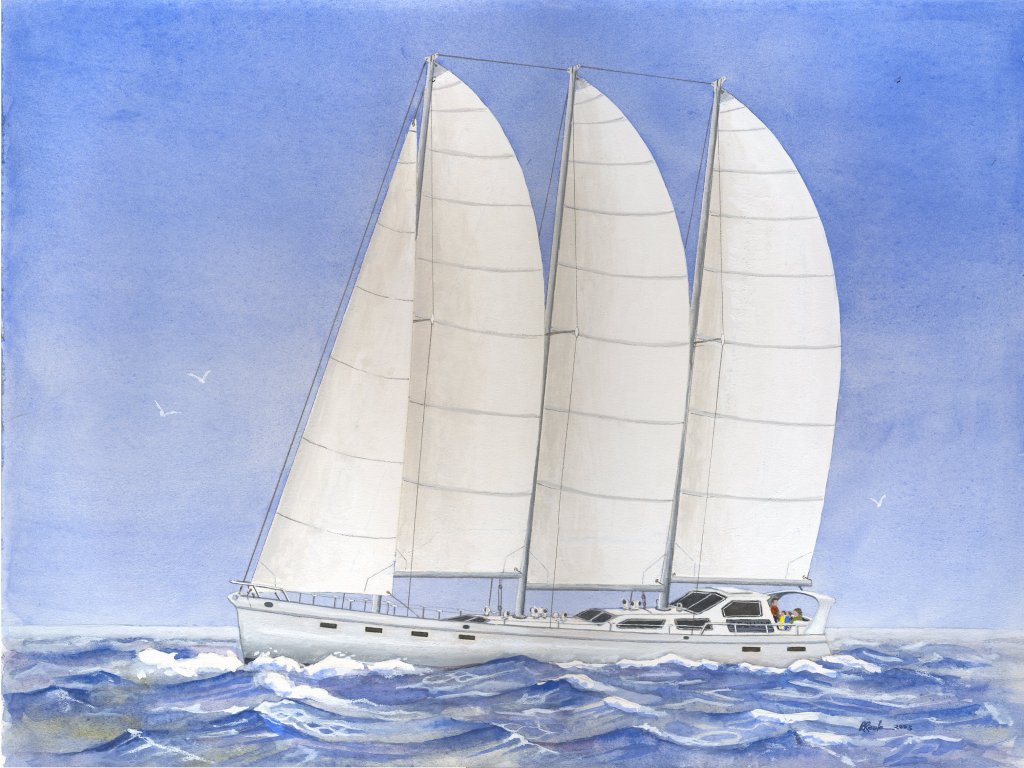
Image courtesy of Loren MurphyThe Name
Zebulun - also spelled Zebulon or sometimes Zevulun - was one of the ten lost tribes of Israel who were conquered and then driven out of the northern lands of Israel circa 721 BC by the Assyrians (sometimes claimed to be the Babylonians). The original home of the tribe of Zebulun is now southern Lebanon - to the west of the Jordan River in the region of the Litani River. After having been driven from those lands, the Zebulunites, along with their brother tribe the Naftali also from that same region, subsequently occupied lands throughout what is now Afghanistan and Pakistan. Today, per scholars of these matters, a small group of Zebulunites in Bombay, India are possibly all that remains of the lost tribe of Zebulun.
General Concept
Zebulun was designed as a highly capable long range, fast and safe offshore sailing vessel in aluminum for sailing expeditions ranging from the tropcs to the arctic. The original intent was that Zebulun be capable of doing rescue work, mission work, and relief supplies delivery for troubled areas. Long range under power was also a primary requirement, thus one could legitimately refer to this as a true motor-sailor, with 100% functionality in either mode. Zebulun's lines will provide high performance in an easily driven hull, planned for maximum speed and the fastest passage times. The interior layout has been planned around an extended family, or a large charter party. As such, Zebulun will also make an exceptionally fine charter vessel.
Hull Particulars are as follows:
- 96' LOA
- 89' DWL
- 23' Beam
- 8' Draft (twin asymmetric bulb fin keels)
- 206,000 lb. Displacement at the DWL
- D/L 127
Displacement will vary from around 195,000# when lightly loaded, to a maximum capacity of 259,000# with tanks full, stores for twenty people, and the boat ready for a long passage, or alternately loaded with a cargo of supplies. As we can see from the above data, Zebulun is of nearly 'ultra light' displacement. Hull speed is predicted to achieve nearly 18 knots. Typical sailing speeds in favorable conditions should be in the range of 12 to 14 knots. In other words, built for comfort AND speed...!
Stability Compliances
The Zebulun exceeds all of the current (2016) worldwide stability criteria for carrying passengers for hire, including the almost impossible to meet USCG criteria. This is quite remarkable for such a light displacement vessel.
Construction Materials
Aluminum has been chosen as the material for hull, deck and house structures for the purpose of extreme ruggedness, for ease of construction, for its very favorable strength to weight ratio, the goal being to permit a greater reserve capacity to carry cargo or passengers. Zebulun has been designed to exceed the scantling requirements of the ABS Rule for aluminum vessels, and therefore also meets the EU requirements for vessels of this size.
Interior materials have been chosen to be as light in weight as possible, while not being overly expensive to construct. For any of the larger flat panels where it will not increase the joinery labor to any appreciable degree, honeycomb panels are used.
Exterior Layout
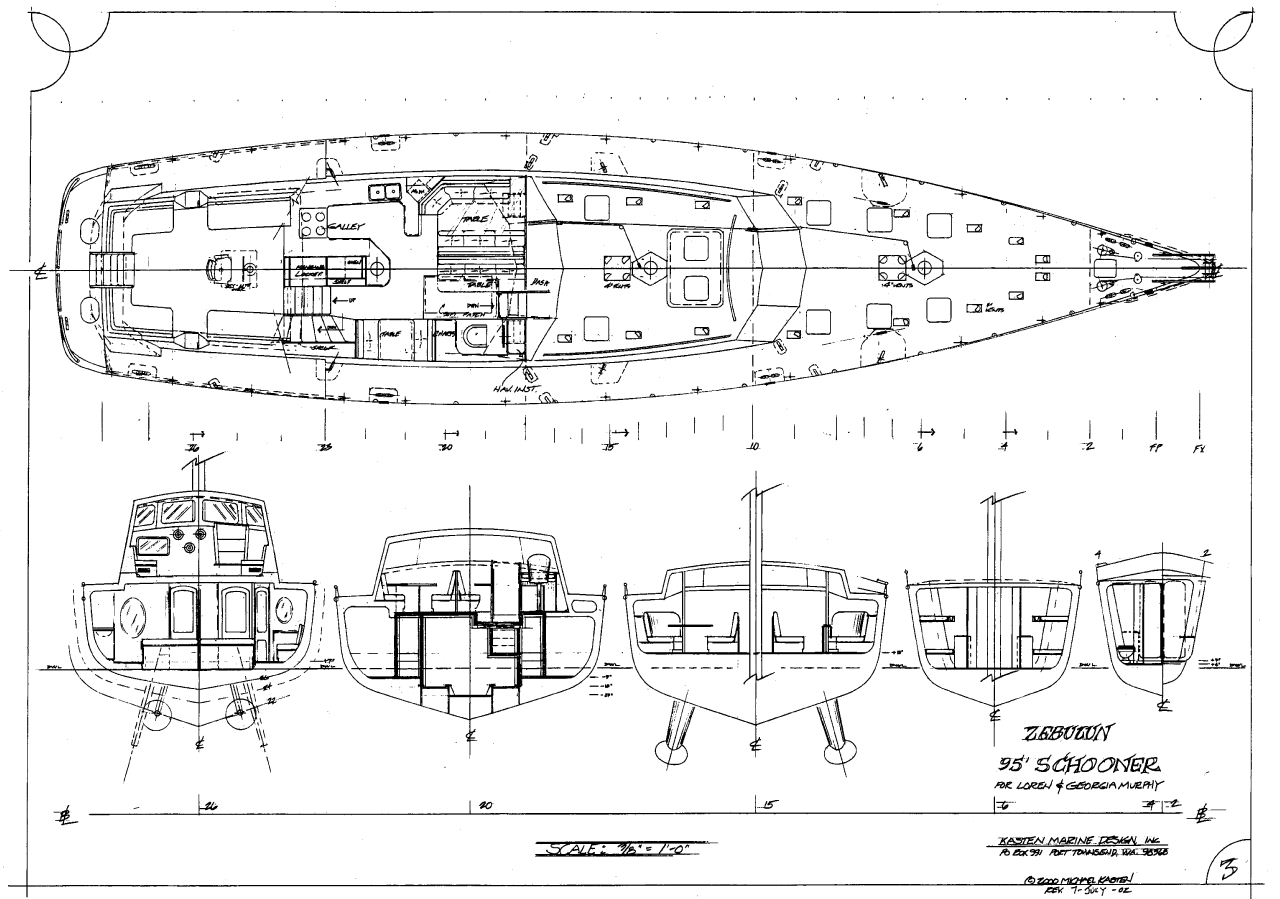
Forward, the deck is surrounded by substantial bulwarks for maximum safety. Aft, the deck is surrounded by an ample toe rail for security when coming and going from the cockpit. Although not shown on the drawings, the decks are additionally protected by a 36" high welded bow pulpit, stern pulpit, welded stanchions and lifelines along both side decks. For additional safety there are welded aluminum hand rails along each house top.
A hard "Bimini" top is provided above the forward part of the cockpit, with windows opening forward. This was an originally requested design feature that works out rather nicely, however if a soft dodger were preferred - so be it...!
For anchor handling, a pair of hydraulic vertical axis windlasses are located forward, with stout mooring bitts located on either side of the foredeck. Additional mooring bitts are placed on both side decks and on the after deck, three per side. Additional smaller bitts and cleats are provided as needed.
Interior Layout
The cabins have 6' 8" headroom throughout the main cabins - at the centerline. For the sake of headroom in the aft cabins, the exterior deck aft is raised to the height of the top of the main bulwark. Where needed, headroom pockets have been created within the cockpit structures to permit standing headroom in the aft master and guest cabins.
The accommodations aboard Zebulun have been designed to provide comfortable living for two to six crew aft, plus twelve or more passengers forward during extended passages.
A large "Great Room" is located amidships for the purpose of comfortable lounging for passengers and crew; for the purpose of carrying more day-passengers on shorter voyages; and for stowage of cargo when desired. The layout could easily be changed to suit a newly defined purpose. If an alternate layout for fewer passengers were preferred, the guest cabins could be expanded in size, making four generous guest cabins, each with their own en-suite head and shower. Or if so desired the amidships lounge could be differently configured. The Zebulun is really quite large so the possibilities are many.
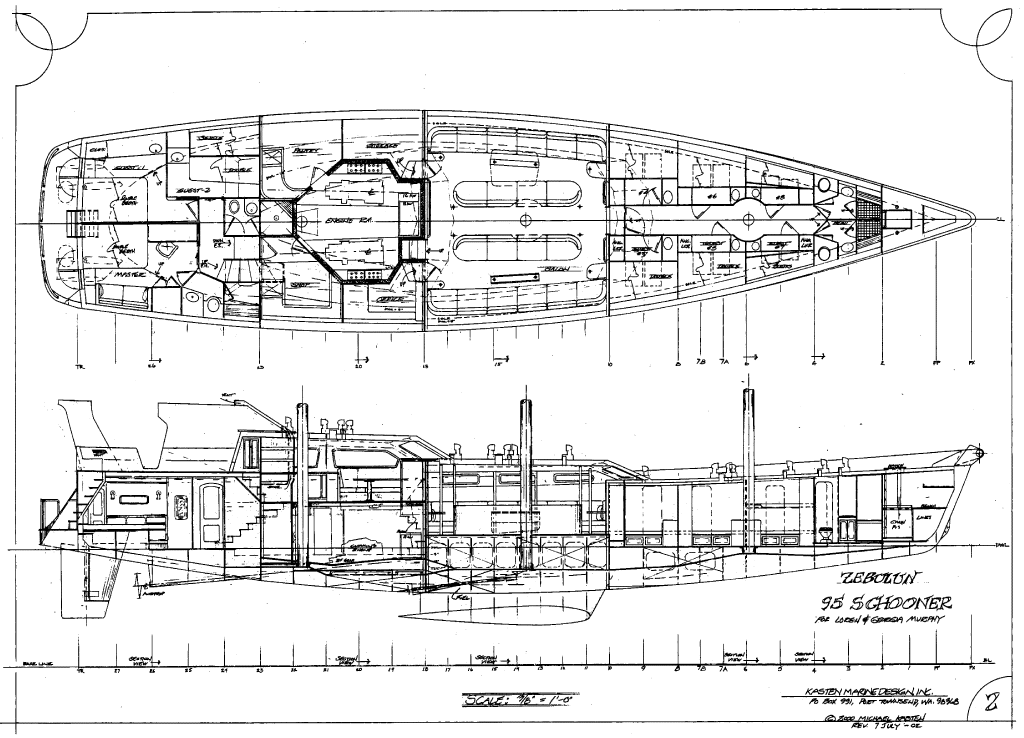
I will describe the interior spaces of the Zebulun via the following "walk through" (also see the layout images linked above).
FORWARD LAYOUT: Beginning right forward, a spacious forepeak can be entered through a deck hatch and ladder. The forepeak is intended for sail and line storage, and also for the anchor rode. Aft of the forepeak are a pair of generous head compartments, one to port and an identical one to starb'd. Each head has a shower, a vanity cabinet with a sink, a toilet and a small dressing area. Aft of the forward head compartments are six separate guest cabins, each able to house two passengers. The forward pair have two single berths each, the central and after pair of these forward cabins have a double berth and a deployable overhead berth, possibly for children. Each guest cabin has a vanity cabinet with a sink, a separate bureau/nightstand for personal effects, plus generous storage in drawers below the berths.
CENTRAL LAYOUT: Amidships in the vessel is the "Great Room" which is being referred to alternately as the "Saloon" per yachting terminology. The Great Room has the flavor of a library or reading room. Long settees with tables are placed as shown in the drawings. Outboard, there are long settees on both port and starb'd sides, having storage cabinets and bookshelves outboard. The "Great Room" serves multiple purposes, as described, including the ability to accommodate various cargoes. Storage is provided below the Great Room sole, as available after placement of tanks and structure.
Aft of the Great Room and down a small stairway outboard both to port and to starboard are two small low headroom spaces. One is an office, and the other is a laundry room. These spaces are situated ideally for carrying cargo as well, being more or less centrally located in the ship. Between these two low headroom spaces is the engine room, accessed from aft.
PILOT HOUSE: Aft of the Great Room and up a stairway is the Pilot House, containing the Pilot's Seat; Helm; Navigation Area to starb'd forward; the Galley to port aft; and three separate Dining Areas arranged as shown on the drawings. The central portion of the pilot house sole is lowered in order to provide headroom to the walkway leading forward to the Great Room. The "dashboard" area forward of the wheel holds navigation instruments. Immediately forward of the helm is a cabinet housing the helm controls and the engine controls. A magnetic compass is mounted prominently forward of the wheel. A radar and sonar screen are located within easy view from the helm. A VHF radio is mounted near the helm. Other navigation instruments may be mounted overhead as needed. The helm seat swivels to allow use as a chart table seat.
COCKPIT DECK: Aft of the Pilot House, on deck, is located the cockpit and exterior helm. Aft of the Pilot House, inside, and down a stairway is a hallway, from which one may access the after cabins below the cockpit area, the engine room, and a centrally located Head. This aft head is intended to serve the aft cabins as well as being a "day head" for the crew. The head contains a vanity cabinet with sink, a toilet, and a large shower.
BELOW AFT: The after cabins are arranged as follows:
A crew cabin is located to port forward and contains a double berth outboard with a deployable berth for a child above. This cabin contains a bureau / night stand, as well as a vanity cabinet with a sink. A second crew / guest cabin is located to port and aft, and will contain a double berth toward the center of the vessel and aft against the transom. A long counter is located outboard, and will have a sink at the forward end, and a hanging locker at the aft end. A "Dutch door" will lead aft through the transom to the swim platform. The master's cabin is located to starb'd aft. A double berth is located inboard and aft, and will have a settee outboard with a small sideboard / end table at each end. The forward end of the cabin has a hanging locker inboard, and a doorway to the master's head outboard. The head has a vanity with sink, a toilet and a shower stall with a seat.
Descending the stairway aft from the Pilot House one emerges into the aft hallway. From this central hallway, one may turn immediately forward again and proceed down a few steps to a door leading into the engine room. Passing into the engine room, one may access a tool room / workroom to starb'd, and a pantry / storage room to port (located below the galley).
Layout Alternatives
FORWARD: The whole area forward of the ‘saloon’ could easily be re-arranged if desired, more or less as follows:
- Option #1: Four cabins, each with en-suite head / shower, with the approximate division between the two pairs at Station 7A or 7B. A pair of doors similar to those that presently access the head compartments could be located, say at Station 7A on center. Then an on-center longitudinal partition from there forward, possibly keeping the two forward head compartments to serve those forward cabins.
- Option #2: Three cabins, each larger and with en-suite head / shower, with the division between them being approximately at Station #6. In this arrangement, there would be larger cabins port and starb’d, with their head / shower at the forward end of each cabin, and possibly a desk / couch in between. Entry to the single forward cabin would be forward of the mast on center. In this cabin the best arrangement would be to place a large ‘island’ style double berth on center right forward, with a large bureau to one side and a writing desk opposite, say between Stations #4 and #5. Then between Stations #5 and #6, to port and starb’d to have a head / washroom on one side, and a shower / tub / washroom opposite.
My own preference would be for Option #2 above, whereby all three cabins have approximately the same size, with plenty of elbow room and greatly improved privacy. In other words, three couples accommodated forward in relative comfort.
AMIDSHIPS: Presently the central ‘saloon’ is conceived as a large meeting room, with folding leaf tables for spill-over from the dining table above in the pilot house. If it were desired to take more people onboard, I could easily envision having two bunk rooms to port and two to starb’d, and there would still be enough room amidships for a long table to be placed on center around the mast, with seating all around.
I could also see transforming the “office” to starb'd of the engine room into a head / shower for day guests. The ship’s laundry is located to port of the engine room forward, and is probably best left as-is.
AFT: Presently there are two portside cabins aft, both of which share a common head / shower. The starb’d aft cabin is the master / owner’s cabin, and has an en-suite head and shower. There is easy access from the galley above via the stairway and hallway, by making a U-turn toward the engine room, but first you enter the pantry / cool room that is separated and insulated from the noise of the engine room proper.>
An alternate arrangement aft that I would greatly favor would mirror the starb’d aft cabin across the ship, removing the portside forward bunk room and providing the same en-suite head / shower to port. In other words, both cabins essentially the same. It would then be appropriate to designate the portside cabin as the ‘master’s cabin’ since its head compartment can be larger (to port there is no stairway to intrude). With that arrangement, the on-center head / shower located aft of the engine room could be used by anyone onboard, i.e. day guests, etc.
In combination with Layout #2 as described above, this would provide comfortable accommodations for 10 people onboard, with three very nice cabins for the owners or partners (the two aft suites, and the large suite all the way forward), plus two very comfortable cabins with en-suite facilities for two additional couples as guests.
Ownership Options...
The interior layout allows the vessel to be used in several modes:
- As a personal world-traveling yacht for a private owner and family or guests, or
- For use as a charter yacht with "managed ownership."
By "managed ownership" we mean that the yacht is privately owned, but is managed by a charter company who is able to charter the vessel when it is not being used by the owner. In exchange for its use, the charter company takes care of the vessel's maintenance and repairs, and provides the owner with an income stream. Done correctly, this is a rather ideal way to own a boat - no maintenance, it pays its own way, and the owner can step aboard a well maintained vessel nearly any time and simply enjoy their time aboard rather than having to manage the vessel's upkeep.
Power & Range
The engine space, located below the Pilot House, is thoroughly sound proofed, and has a forced ventilation system. Low levels of noise and vibration are provided via adequate sound insulation and vibration damping. There are flexible engine mounts and a flexible coupling on the shaft.
There are two fresh water cooled Cummins 6CTA 8.3-M marine diesel propulsion engines. Using a continuous duty Marine rating, the engines provide 255 hp each at 1,800 rpm. Autoprop propellers are used. Shaft rotations are opposite. Long range cruising speed for this vessel is between 10 and 11 knots. Per the typical Beebe method of calculating average range in ocean conditions, range is approximately as follows:
- At 10 knots, range should be around 4,700 NM.
- At 11 knots, range should be around 3,500 NM.
- At 12 knots, range should be around 2,200 NM.
Displacement hull speed per the traditionally applied speed to length ratio of 1.34 is around 13 knots. However due to the very light displacement to length ratio, using the above engine horsepower, the calculated maximum speed should be around 14 knots under power alone. Maximum achievable speed while motor sailing is likely to be around 17 knots, or given the right conditions 17 knots should be possible under sail alone.
The Rig
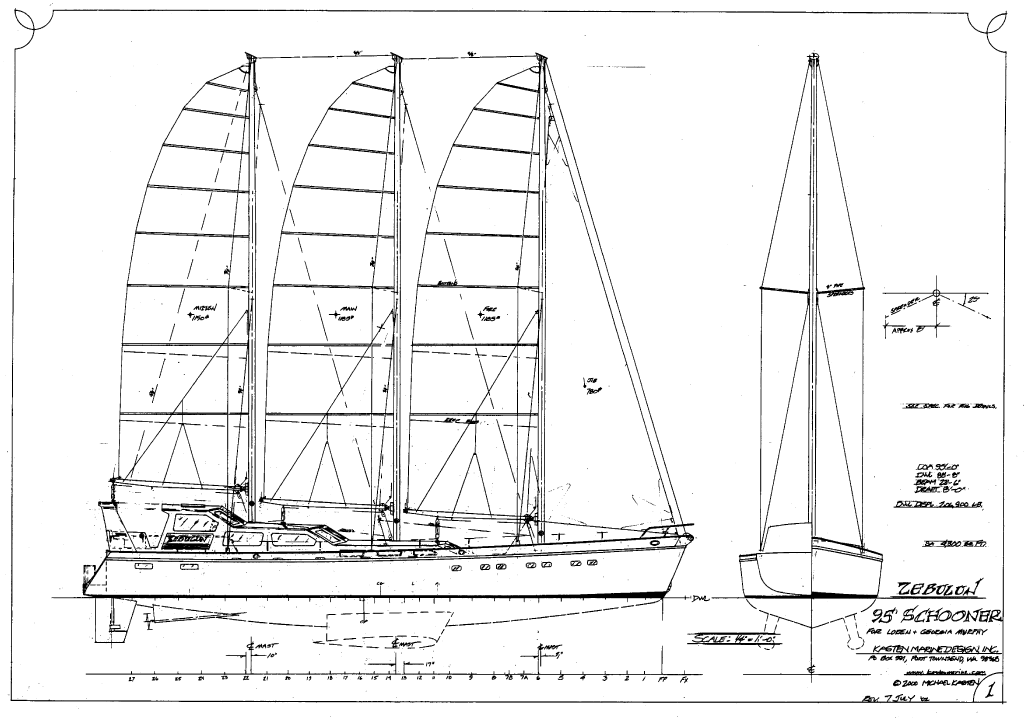
Zebulun is given a three masted schooner rig in order to make use of relatively high aspect individual sails, while keeping the rig to a conservative height overall, and individual sail sizes within manageable limits. Sails are fully battened to enable the use of a large roach and an elliptical plan form, while still allowing maximum draft control. The two forward sails are identical in size and construction, and the mizzen slightly smaller. The sails are each cut differently in terms of draft in order to take maximum advantage of their relative positions in the rig. There is one large roller furling jib on an inner forestay, and there are two other light weather stays'ls set from the respective mastheads.
Standing Rigging
The masts are each be identical in terms of their layout, with the exception of the amount of bury belowdecks, and with the exception of the height of the mizzen boom. The masts and booms are constructed of 6061 T-6 aluminum pipe. All spars are welded shut in order to be air and water tight. Halyards are external. Reefing is slab type with hydraulic winch assist.
The rig is supported by swept back spreaders, making use of a single lower shroud, and a single upper shroud per mast per side. There are running backstays at least on the Mizzen mast (other locations to be determined.) Wire is 1 x 19 type 316 stainless throughout, except for the running backstays and the jib's internal luff wire, which is 7 x 19 type 316 stainless. Turnbuckles are one size larger than the wire they serve, and are fitted with toggles. Wire terminals are poured sockets throughout.
Running Rigging & Deck Hardware
All running rigging lines are pre stretched braided Dacron line. Blocks are by Harken or equal. Halyards terminate on belaying rails at the base of each mast. Sheets are led to the cockpit area. There are two halyard winches per mast, one on each side at a convenient height. There are three sheet winches per side per side to handle the jib and stays'ls. Sheet winches are located in the cockpit area. For the boom sheets, there are Harken or equal roller bearing travelers, arranged to be at the full available width. Sheets are located within the outer 20 percent of the booms. There is a downhaul at the gooseneck of each boom. Reefing gear is provided for two reefs in each of the sails attached to the masts. Mast hardware includes Harken roller bearing luff track and cars, Harken gooseneck, Harken roller furling gear for the jib, and Harken boom hardware.
Sails
The Foresail, Mainsail, and Mizzen are fully battened. They have a large roach and are loose footed. Headboards are provided, as drawn. Sail cloth is stabilized Dacron or better. Battens are solid round or rectangular GRP extrusions, sized to suit the loads. Battens are attached at the forward end to Harken cars designed for the batten loads. The Fore, Main and Mizzen each have two reefs. The jib is roller furling. A storm jib is provided. A genoa or cruising spinnaker may be provided (to be decided). A pair of light weather stays'ls will be flown from the Main and Mizzen mastheads, set flying and attached at the deck to weather of the next forward mast.
NC Cutting
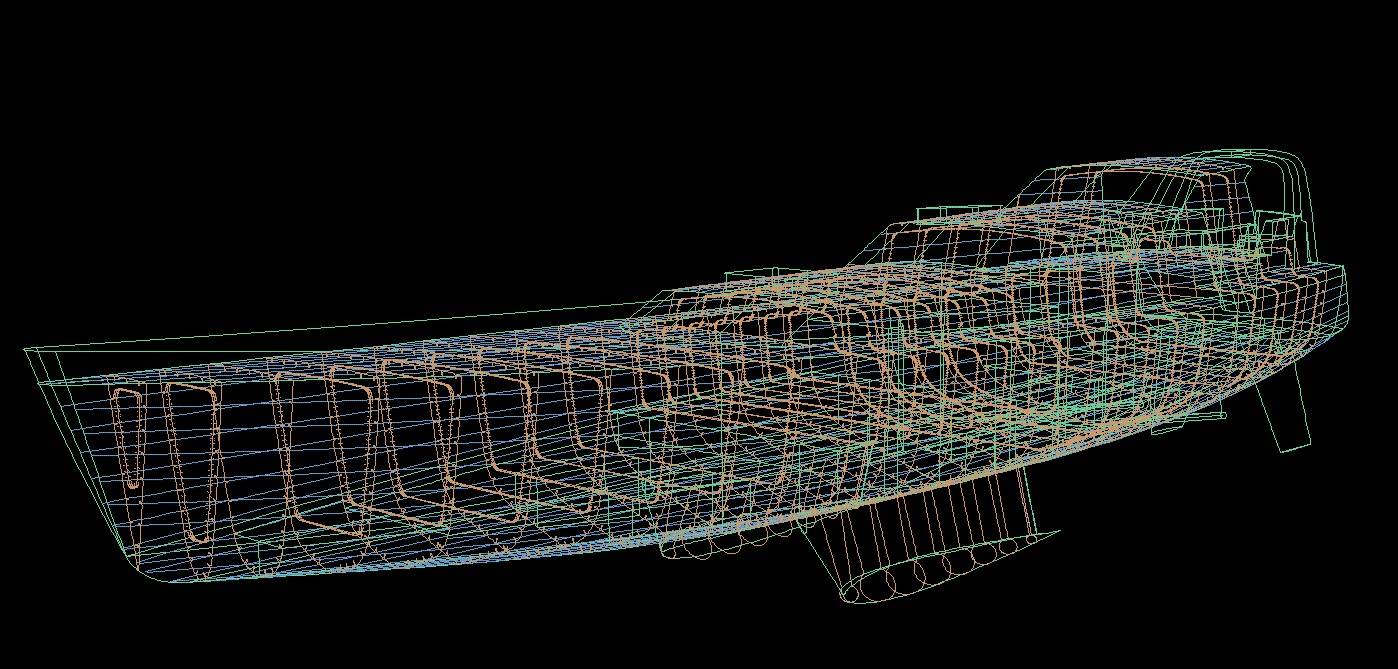
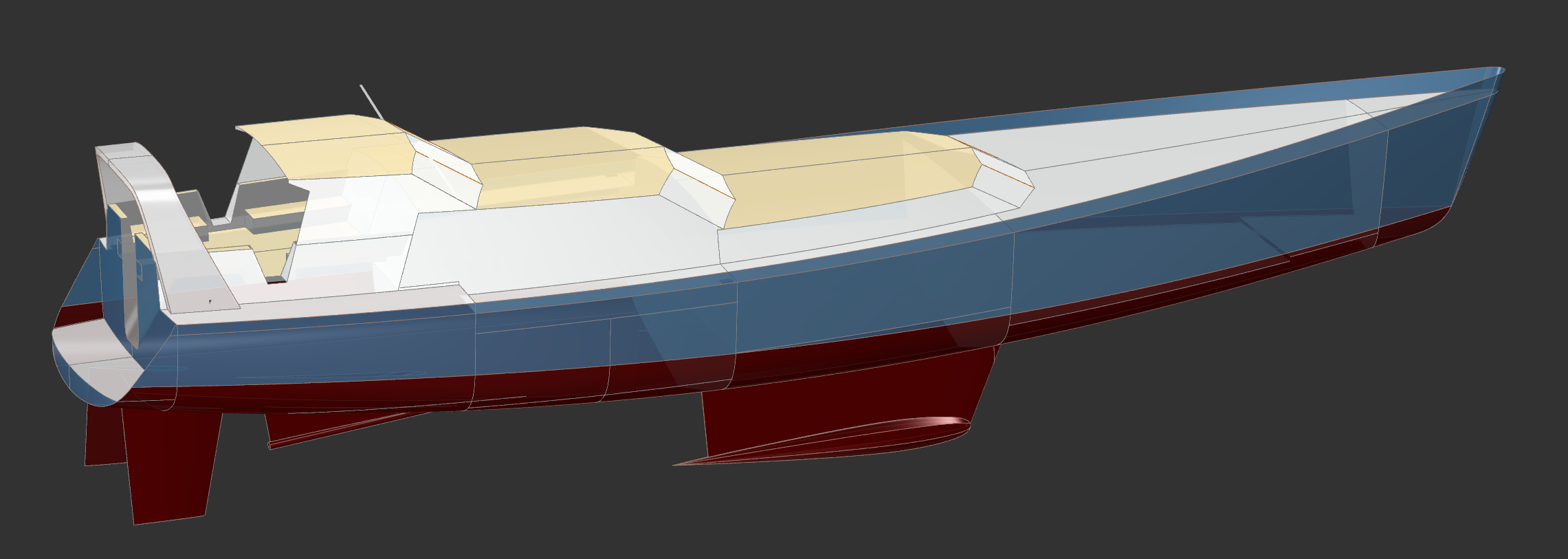
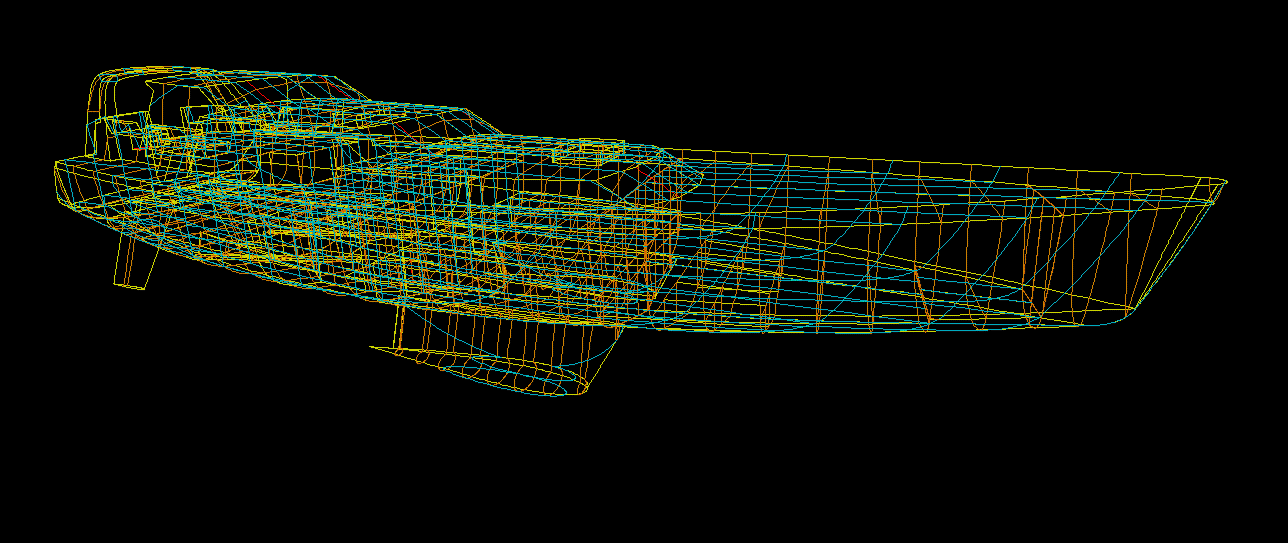
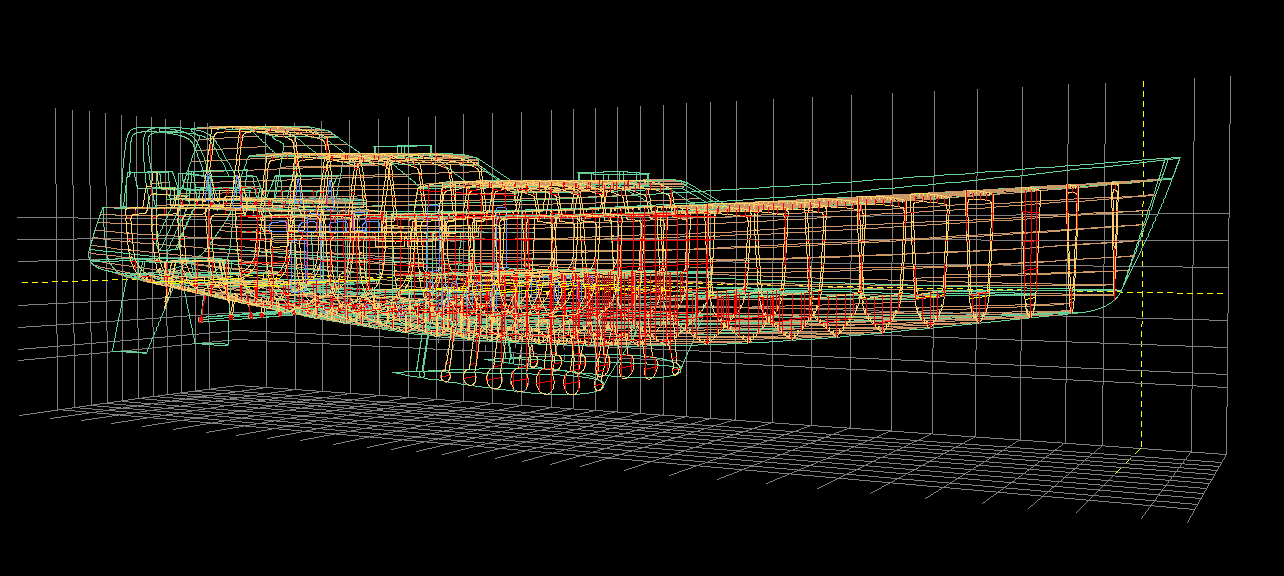
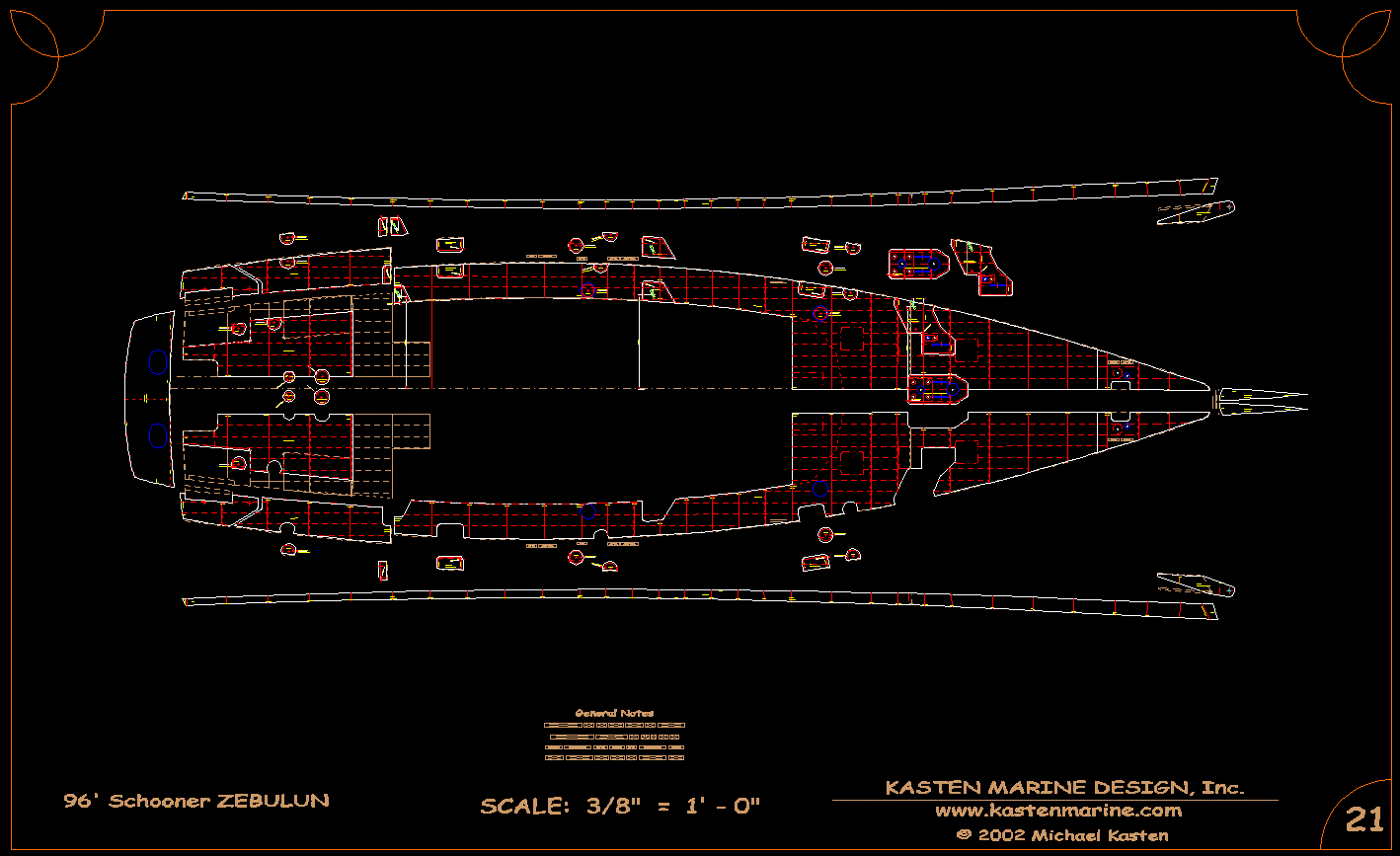
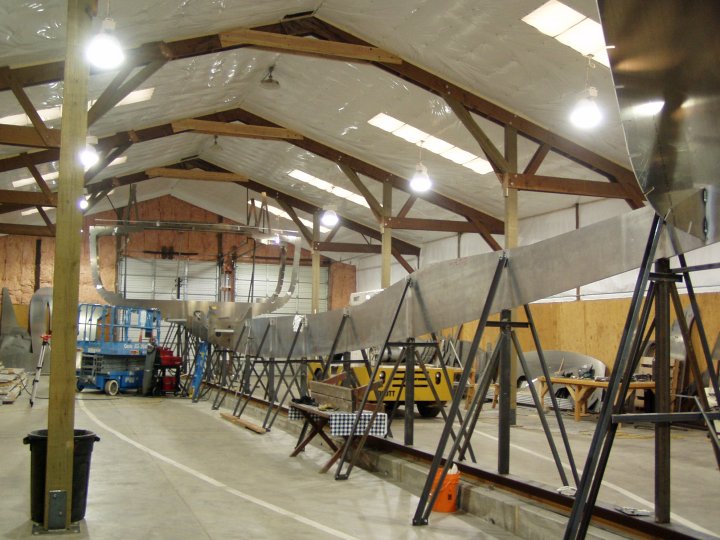
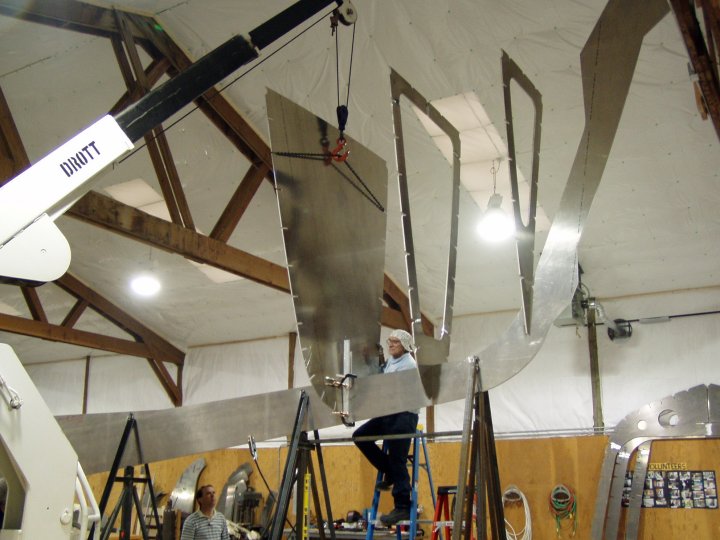
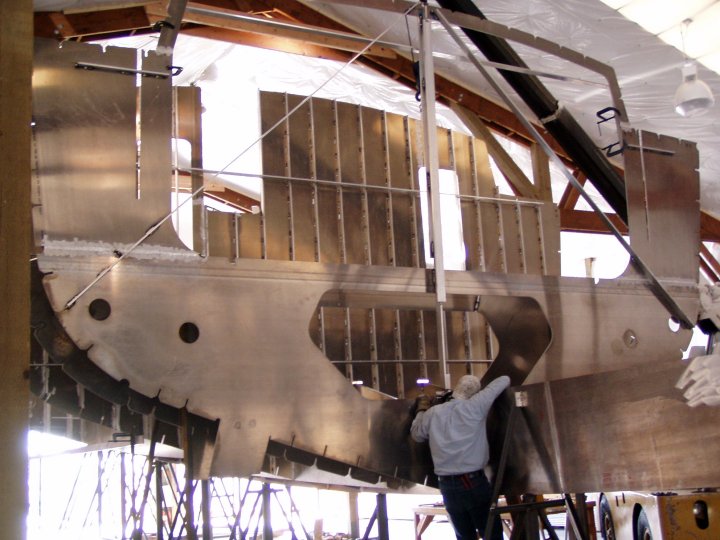
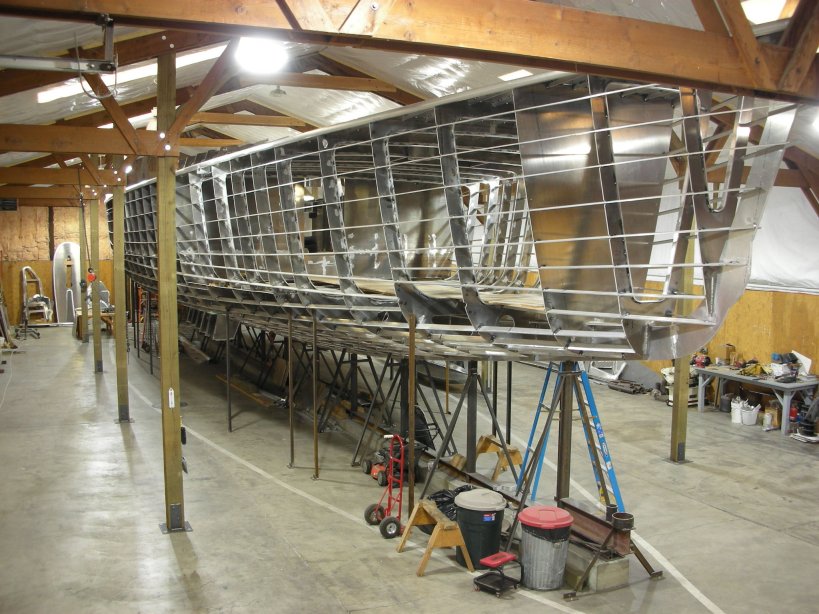
Hull and superstructure surfaces have been computer modeled and faired. For the sake of saving considerable labor during hull fabrication, the structure have been detailed for NC Cutting via our usual CAD Design Stream. Frames, girders, keelson, stem, engine beds, tank faces and tops, and all hull plating are all detailed and nested, ready for plasma or water jet cutting. All frames have limbers and long'l cutouts. All components are nested onto separate plate sizes, as required by the cutter. Images of the NC files and the resulting structure can be seen in the following links:
- Computer-generated Structure: Structure Perspective | Deck Plate Layout
- Construction Photos: Keelson Set In Place | Forward Frames | Midship Frames | Ready for Plating
In Conclusion
At 96 feet, Zebulun is an ambitious project. A delight to sail, Zebulun is also a true "passagemaker" under power. With twin ballasted keels, Zebulun is capable to windward even with relatively shoal draft, and can sit on the hard when the tide goes out. Being of all aluminum construction and unpainted except below the waterline, maintenance requirements are minimal. With generous accommodations, Zebulun will be a fine host to the many who chance to sail on her.
For more information about the Zebulun or any of our other designs, please inquire.
Other Designs in This Series:
45' - 60' Zeb | 46' Dinah | 50' Sarah | 65' Rachel | 96' Zebulun | 118' Leah | 120' Leah - II
Zebulun Links:
Sail Plan | Accommodation Plan | Deck Plan & Sections | Structural Perspective | Hull Form | Lines Perspective
Please see the AVAILABLE BOAT PLANS web page.
Home | Intro | Our Design Process | Stock Design Info | Motor Yacht Designs | Sailing Yacht Designs | Prototype Designs
Plans List | Articles | Our CAD Design Stream | Maxsurf | SITE MAP..! | Site Search | Design Team | Contact Us