Messing about in boats since 1975. Online Since 1997.
Home | Intro | Our Design Process | Stock Design Info | Motor Yacht Designs | Sailing Yacht Designs | Prototype Designs
Plans List | Articles | Our CAD Design Stream | Maxsurf | SITE MAP..! | Site Search | Design Team | Contact Us
Please see the AVAILABLE BOAT PLANS web page
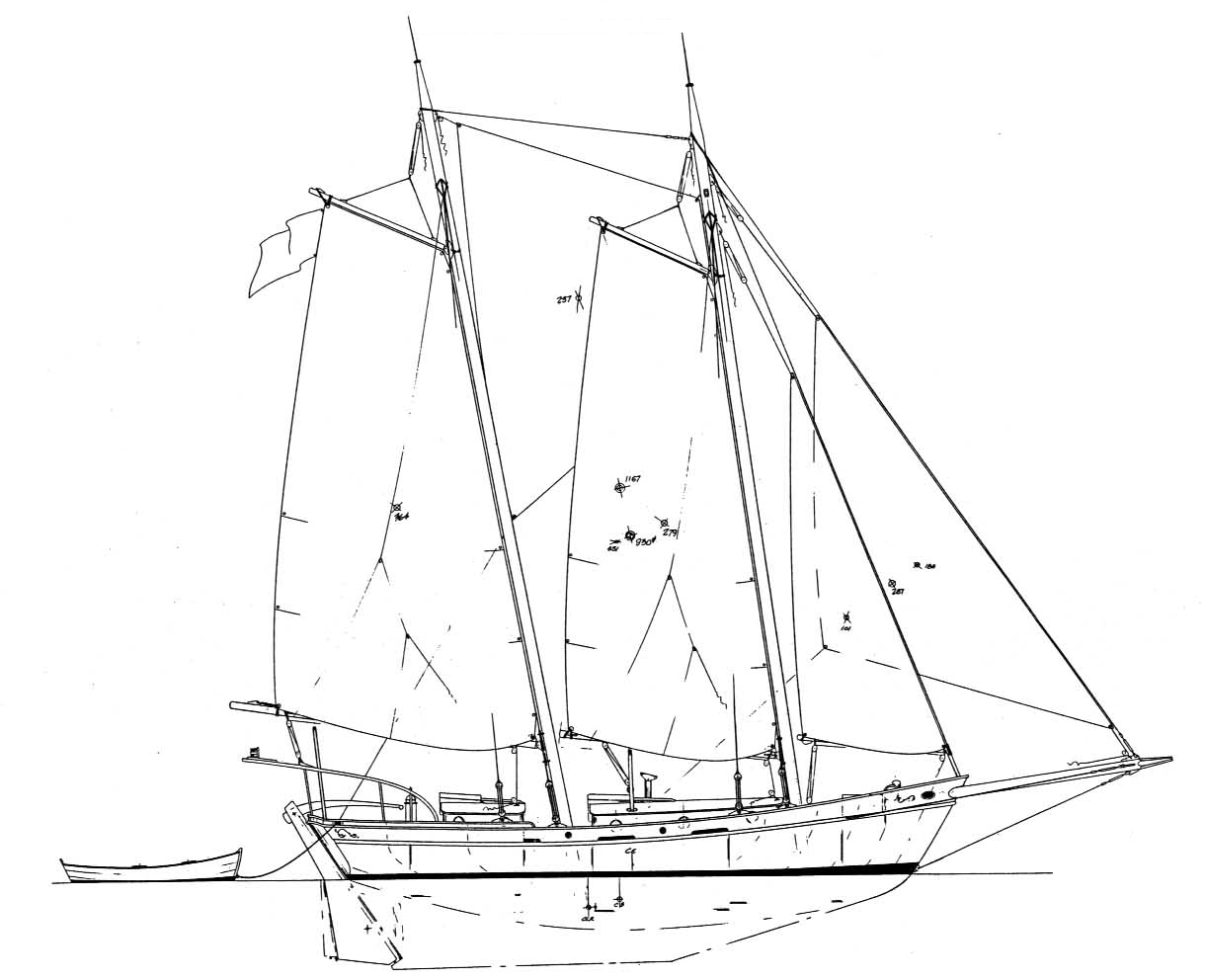
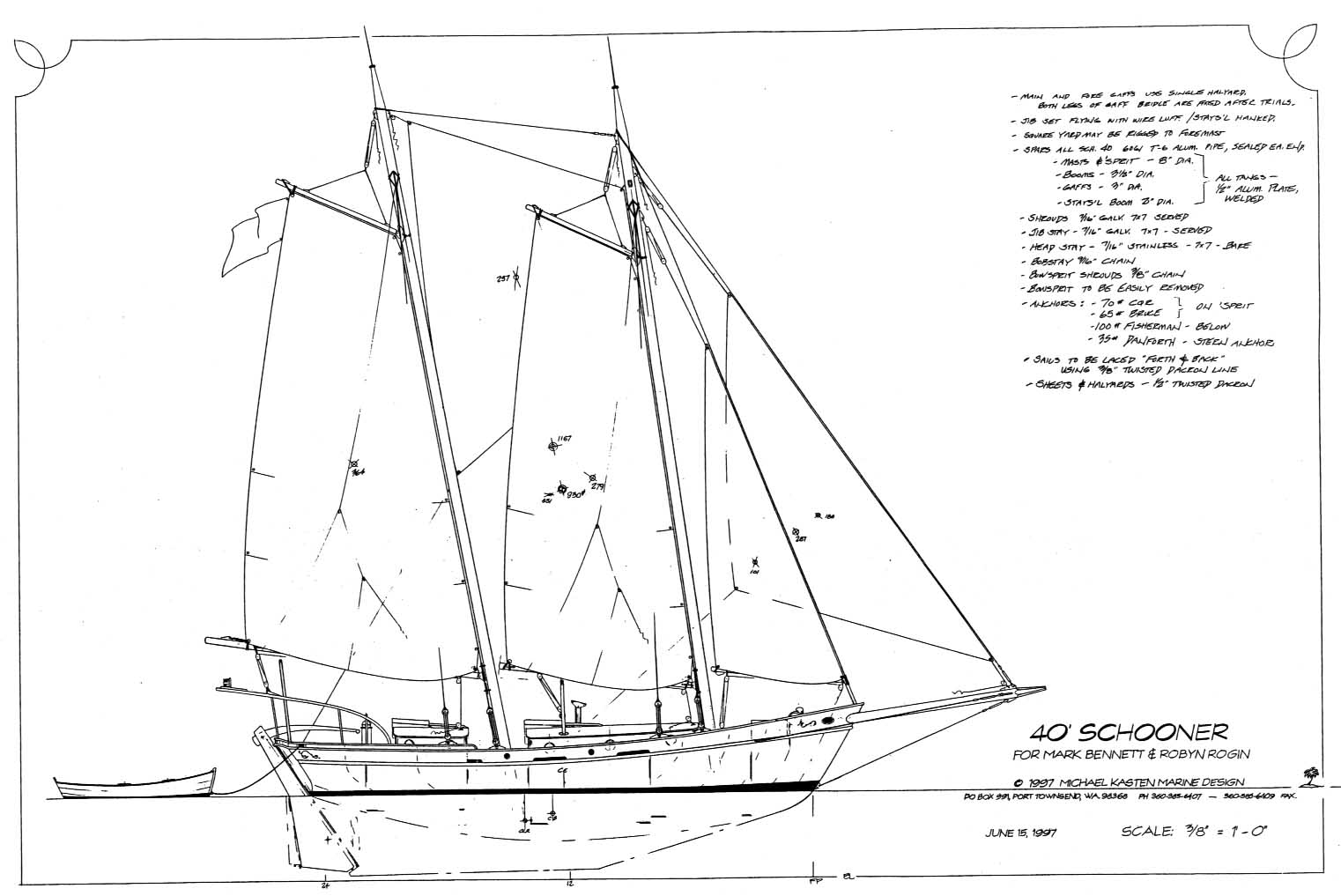
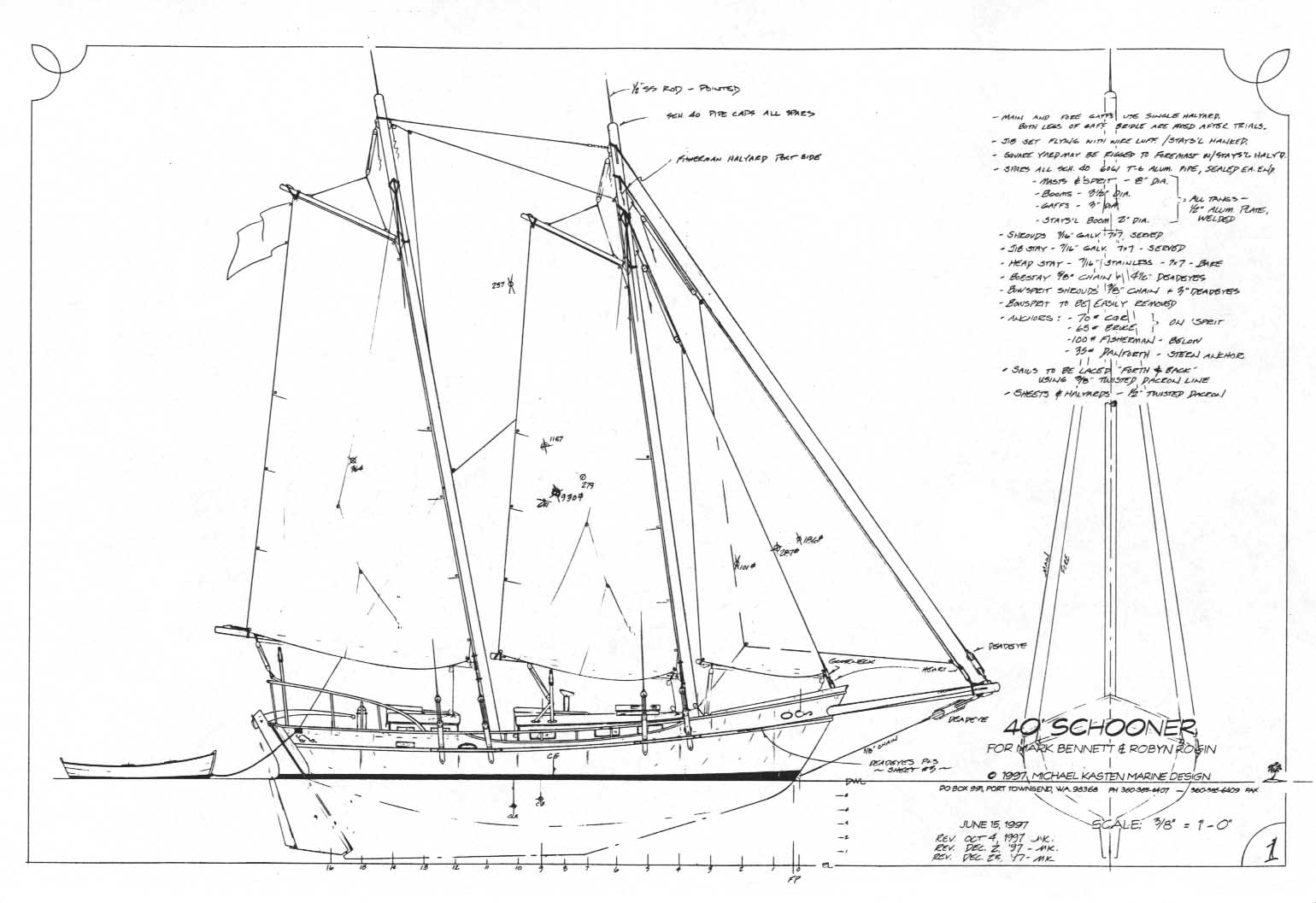
The 40' Schooner "BENROGIN"
Perspective Forward | Perspective Aft
Steel Deck Version: Sail Plan | Interior
Teak Deck Version: Sail Plan | Interior
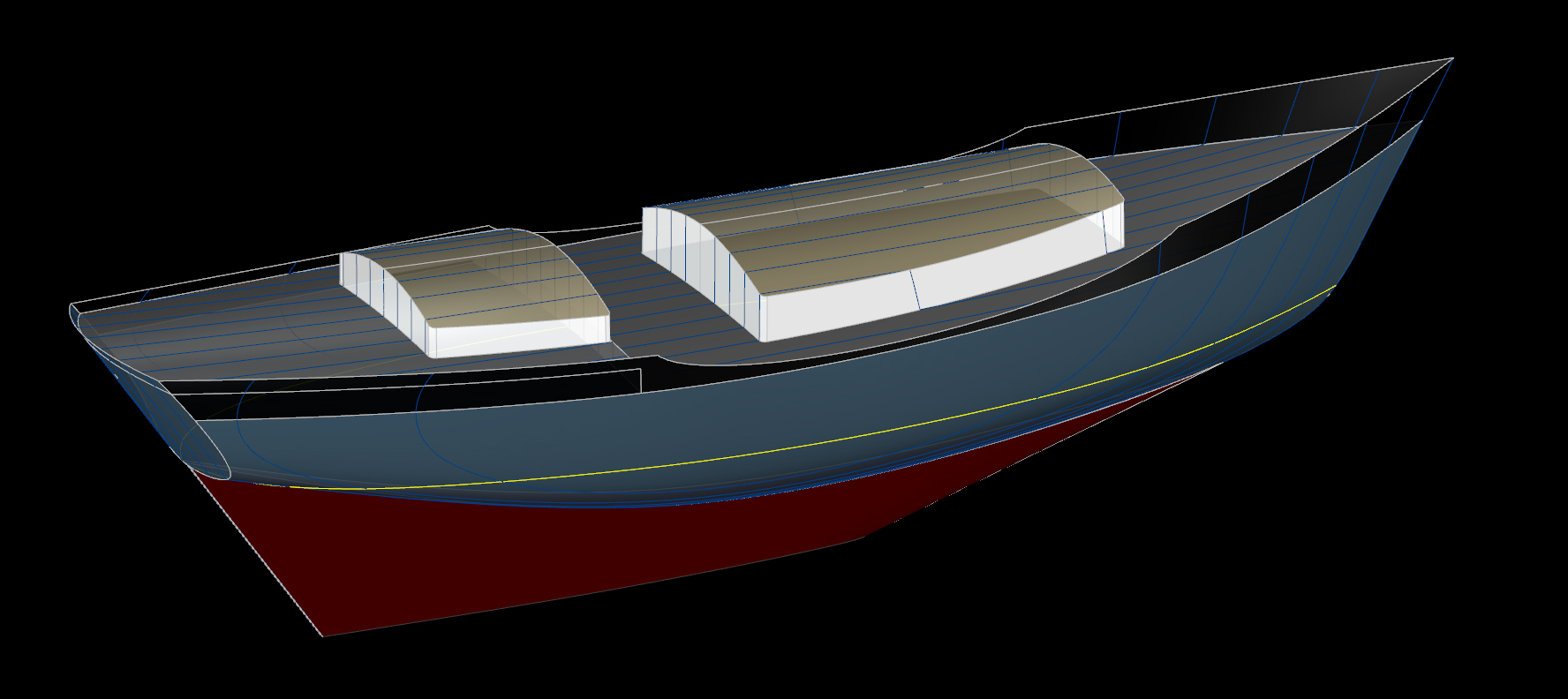
Hull Form
This vessel was inspired by a combination of other designs. The rig came from Redpath, the general hull form was a rounded steel hull prototype I had developed, but with a counter stern. In this case, the choice was made to pursue a transom hung rudder for the ease of using a steering vane.
One requirement was that the hull be easy to plate. This was made possible by using a shape that can be plated with flat plate for approximately 85 to 90 percent of the surface. The remaining plate at the turn of the bilge would be rolled to fit. This is not to be confused with a "radius chine" hull type. Benrogin is instead a true rounded hull. In my view, the result is far more appealing, and it is no more trouble to build. The plates are arranged to have "joggled seams." Each plate has a "jog" pressed into its lower edge all along, so that it may overlap the plate below, and the plating may lie flush on the frames throughout. This gives considerable grace for fit-up, and being lined off nicely, looks just right.
Two versions were developed, both having a secure cockpit, tiller steering, and an all steel hull. The first version has an all steel deck and deck houses. The second version has all teak decks and houses for the best combination of ultimate luxury and comfort on deck with ultimate strength of hull.
Displacement: 35,610 lb
Draft: 5.65 ft
WL Length: 35 ft
WL Beam: 11.6 ft
Length on Deck: 40 ft
Beam on Deck: 12.38 ft
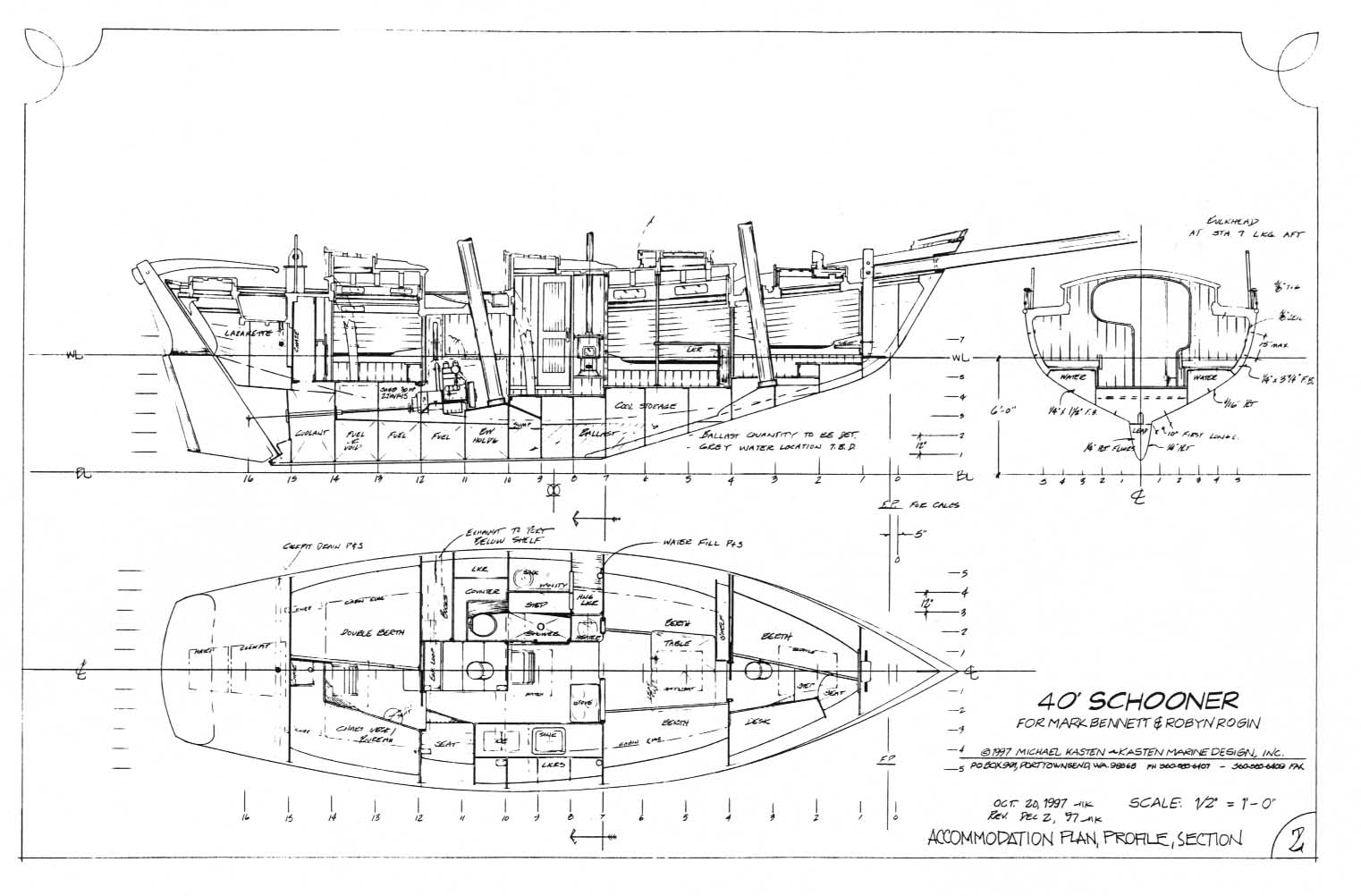
Interior
The interior went through a few changes from one version to the other. The essence of the change between them is that the guest berth was moved from the 'midship site in the steel deck version, to the fo'c's'l in order to create a separate, more spacious and private guest suite. This moved the galley and the saloon aft some, making the galley a bit smaller, and the saloon a bit larger.
Power
The engine originally specified was the SABB 30 horse two cylinder diesel, with a controllable pitch propeller. Since Sabb no longer makes diesel engines the best alternate is probably the 40hp Lister diesel, which is sold by Sabb together with the Sabb HVP-45 gear and CP propeller.
Rig
Being a schooner, so able to spread plenty of sail area, performance will be sufficient to do without big light weather sails. The fisherman tops'l, though a light weather sail, is a real work horse. The fisherman is easy to handle, and since it is up in the wind, it can do some real good!
The rake of the masts is quite intentional. It keeps the booms out of the water when sailing off the wind, and makes lowering sail very easy. Also, the fore masthead is above the cabin top for loading a tender there. The sail is laced to the mast, using a "forth and back" lacing line. With that, there is no need for track, and the sail never binds. Loose footed sails permit more sail area, and avoid any side load on the booms, allowing them to be lighter and easier to handle.
The spars are all aluminum pipe. When painted, most people will see them as being wooden spars. The aluminum pipe is considerably stronger than wood, and is the same weight. The fittings are fully welded in place, so overall cost is less to build, this combination being very quick to fabricate. The aluminum spars will last longer and require less maintenance than any other spar material.
A steering vane is not really a requirement, since the boat will self steer very capably via a sheet-to-tiller arrangement, making use of the forestays'l boom, a few blocks, some line, a bungee cord, and the tiller. Skeptics may not believe that this works, but... it definitely does!
What's the Ideal Sailing Rig...?
Please see the AVAILABLE BOAT PLANS web page.
Home | Intro | Our Design Process | Stock Design Info | Motor Yacht Designs | Sailing Yacht Designs | Prototype Designs
Plans List | Articles | Our CAD Design Stream | Maxsurf | SITE MAP..! | Site Search | Design Team | Contact Us