Messing about in boats since 1975. Online Since 1997.
Home | Intro | Our Design Process | Stock Design Info | Motor Yacht Designs | Sailing Yacht Designs | Prototype Designs
Plans List | Articles | Our CAD Design Stream | Maxsurf | SITE MAP..! | Site Search | Design Team | Contact Us
Please see the AVAILABLE BOAT PLANS web page
The 48' Schooner, JASMINE
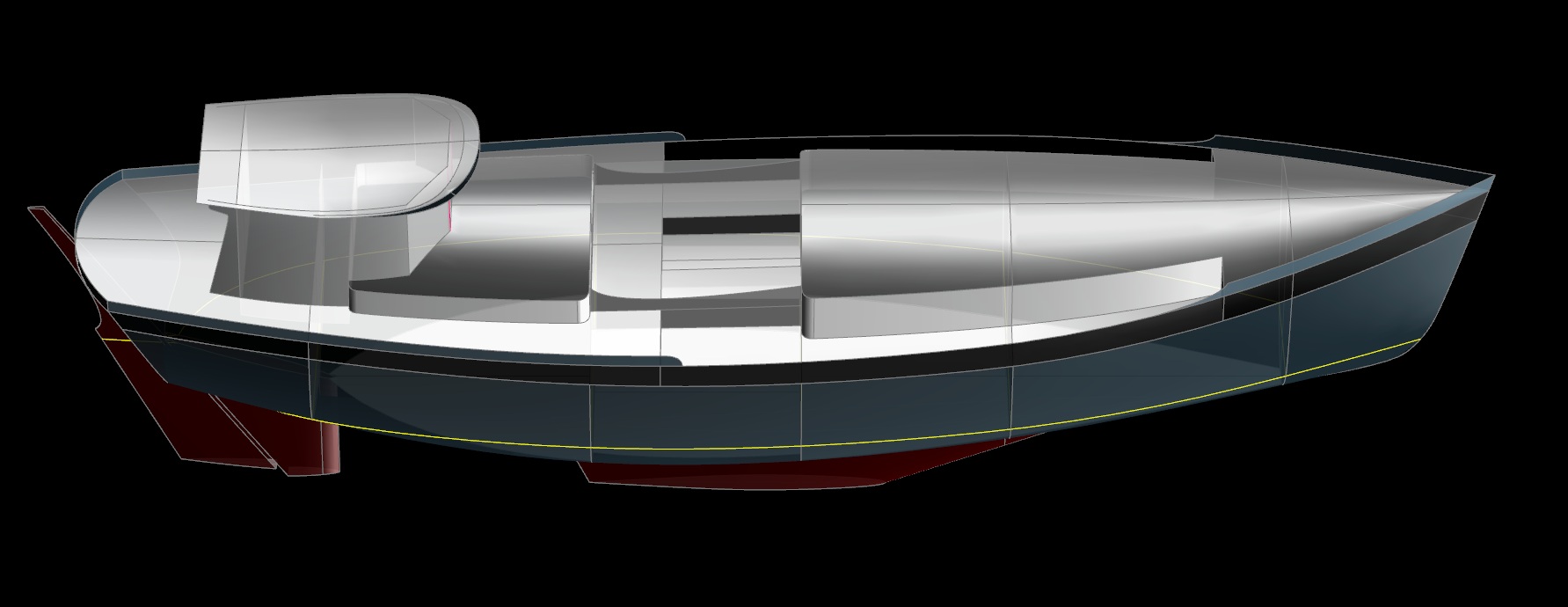
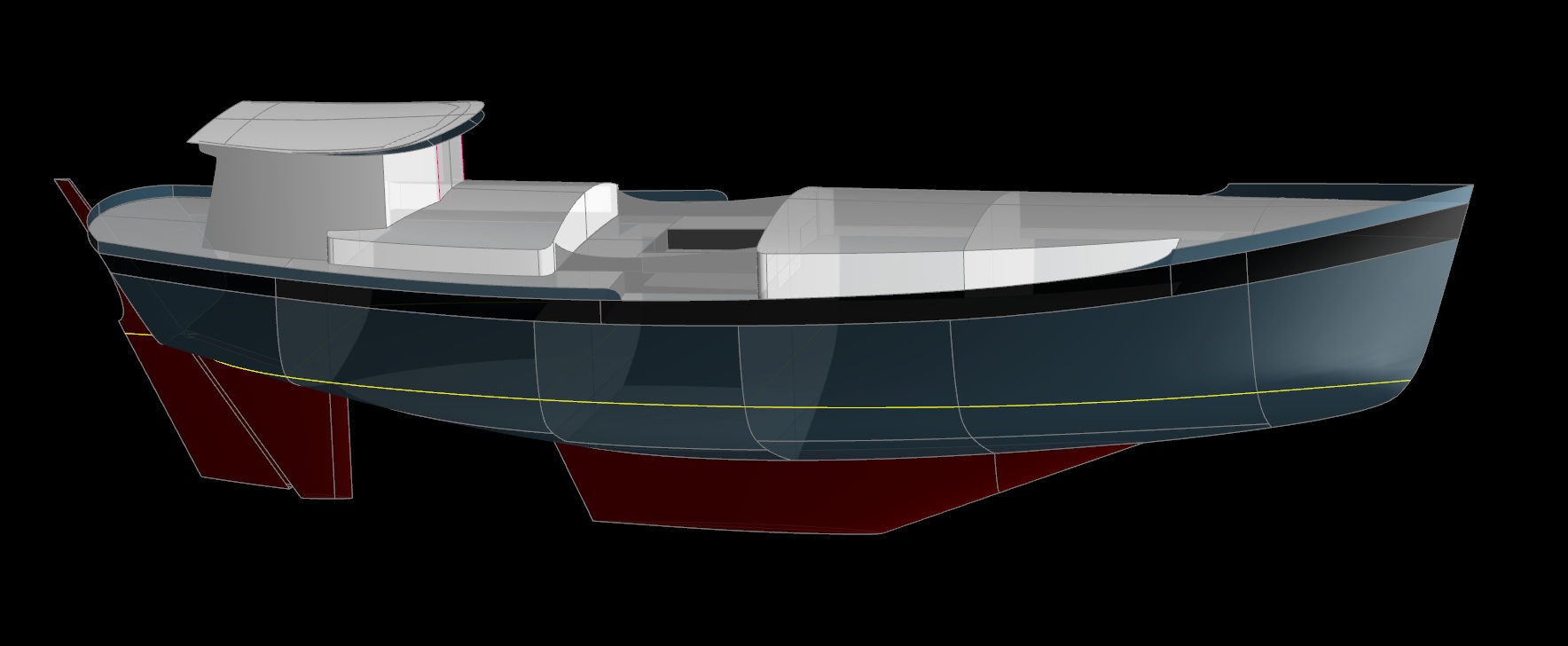
Perspective Aft | Perspective Forward | Deck & House Perspective
Larger Sail Plan | Deck Layout | Interior Profile | Interior Plan
Copyright 2006 - 2010 Michael Kasten
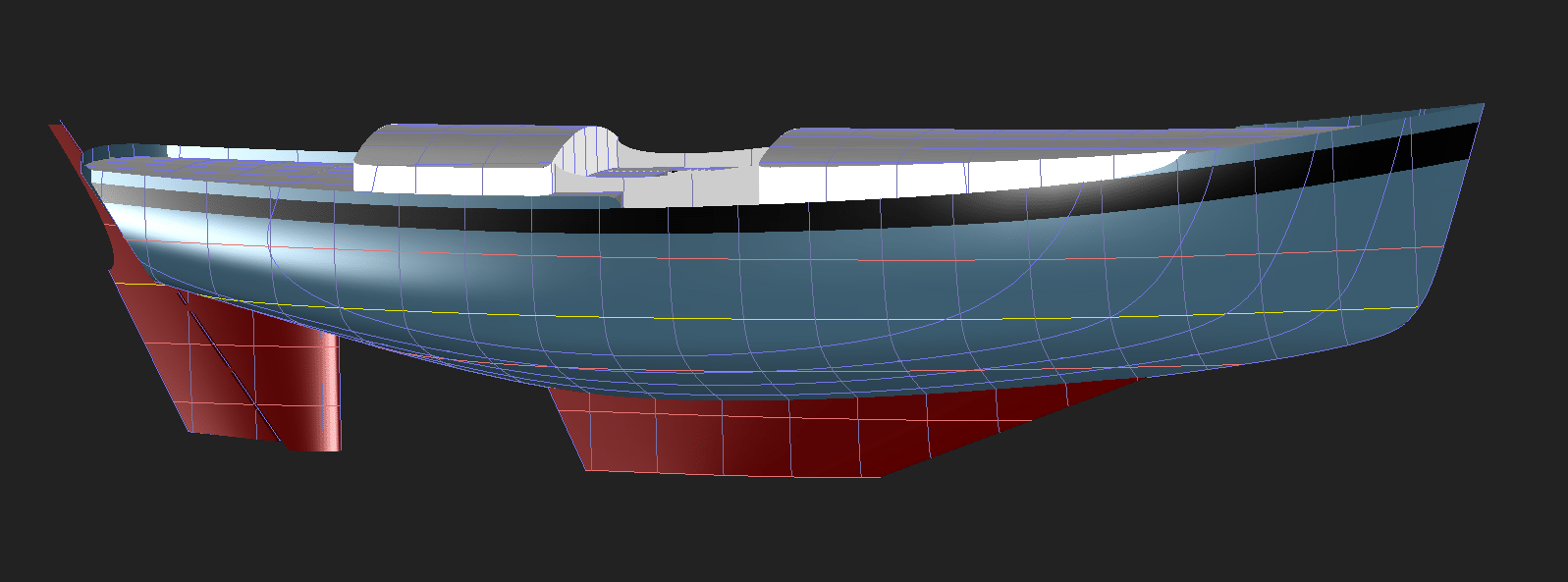
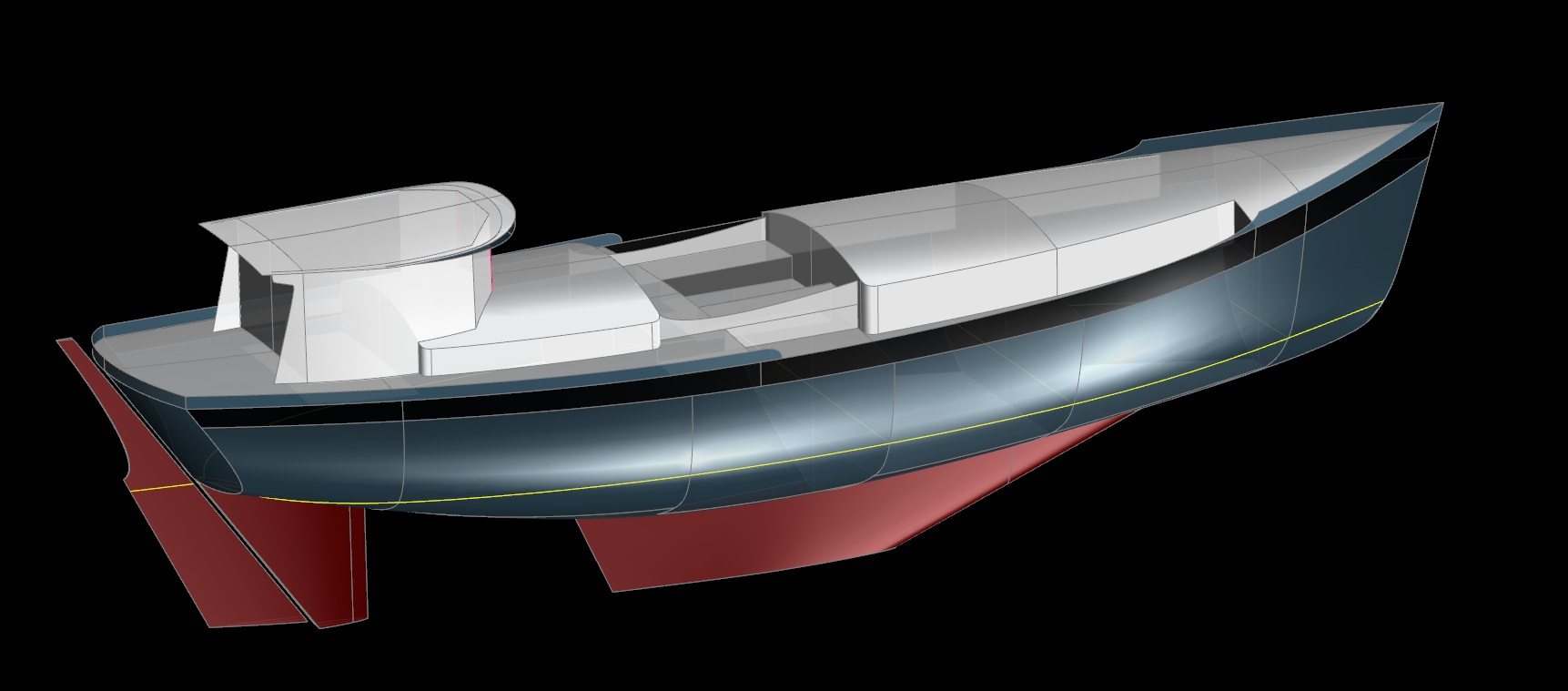
The 48' aluminum schooner Jasmine is a fine example of combining classic form with modern thinking in terms of materials and in terms of propulsion. This is a motor sailor in the purest sense of the term. In other words, Jasmine is designed to be equally capable as a sailing vessel or as a motor vessel, and to do so in style! Please have a look at the Perspective Aft and the Perspective Forward, and I think you will agree.
The propulsion and structure involve modern thinking for several reasons:
- Use of all aluminum construction,
- Use of a medium to high aspect Junk Schooner Rig,
- Completely free standing, un-stayed masts, and
- Electric Drive...!
I will describe a number of the unique features of this vessel below.
Particulars
The dimensions of the schooner Jasmine are:
- 48' - 3" Hull Length including bulwark and rub rails
- 47' - 6" Moulded Length On Deck
- 13' - 5" Moulded Beam
- 42' - 7" Approximate WL Length in the Half Load condition
- 6' - 1" Approximate Draft
- 49,900 lb Displacement in the average Load condition
The Structure
I have referred to the materials of construction as being modern because the entire vessel will be built in aluminum, including the free standing masts and the upper and lower yards.
It takes a while to actually let that concept sink in... Yes, with free standing masts there is no rigging and there are no chain plates. This dramatically simplifies the rig, and almost entirely eliminates chafe. The cost...? Slightly greater weight in the spars. The benefit...? Zero standing rigging, therefore zero maintenance of it!
The intent is that the exterior of this vessel will not be painted, except below the waterline, and at the boot stripe. With a fine-grit sandblasted surface elsewhere, the exterior will look like it has been painted a flat light gray. In the long run, this will weather to a uniform soft gray, and the surfaces above the boot stripe will require zero maintenance.
The Layout Above & Below
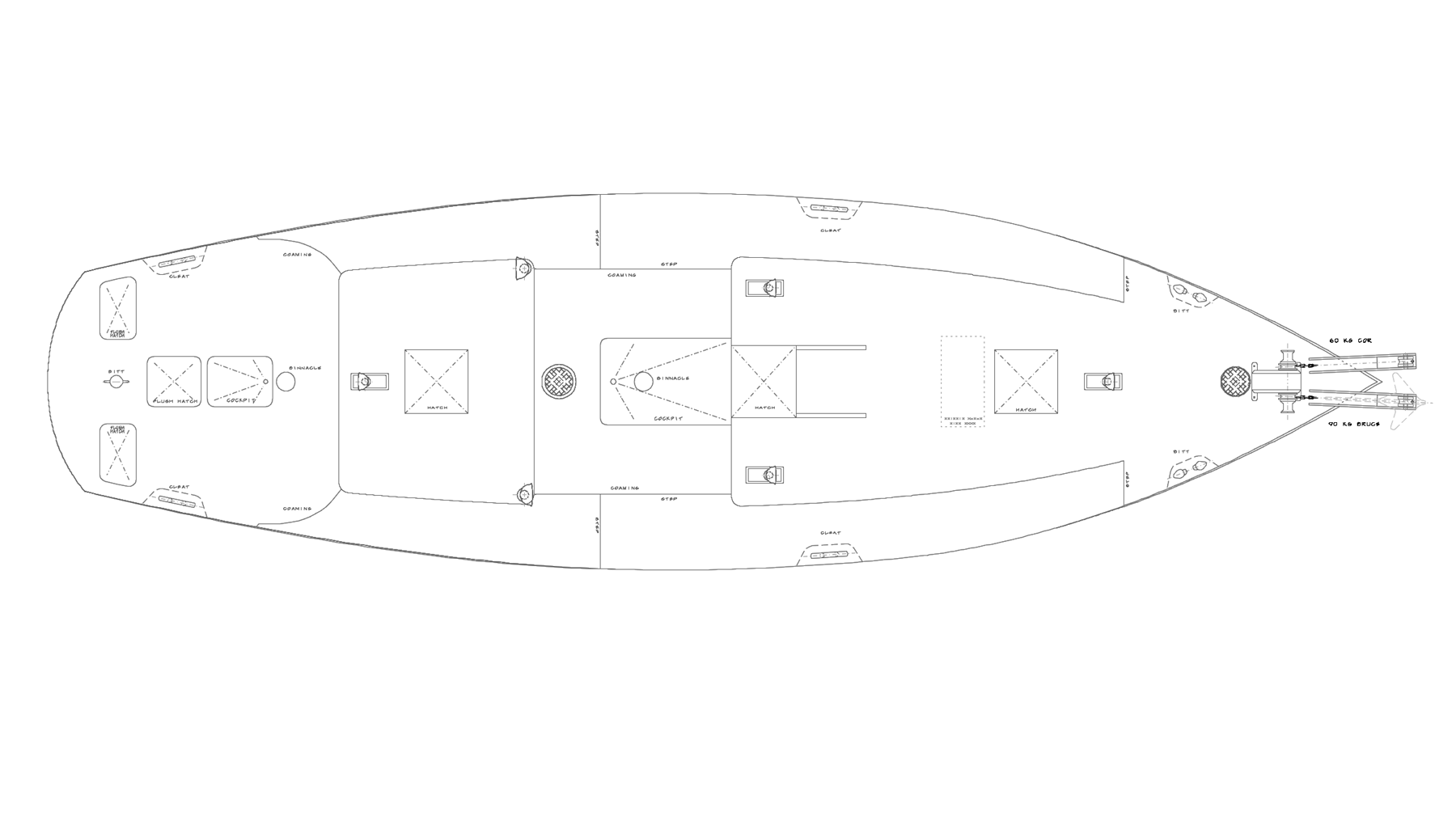
The Deck Layout is very straightforward. The cabins are kept low intentionally, in order to keep windage to a minimum.
A cockpit is located aft, with a binnacle placed on the bridge deck just aft of the aft cabin. This is the primary steering station, from which all sails are clearly visible. A tiller is mounted directly to a transom-hung rudder. The aft deck is intentionally kept as un-cluttered as possible. All hatches are flush to the deck and water-tight. This allows complete freedom for placement of deck chairs or sleeping / sunbathing mats, etc.
A second cockpit is located amidships. The seats that flank the midship cockpit are generously sized for comfortable sleeping or lounging on deck as well. An optional second steering station is located here. From this midship cockpit, one can go below via the companionway.
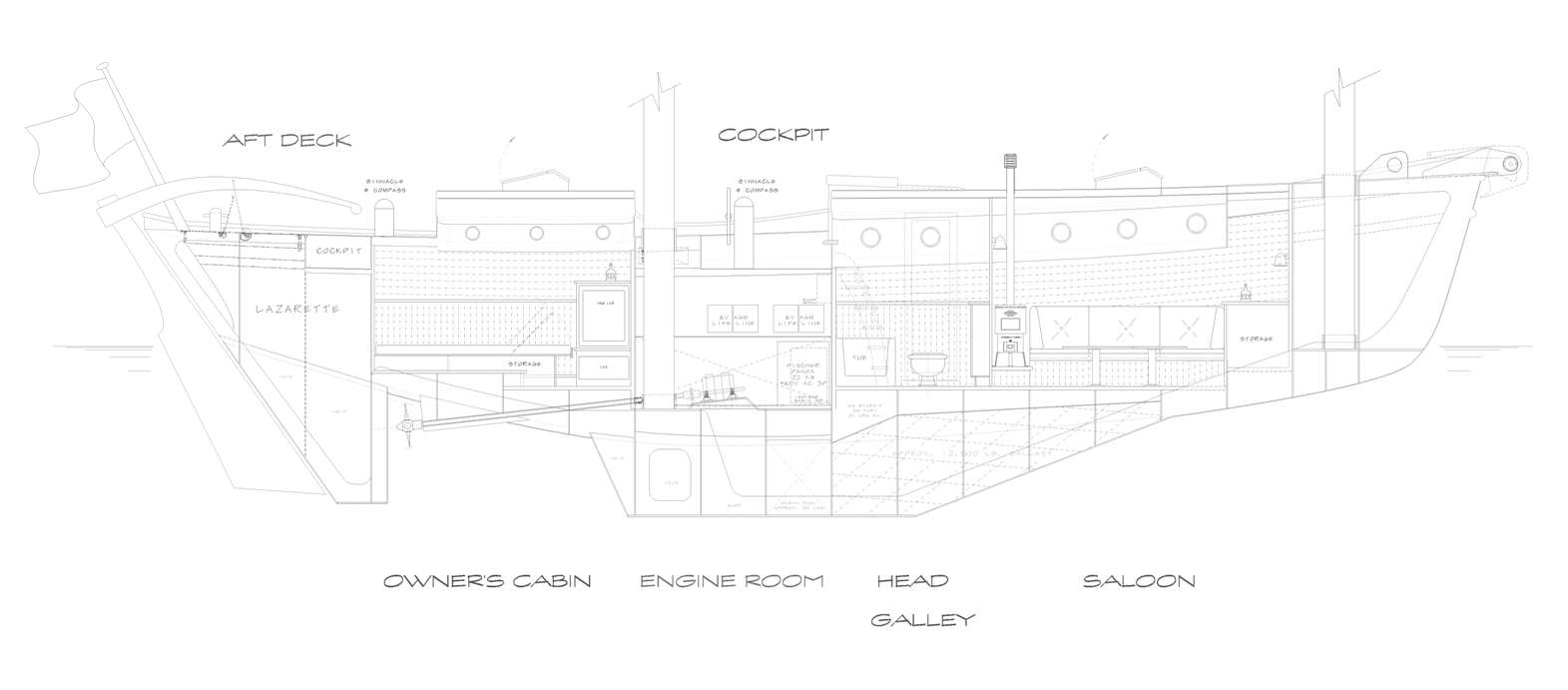
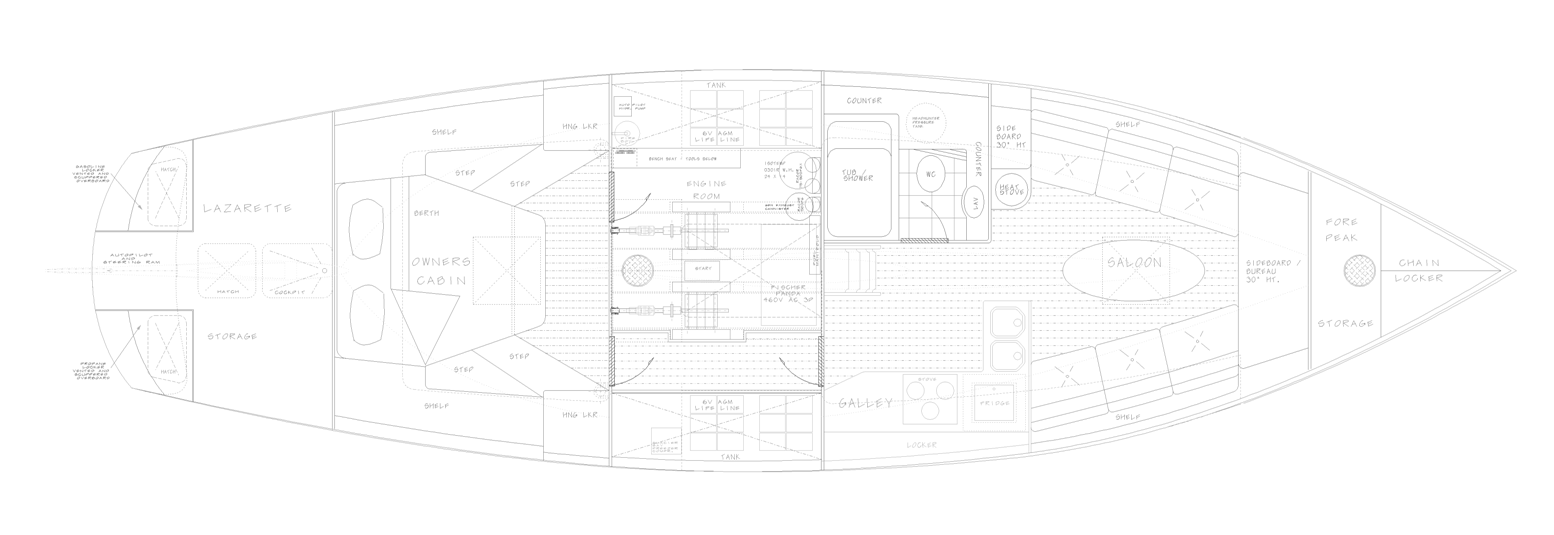
Below, as can be seen in the Interior Profile and Interior Plan views, there is first a very ample head compartment to port which includes even a bath tub! To starb'd of that is a large galley. Forward of these spaces is a full sized saloon, complete with heat stove and coffee table. Also, there is a large bureau right forward that spans the width of the forward end of the cabin. This is the perfect spot for a stereo, or books, or entertainment center, or maybe just to accommodate a bar service.
If, after descending the companionway ladder, one were to instead swing around to starb'd, a passageway is found which leads aft to the owner's stateroom. The aft cabin is generously sized and contains a large island-style berth on center, two hanging lockers outboard, and a long shelf / cabinet that extends full length on both sides. Very roomy indeed!
Within the stateroom, forward and to port is the entrance to the engine / motor room. In the motor room are the twin electric motors, generator, batteries, diesel tanks, and whatever else makes noise or generates heat.
There has been no attempt to crowd in more accommodations such as another stateroom, which on a vessel of this size is often very tempting. Instead, guests can be accommodated in the saloon by the simple expedient of placing a curtain forward of the galley. The result is that in all, this is a very un-crowded layout. It is an interior which will be a joy to inhabit.
The Rig
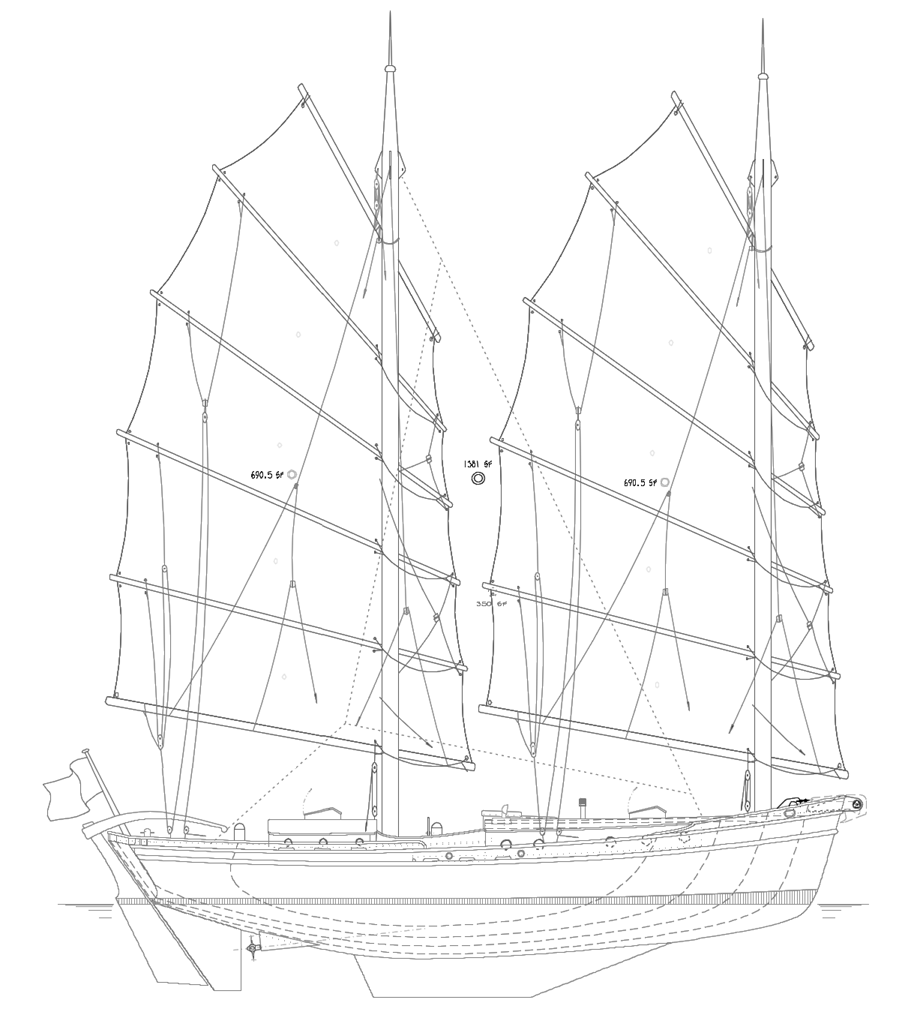
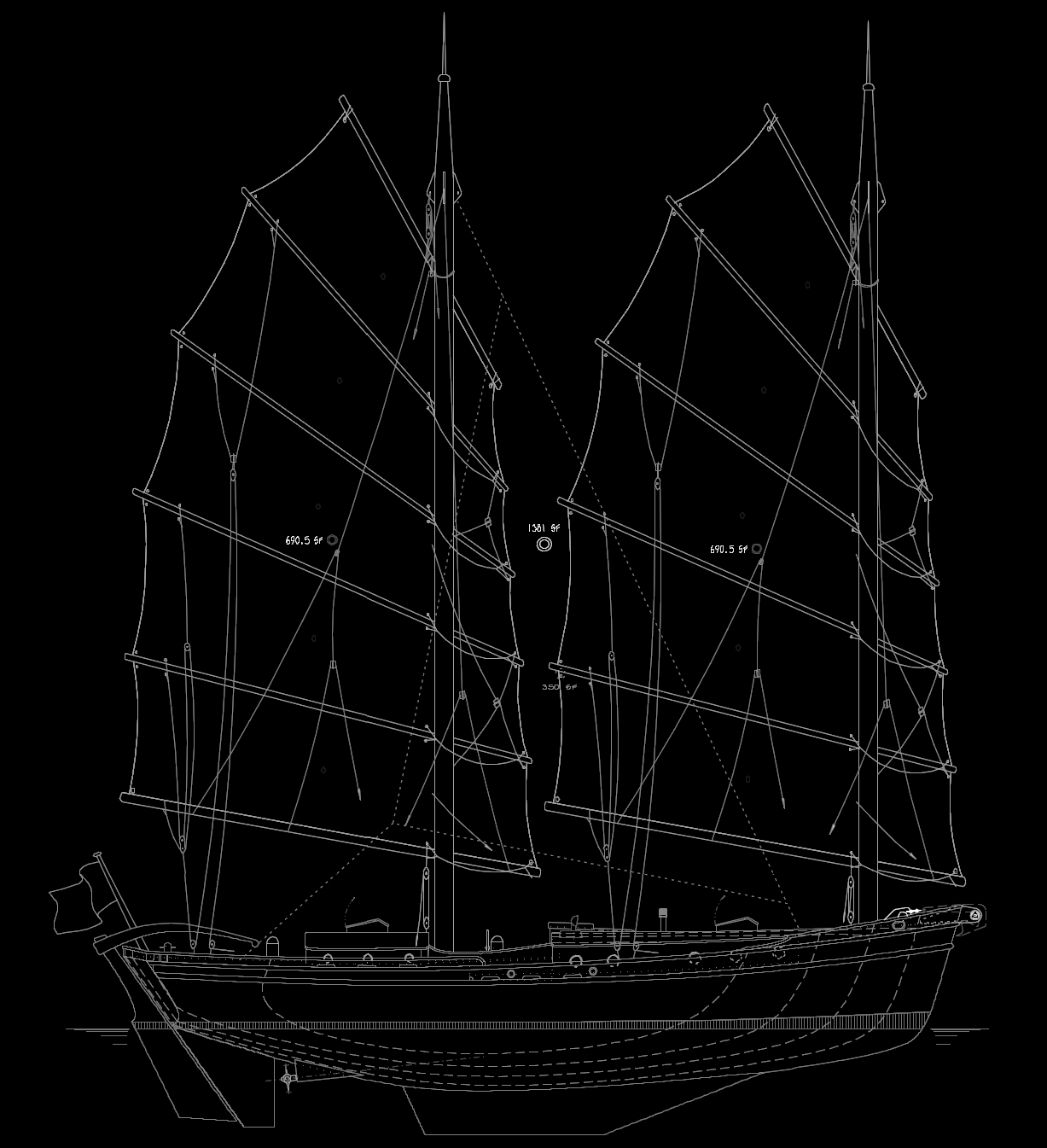
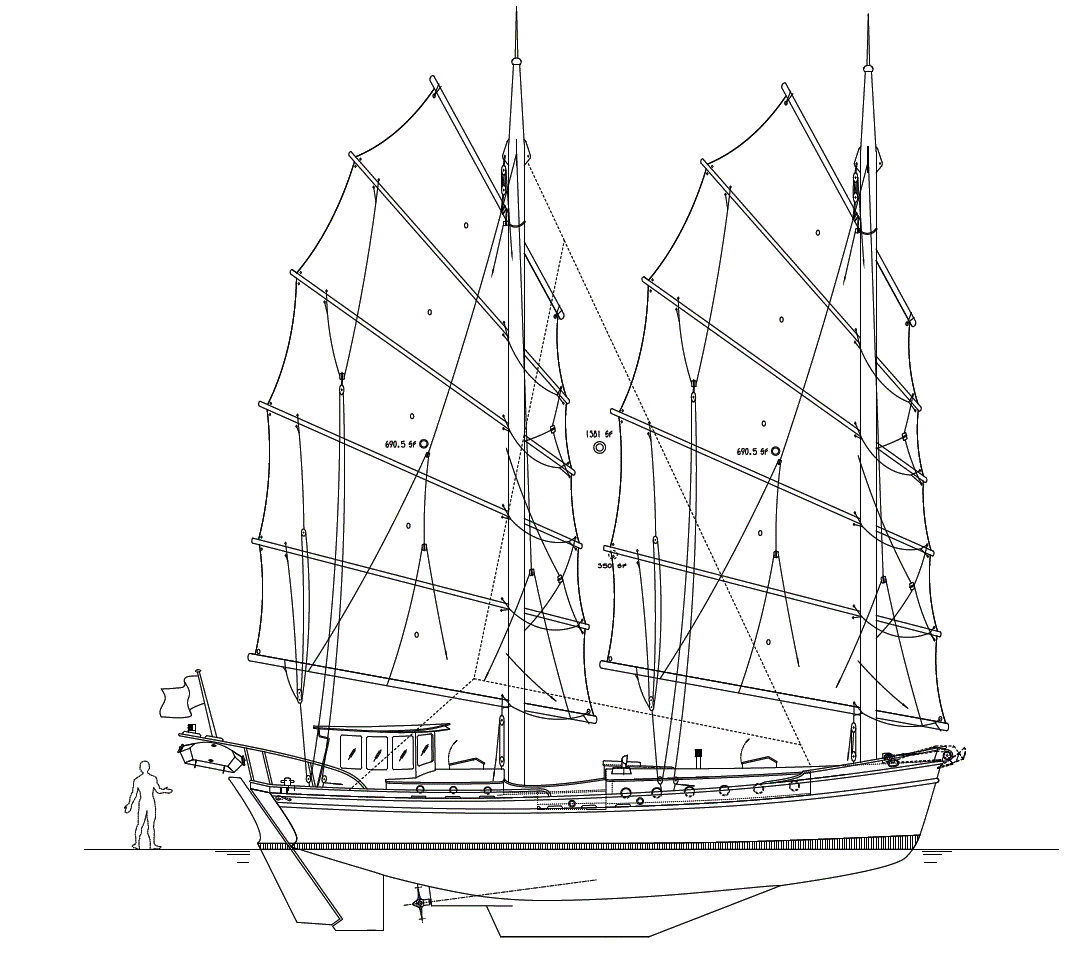
As can be seen in the Larger Sail Plan image, we have used a medium to high aspect modern junk schooner rig in order to maximize sailing performance. Both fore and main sails are geometrically exactly the same. The junk sails are cut flat, and span between top yard and boom. There are four intermediate battens as well, which lend excellent support to the sail. A brief list of some key advantages of this rig are;
- The battens prevent flutter at the luff and leech
- The weight and stiffness of the battens make reefing extremely easy, panel by panel
- The battens - and the whole sail - extend forward of the masts, helping to counter-balance the sail in the event of a gybe
- The boom, and each batten, are controlled by "sheetlets" that are set forward of the leech, thus the forces on the sail are extremely well distributed.
- Being cut flat, there is relatively less heeling force generated per given wind pressure
And the disadvantages...? There are not many. Windward performance is generally considered to be on par with other rigs of similar aspect ratio and hull form. Performance on other points of sail is often better, a side-benefit of the rig being so easy to handle.
The rig is heavier than a standard gaff or Bermuda rig of the same sail area (but not by much). The sails are heavier, and that is one of the reasons they are so easily reefed, but they require a greater mechanical advantage to raise. Given that raising sail is an act performed in favorable conditions, and reefing typically is not... in my view this rig definitely has its priorities straight!
More can be read about the advantages of the Chinese junk rig by following the links provided below.
Electrics & Propulsion
We have provided very ample power for motoring via a 16kw permanent magnet 144v DC electric motor made by Electric Marine Propulsion. The motor and the electrical system are designed and supplied by Electric Marine Propulsion. The EMP motor we've chosen has the ability to re-charge the battery bank while sailing driven by the propeller, much like a hybrid automobile which re-charges while braking or coasting down hill.
For intensive periods spent motoring, a 22kw permanent magnet 144v DC generator provides power to the 144v DC propulsion battery bank. The rationale for use of a DC generator is that the propulsion and house electrical loads can be served easily by a variable speed generator. In other words, the generator need not scream along at full speed when the loads are light. Instead, the generator can adapt its speed to the load being demanded. The benefit is that the diesel is always fully loaded. We have provided sufficient diesel fuel for long range motoring, or virtually unlimited range while motor sailing (in combination with re-gen).
For shore power, a large 144v DC battery charger / isolation transformer (an EMP component) is able to receive 50hz or 60 Hz, and 110v or 240v AC current. The advantage of this arrangement is that there need be only one shore power inlet, which is completely shore power agnostic with regard to frequency and voltage - in other words, able to plug in anywhere in the world.
House 12v DC demands are provided via the 12v DC house battery bank. The house batteries are charged by solar panels, and also via a cross charger from the 144v DC battery bank and / or 144c DC generator. House AC demands are provided by an inverter that creates 60hz 110v AC from the 12v DC house bank.
A benefit of this approach is that there is no connection whatever between the shore side AC power and the onboard AC system, nor to the onboard DC system. In other words, shore power (110v to 240v AC) is converted to 144v DC in order to charge the batteries. A cross-charger also provides charging to the 12v DC house bank. Power from the 12v DC house bank then provides onboard AC power via an inverter.
While away from shore power the 144v DC charger is energized by either the generator, or by re-gen from the propeller and electric motor. The 12v DC cross charger is energized either by solar panels, or by the 144v DC side. All the electrical components required to interface to shore power and to the generator are designed by and directly supplied by Electric Marine Propulsion all the way from the breaker panels to the electric motors.
Another powering option would be to make use of the excellent ELCO electric motors, which also run on DC current and would have all of the above advantages. ELCO has made electric drive systems since the late 1800's. They offer a variety of motors at various different power ratings, with the mid-range of motors using 72v DC. Here again a DC generator would be used for battery charging, and for directly energizing the electric motor(s).
Quite excellent DC generators are made by POLAR POWER from 3 kW to 8 kW in a variety of voltages. Of special interest is that POLAR additionally incorporates a heat pump with the DC generator, which can produce 28k BTU of air conditioning, or 30k BTU of heat. Called their "Micro Cogen" system, it is able to charge the batteries while simultaneously providing air-conditioning or heating, or alternately up to 16k BTU of cold-plate freezing for refrigeration. An extremely versatile piece of kit..!
Interesting Options...
One of the concepts recently explored is to introduce a small pilot house aft for protection from the weather in order to create an enclosed navigation area complete with helm, instruments and chart table. A few images of this option are among the following links:
Sail Plan With Pilot House | Perspective Above Aft | Perspective Above Side | Perspective Above Forward
This option would require that the aft sleeping cabin layout be revised to allow a centerline companionway ladder leading down from the pilot house and forward, possibly allowing a passage forward on the starb'd side, or alternately another entrance to the engine space. Jasmine has two helm stations as originally designed, one aft having a tiller and one amidships having a wheel and binnacle. With the aft pilot house, the amidships steering station would remain the same, and the aft steering station would be within the pilot house - also a wheel with a hydraulic helm pump.
Summary
The best introduction to this design is to have a look at the layout drawings linked at the top of this page. Please also check out the 'Perspective' image links above which provide a three dimension look at the shape of this design. For the most complete review of the Jasmine 48 design, we recommend that you obtain Study Plans or Estimating Plans. Please see our Plans List page for plans cost and ordering information.
For a brief introduction to the benefits of the junk rig, please see our Junk Rig web page. For more information about various rig choices, plus some background information about the rationale behind the schooner rig, please see our Sail Rig web page. For an overview of the benefits of motor sailing, please review our Ideal Motor Sailor web page.
If you'd like to know more about the Jasmine 48, please inquire.
Original Jasmine Deck & House Layout - Click for Larger Image
Please see the AVAILABLE BOAT PLANS web page.
Home | Intro | Our Design Process | Stock Design Info | Motor Yacht Designs | Sailing Yacht Designs | Prototype Designs
Plans List | Articles | Our CAD Design Stream | Maxsurf | SITE MAP..! | Site Search | Design Team | Contact Us