Messing about in boats since 1975. Online Since 1997.
Home | Intro | Our Design Process | Stock Design Info | Motor Yacht Designs | Sailing Yacht Designs | Prototype Designs
Plans List | Articles | Our CAD Design Stream | Maxsurf | SITE MAP..! | Site Search | Design Team | Contact Us
Please see the AVAILABLE BOAT PLANS web page
FOUR PRAMS
THE ULTIMATE YACHT TENDER
Why The Pram...?
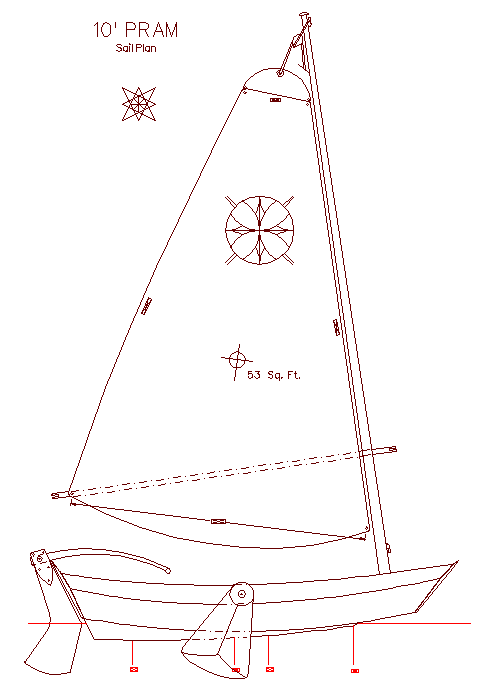
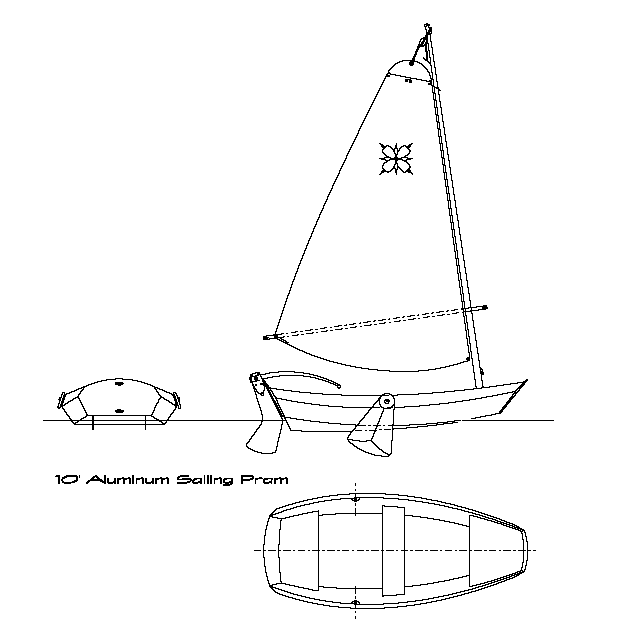
A pram will make an excellent tender for any yacht, having the most carrying capacity within the least length compared with any other shore boat type. We have developed four basic pram designs at 8 feet, 10 feet, 12 feet and 14 feet. Each of them share the same features and general shape. The ten foot pram is shown in the drawing above.
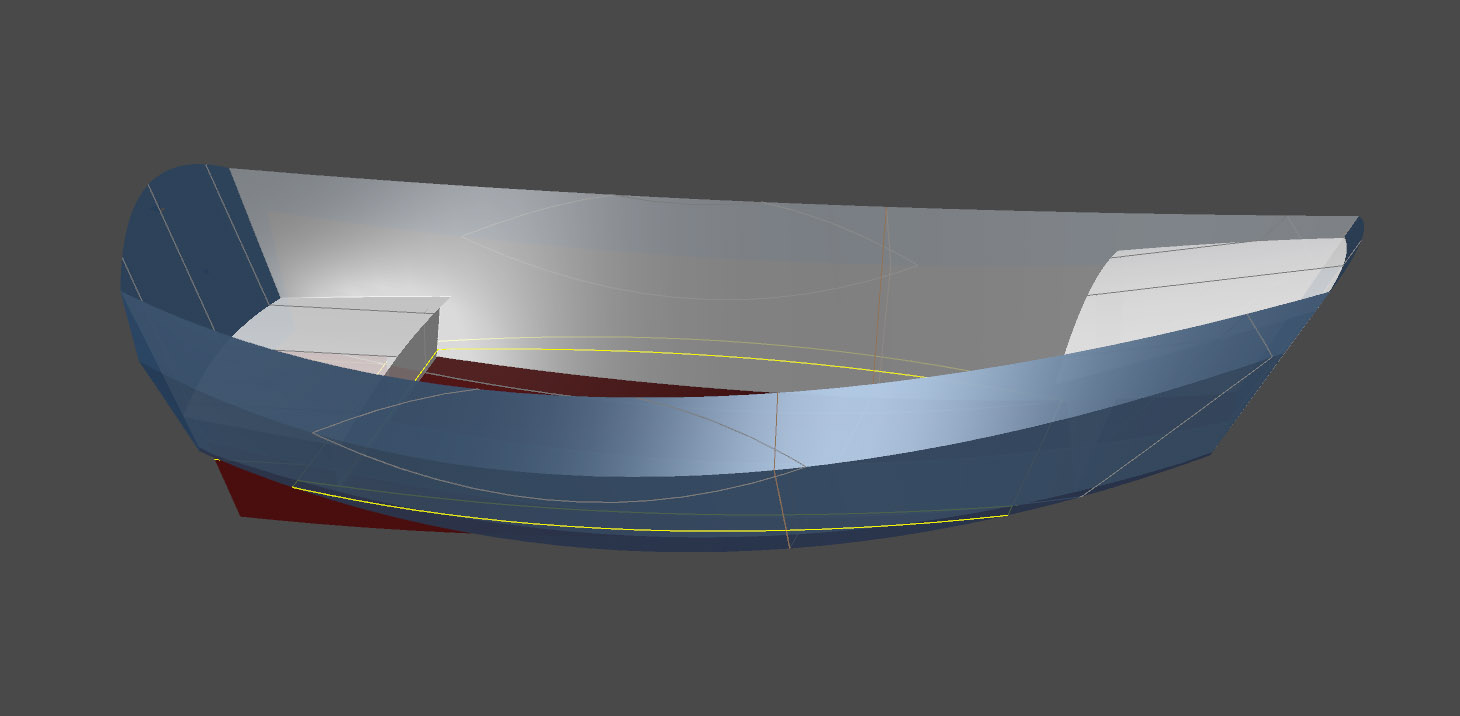
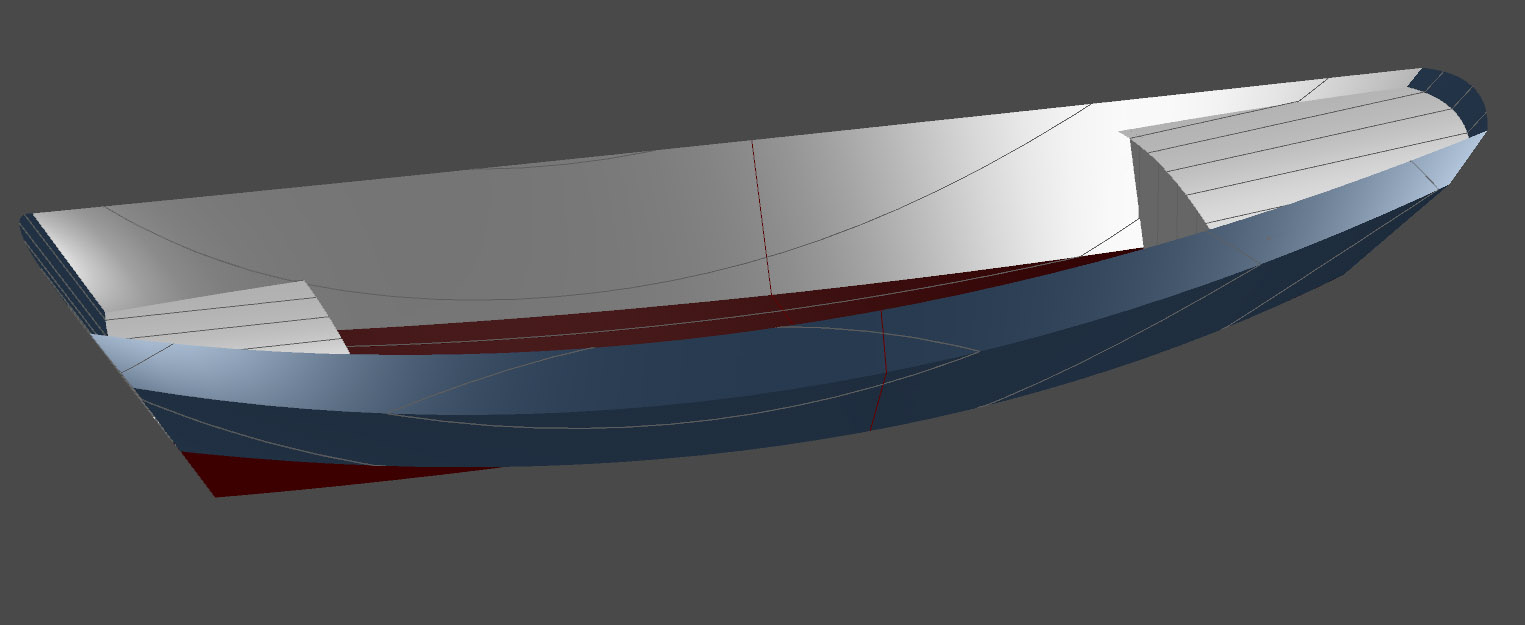
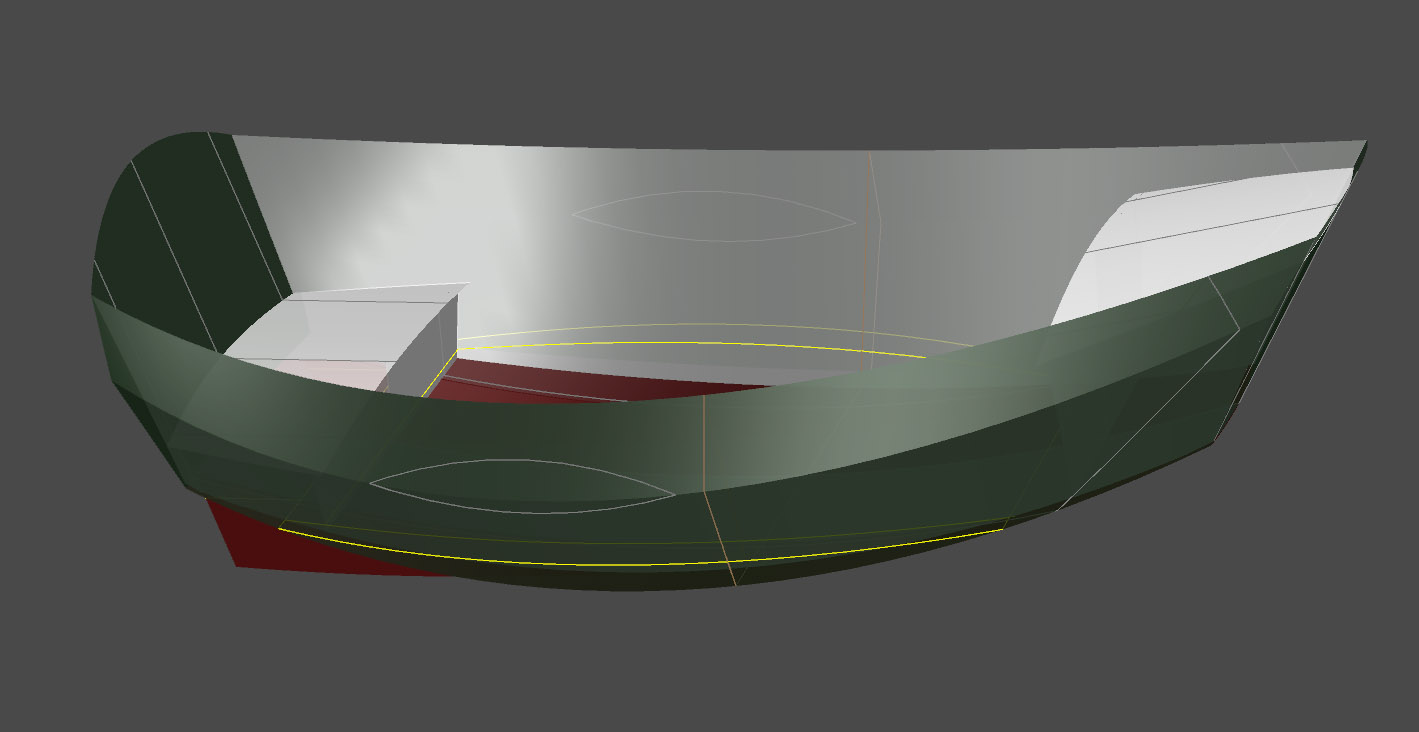
Intended for construction in welded aluminum, these little boats are easy to assemble. They are light and extremely tough. As a further advantage of welded aluminum, these prams have built in flotation compartments for unsinkable safety. A longitudinal WT compartment is along each side, plus the aft seat and forward seat also are WT compartments.
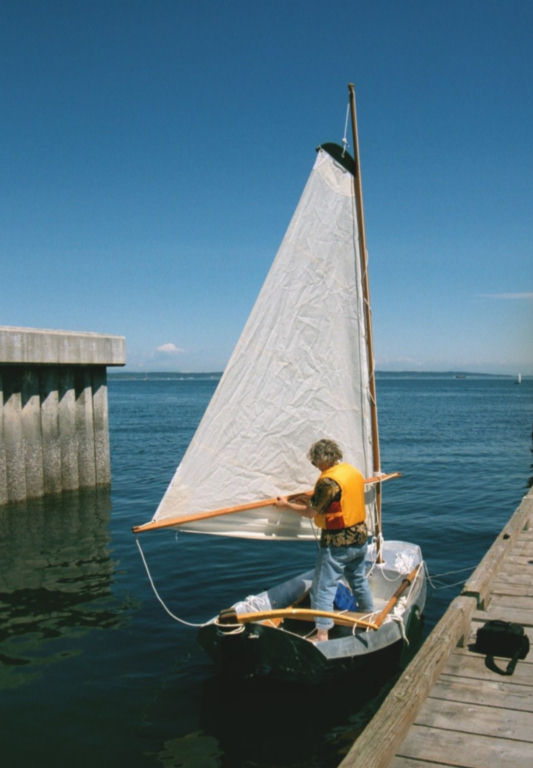
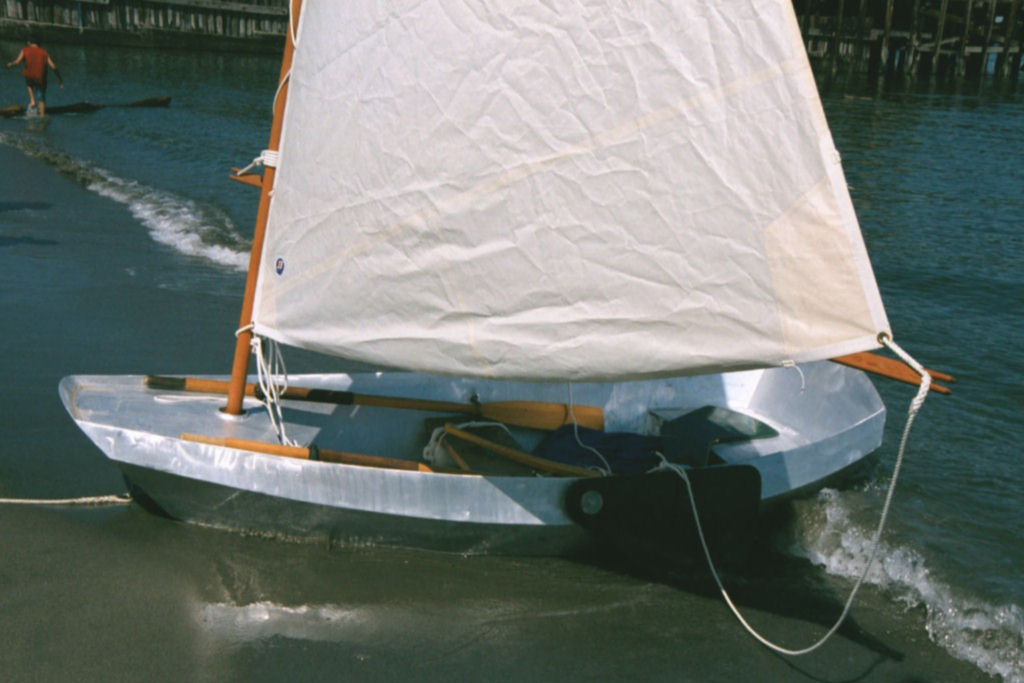
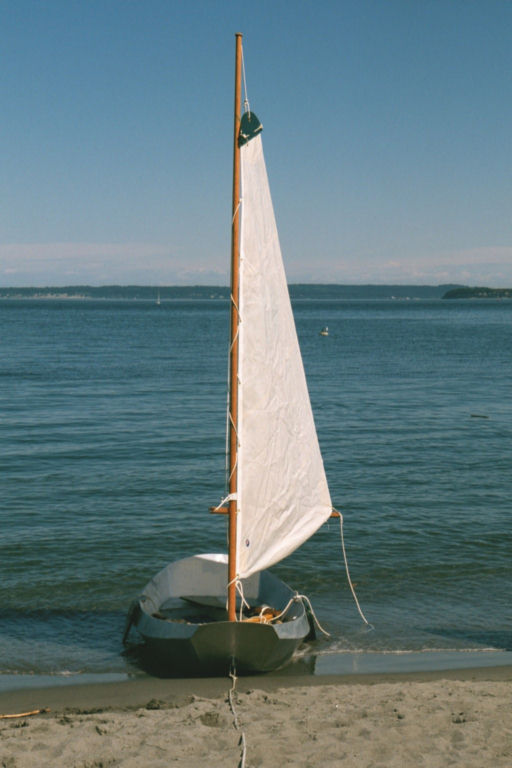
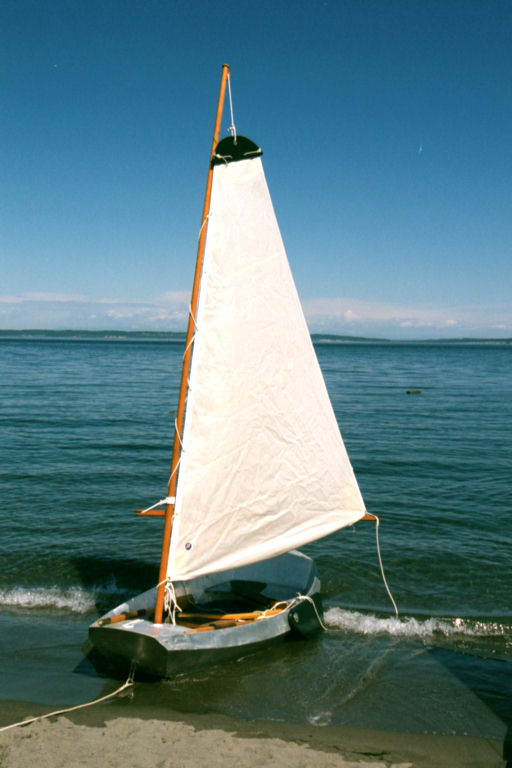
Check out the following photos of the 10 foot pram built in Port Townsend, Washington. These photos were taken on the pram's launching day in Port Townsend Bay. (I'm the guinea pig in the yellow life vest..!).
The Pram In Use
Sailing: These prams are all "Cat" rigged. They make use of leeboards in order to keep the interior clear. The presence of the leeboards on each side is the very reason for the topsides to have a generous tumblehome – so the leeboards will naturally have the correct angle to the water on the leeward side when heeled.
You can see from the photos in the above links that we did not have a blistering sailing wind that day...! Sail we did however, plus we had oars...
Rowing: Just the right amount of rocker has been given to the bottom to allow easy rowing. Due to the bottom rocker it is not an ideal craft for planing speeds or high power. Sailing and rowing however are excellent!
Motoring: The aft transom rakes aft a bit and is designed to easily take a rudder for sailing. We have created an outboard bracket (detailed on the plans) that mounts right onto the rudder gudgeons. The outboard bracket is very strong and will take a low power "trolling" outboard of around 3 to 5 hp on the 10' pram, and up to 8 or 10 hp on the 14 footer. This will provide very adequate displacement speeds.
Convenience: The forward transom allows one to step right into the bow and the pram is still stable. This is really quite convenient: The combination of the flat bottom and the forward transom ordinarily allows the pram to be driven right up on the beach where one can step off the forward end and not get thoroughly doused whilst going ashore.
Camping: The fully welded all aluminum hull is extremely strong, in particular with the floatation chambers along each side. Thus the prams do not require the added strength of a center thwart, and the center rowing thwart is arranged to be removable. The use of leeboards and making the rowing thwart removable were choices we made primarily in order to allow a completely clear and unobstructed interior for day sailing.
However this combination also allows the 10' to 14' prams to be used for camping while at anchor or while beached. The bottom is flat athwartships. Thus, with a sleeping mat laid on the bottom you can stretch right out in there using the boom and sail as your tent. With a good sleeping mat, a friendly couple can sleep there quite comfortably.
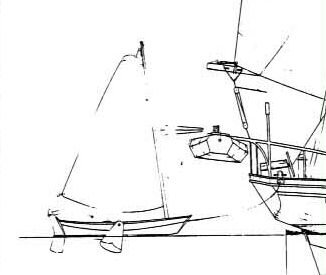
Stowing: As can be seen in the drawing below, towing and stowing are also optimum. What makes these prams so easy to stow? It is primarily due to having a transom at both ends. Because of this, for a given carrying capacity the pram is able to be shorter than a similar craft with one or more pointy ends.
Capacity: In addition to its own weight, the maximum carrying capacity of the 8' pram is around 350 lbs. The larger prams have proportionately larger carrying abilities. For example, the 10 foot pram can carry 25% more weight, or around 435 pounds. The 12' pram can carry 50% more, or around 525 pounds. The 14' pram can carry 75% more, or around 612 pounds.
Due to its relatively square-shaped ends, a pram can carry more weight per foot of overall length than any other type of shore boat, with the possible exception of an inflatable. However an inflatable can not be properly rowed... nor does an inflatable offer the fun of sailing!
8' Pram - Click for Larger Image
12' Pram - Click for Larger Image
Dimensions & Weights...
The 10 footer is 10 feet end to end at the top of the transom, and the other sizes are also as long as their nominal length, from bow transom top to stern transom top. All the prams are the same width at 4' - 4" to the outside of the knuckle. Bottom width is 3' - 4" for all of them. Maximum height from transom top to skeg bottom is 1' - 11" for all the prams.
When finished, the surface areas are as follows:
- 8' Pram: 76.5 sq ft
- 10' Pram: 90.2 sq ft
- 12' Pram: 107 sq ft
- 14' Pram: 132 sq ft
These are the total surface areas of each aluminum pram, as-fabricated.
The weight of each pram size will depend on the thickness of sheet used. For any of these prams we recommend 1/8" thickness plate, welded with a pulsed MIG. With straight spray arc MIG it is likely that 5/32" thickness will be required, however the pram will be 25% heavier as a result. The weight per sq ft of each thickness is:
- 1/8" aluminum plate: 1.75 lb / sq ft
- 5/32" aluminum plate: 2.1875 lb / sq ft
Add to that the weight of oars and center thwart (spruce oars and western red cedar thwart, so very light) for the rowing version. Say 6 or so pounds, plus bailer, nylon 3 strand painter and shackle.
Add to that the weight of leeboards, mast, headboard sail, halyard block, sheet, halyard, rudder, tiller for the sailing version. Douglas fir mast; marine plywood leeboards, rudder, headboard; oak or ash tiller; Dacron sail, Dacron line. Say 12 to 16 pounds.
You will observe that the weight of the as-fabricated aluminum for each pram size varies directly as the percentage of difference in length, adjusted per the thickness being used. The weight of the other items is fairly close to a direct percentage as well... however the painter, bailer, shackle, halyard block and similar items will not vary.
NC Cutting Files
An NC cutting kit is available for these prams. Please see the Plans List Page for a summary of the plan and NC kit prices.
What is NC? It simply means Numerically Controlled... in other words, computerized cutting.
The NC cutting files allow plasma or abrasive water jet cutting of all the parts including hull plates, transoms, seats and WT compartments. The result is that a mould or building jig is not required, and construction is very quickly accomplished. Using this method, I completed all the metal fabrication on the 8' aluminum pram in 4 days, complete with welded-on fittings.
Why is it so quick to build? With NC cutting there is no time spent planning, nor lofting, nor spiling of shapes, nor cutting, nor is there any time spent worrying about any of those things!
When we built the 8 foot pram, to begin we simply placed the bottom sheet onto two saw horses, pushed the middle down, fit the side pieces and transoms to it, and tacked it all together. The basic hull plates and transoms were assembled in a matter of hours.
In plywood, the same NC files can be used for cutting the sheets via a computer driven router. The NC cut parts then simply "stitch-and-glue" together, and again a mould or building jig is not required. In plywood, the configuration would be exactly the same - i.e. there would be the same shape and the same floatation chambers.
How Do You Get One...?
By far the most cost effective way to get one of these prams is to build it yourself. For that purpose, the use of NC cutting makes the job very easy and quick.
When pram plans and NC cutting files have been purchased we can also provide contact information for metal cutting companies for the NC cutting in order to create a boat parts kit, and we can provide contact information for aluminum boat builders who can do the hull fabrication. If desired, we can also recommend sail makers and spar makers, etc. but you might want to make the spars and rudder and leeboards yourself...!
The best way to discover building costs is to obtain the building plans and submit them to a few builders for a quote. If you intend to build one yourself, the above aluminum weights can be used to estimate the alloy cost, then just add to that the cost of sails and other items.
7' Pram - Click for Larger Image
In my view, 8' is about the smallest practical size for these prams if any reasonable rowing and / or sailing performance is to be had. That said, certainly they can be done in smaller sizes, but at a great compromise in terms of performance and carrying ability. At sizes under 8 feet, aluminum construction is probably not optimum due to its weight, and the better choice would be a good quality of marine plywood...
Although we have not created plans for other pram sizes, certainly we could do so, along with the NC files. In plywood, and NC router can be used to pre-cut the parts, and the pram then assembled using the "stitch and glue" method.
Please see our Plans List Page for a summary of the Pram Building Plan and NC cutting file costs and ordering information.
Please see the AVAILABLE BOAT PLANS web page.
Home | Intro | Our Design Process | Stock Design Info | Motor Yacht Designs | Sailing Yacht Designs | Prototype Designs
Plans List | Articles | Our CAD Design Stream | Maxsurf | SITE MAP..! | Site Search | Design Team | Contact Us