Messing about in boats since 1975. Online Since 1997.
Home | Intro | Our Design Process | Stock Design Info | Motor Yacht Designs | Sailing Yacht Designs | Prototype Designs
Plans List | Articles | Our CAD Design Stream | Maxsurf | SITE MAP..! | Site Search | Design Team | Contact Us
Please see the AVAILABLE BOAT PLANS web page
The 49' Semi-Displacement Trawler Yacht
"Ocean Runner"
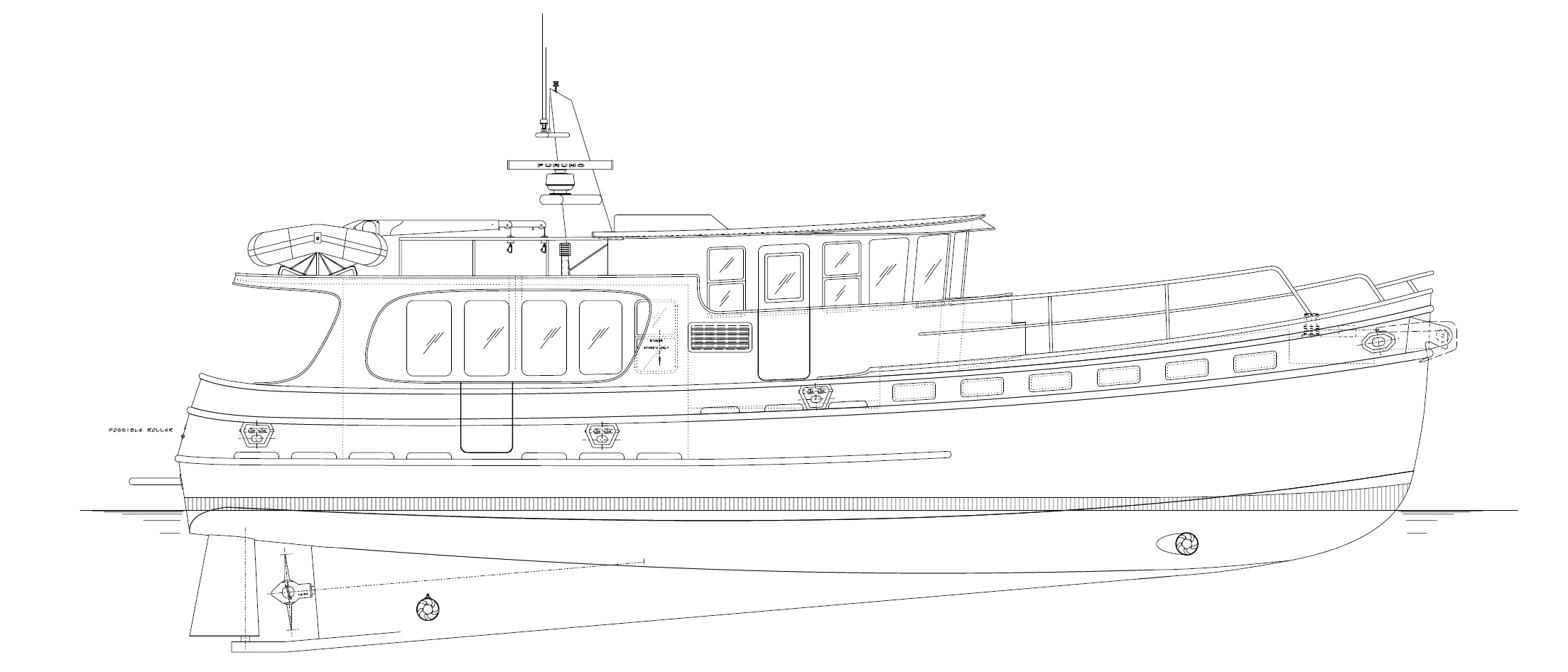
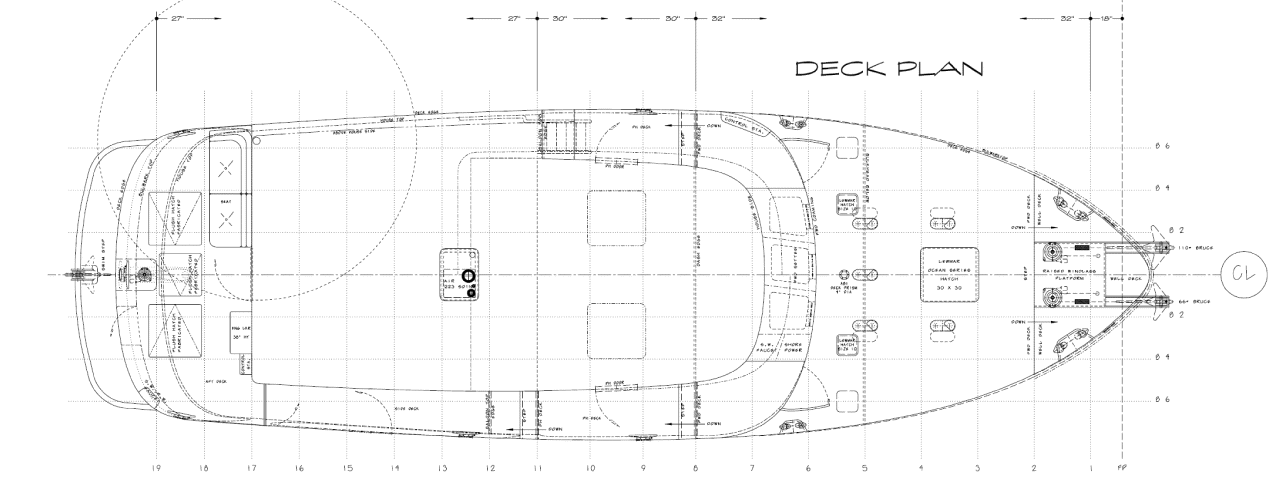
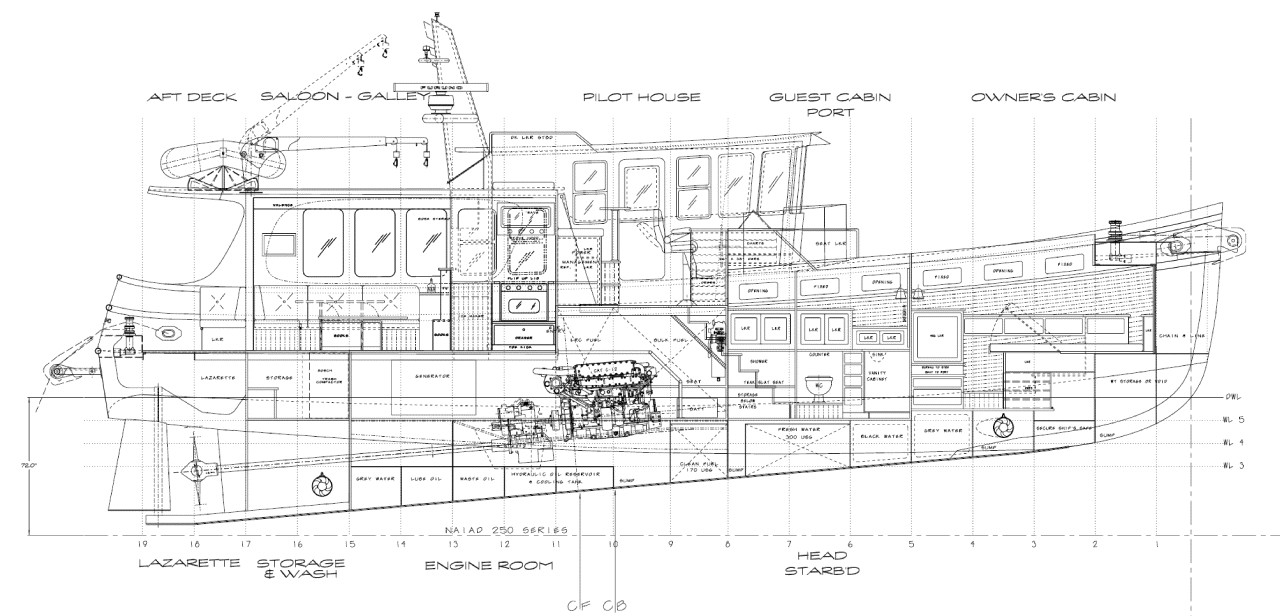
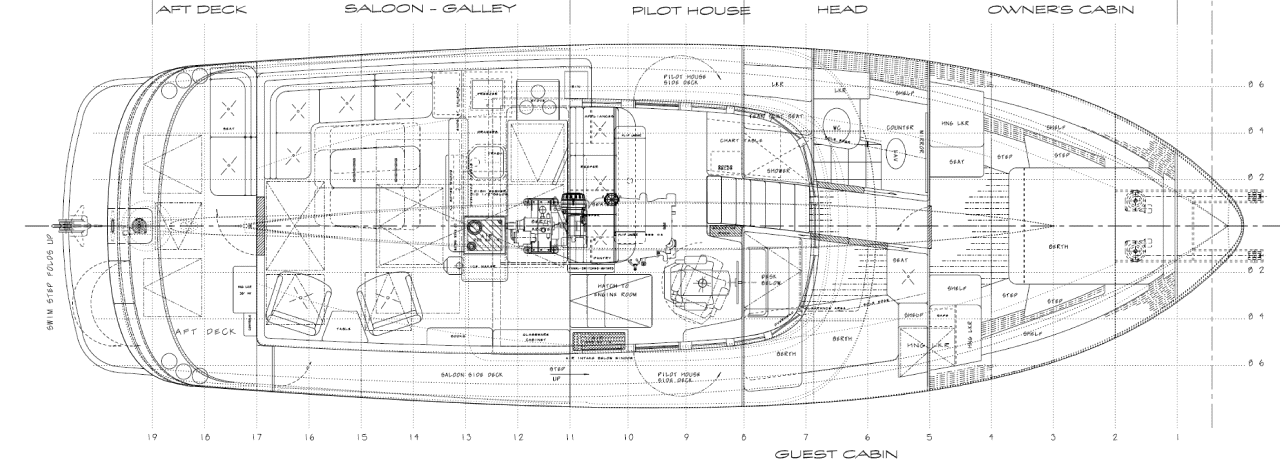
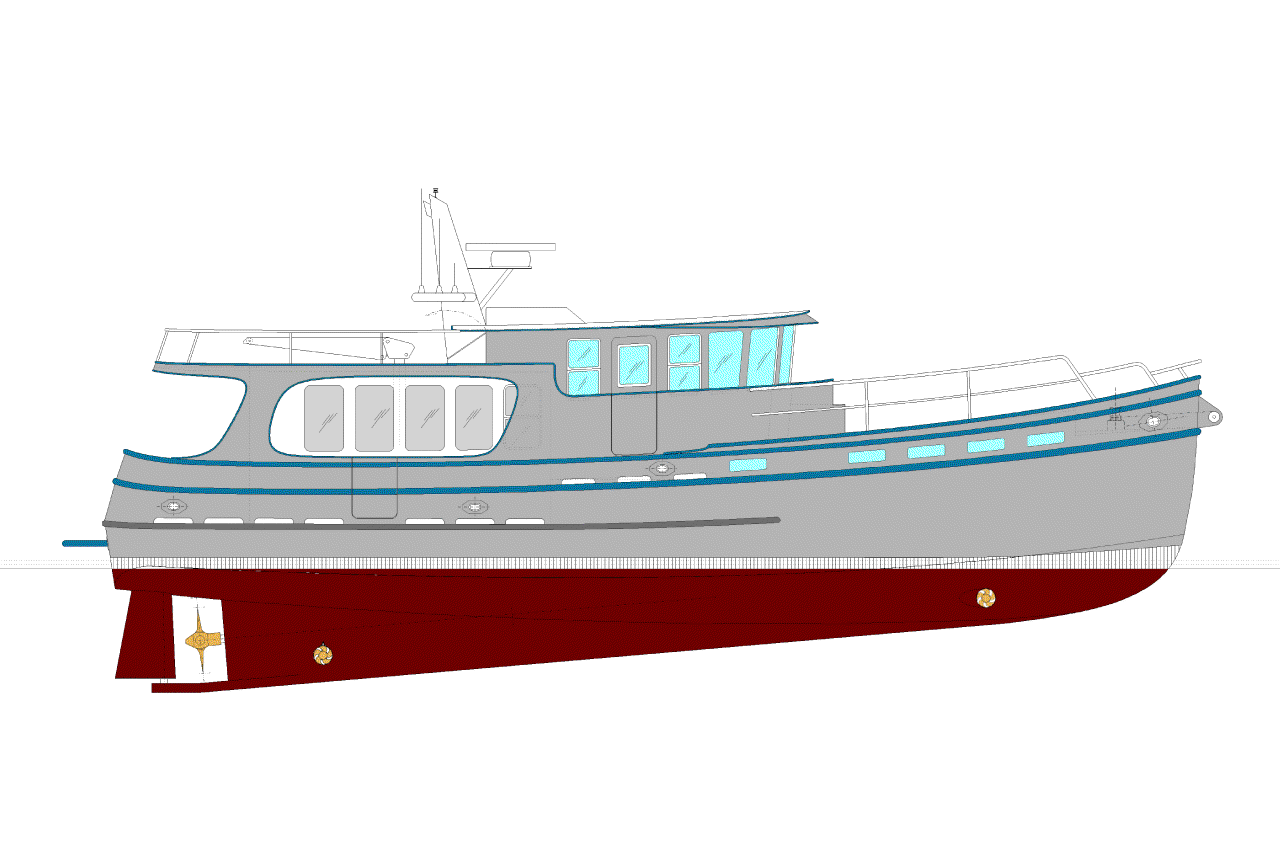
Exterior Profile | Deck Plan | House Top Plan | Interior Profile | Interior Layout
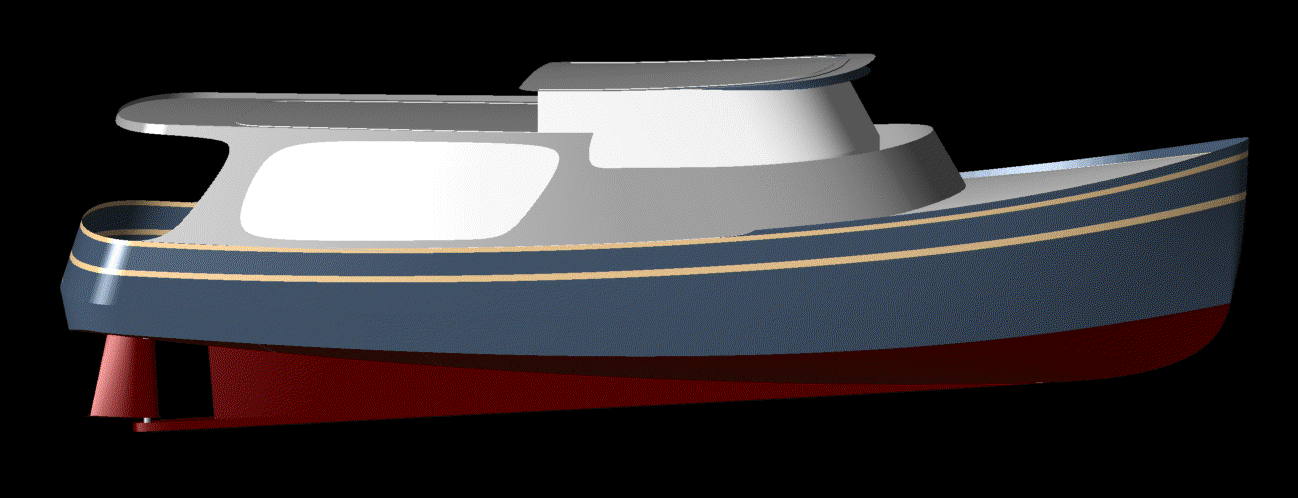
Exterior Color View | Forward Rendering
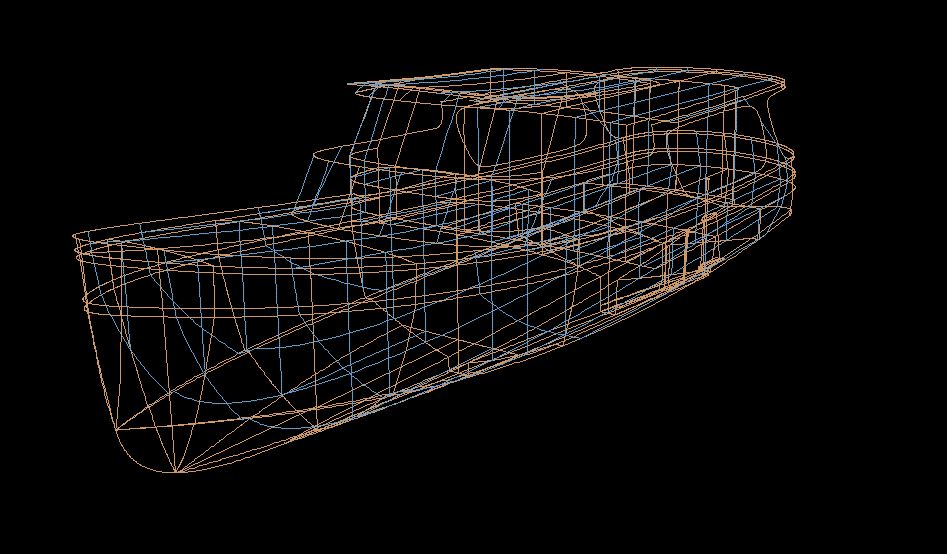
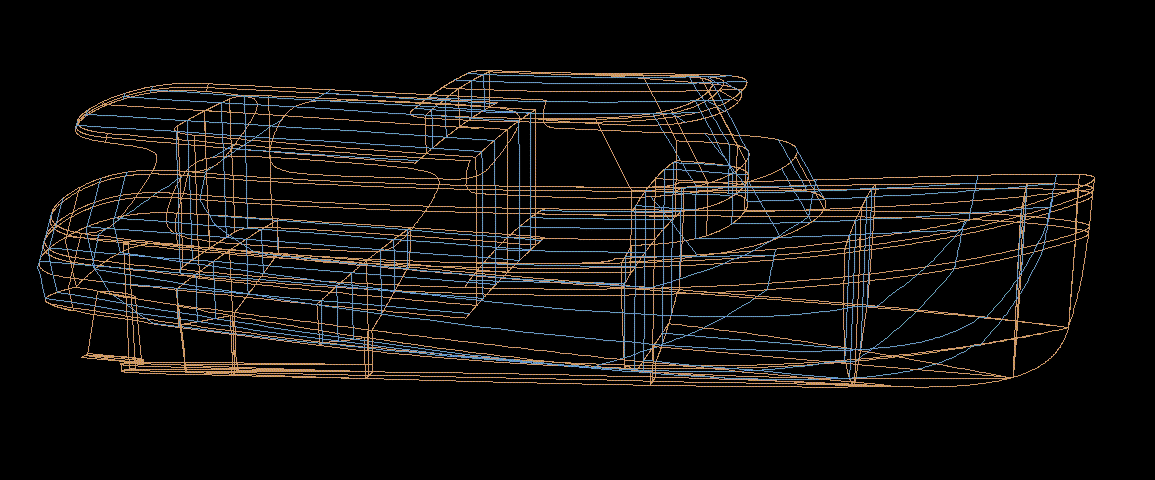
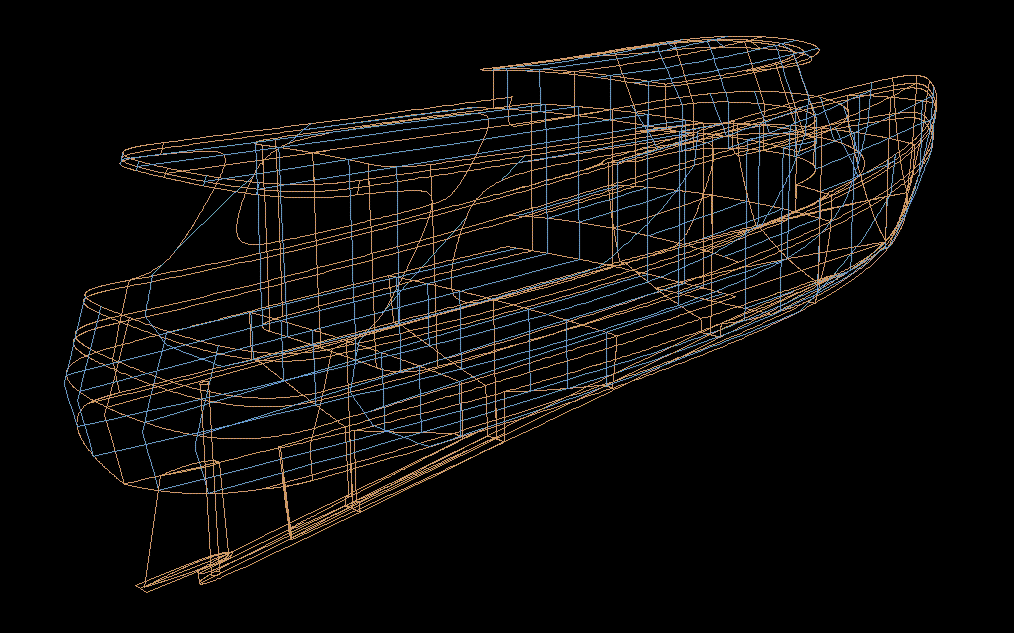
Forward Wireframe | Side Wireframe | Aft WireframeCopyright 2003 - 2009 Michael Kasten
General Concept
The Ocean Runner 49 is an adaptation of the smaller semi-planing power yacht prototypes, Wave Runner 36 and Rhumb Runner 48, and of the very similar but lighter and simpler Ocean Express 49. The long fine run will yield excellent speed potential, and the relatively short overhangs are intended maximize WL length for the maximum accommodation space below.
The objective with the Ocean Runner 49 has been to create a comfortable interior for a couple, including a second stateroom, but to stay under 15 meters LOA for the sake of simpler ownership within the European Union. The interior arrangement allows plenty of room for a couple and occasional guests, plus a generous pilot house, galley, saloon, and cockpit deck. The aft deck could be screened in if needed, or enclosed by awnings. The large fore deck has a forward facing seat, right in front of the Pilot House, and a well-deck for secure anchor handling.
With mast down, this vessel is designed to pass through French canals, and with mast up, German canals.
OCEAN RUNNER Particulars
- 49' Moulded Length Overall
- 15' – 8" Moulded Beam
- 47' – 5" WL Length in the Half Load condition
- Water Draft will be 5' -9" in the Half Load condition, depending on trim.
- Air Draft will be 11' – 4.25" in the Half Load condition with the mast lowered, depending on trim (French canal and bridge clearance).
- Displacement will vary from around 49,700# light to a full load capacity of 63,000# with tanks full, stores for three people, and the boat ready for a long cruise.
OCEAN RUNNER will make use of active roll stabilization using Naiad hydraulically actuated, gyro controlled stabilizers.
Having been inspired by the general aesthetic and functionality of working vessels, OCEAN RUNNER has high bulwarks, substantial heavy duty rub rails, and all welded deck fittings, including all welded stanchions, cleats, bitts, hawse holes, and anchor rollers.
In keeping with a commercial yet refined appearance, the exterior aluminum surfaces will be sand blasted with a fine sand sweep, but will not be painted, except for anti-fouling on the hull. A vinyl accent color stripe may be added per owner preference. Glass, hatches, doors and other openings will be of a commercial standard, i.e. heavy duty.
Construction
Ocean Runner is designed for construction in aluminum. All parts will be NC cut by plasma arc. The NC cutting process leverages the work already done to create the computer model, allowing structure to be easily defined directly from that computer model. The resulting "boat kit" makes for very fast assembly. Once the parts have been pre-cut and delivered, the frames and other internal structure are quickly erected, the stringers placed, and the plating applied.
Power And Range
The displacement to length ratio shows the vessel to be fairly light, consistent with the requirements of good performance. The result is that "hull speed" will be in excess of 11 knots. For higher semi-displacement speeds one could easily make use of 700 or more hp, which would yield vessel speeds in excess of 17 knots (depending on loading and other factors).
Although it is possible to apply sufficient power for true planing, if that were to become the design goal, the hull form should be changed. In other words, for true planing performance the hull would be given a run that is considerably flatter, and there would be a wider transom.
A Hundested controllable pitch gear is provided, along with a Hundested four blade controllable pitch propeller. This combination was chosen in order to allow the "dual operating regimes" of high speed running, or low speed long distance cruising. Use of a controllable pitch propeller provides the ability to more fully load the engine during lower speed long distance voyages, therefore to enable choice of engine rpm for the same speed through the water.
Range under power is a matter of providing the required fuel capacity for the preferred vessel speed and the intended destinations. The Ocean Runner is designed to have a target range of 3,000 nm at between 7 and 8 knots (for long ocean passages) with a 12% fuel reserve, and to be capable of 14 to 15 knots sustained cruise at shorter range.
Depending on sea state and other factors, an engine of around 500 hp is expected to push Ocean Runner along at a top speed of around 16 knots in the half load condition.
Interior
The layout below contains a large owner stateroom right forward; a head and shower to starb'd; and a second stateroom to port. A hallway is located slightly off center and leads aft to a stairway into the pilot house.
The Pilot House is spacious, having a nav station and piloting area forward plus a bench seat and table to port aft. Below the Pilot House sole are the engine, machinery space, and bulk fuel tanks.
Aft of the Pilot House, there is a Galley to port. A large saloon is right aft. A door aft of the saloon leads to the aft deck.
Design Summary
The intent of this design has been to fit the maximum accommodations into a long distance combination cruiser under 50 feet LOA. Additionally, the requirement for excellent sea keeping has encouraged keeping the cabins low.
This concept has also been developed into three similar prototype designs. Among them, the Coast Runner 48 and the Ocean Express 49 have virtually the same interior layout. The Coast Runner has a slightly more working vessel style to the cabin structures. Both of those designs have the layout below flipped port-to-starb'd.
The other prototype design is the Rhumb Runner 48, which has a much different interior layout having a much larger pilot house and two spacious, nearly equal sized staterooms.
For additional information on this vessel or any of our other designs, please inquire.
Please see the AVAILABLE BOAT PLANS web page.
Home | Intro | Our Design Process | Stock Design Info | Motor Yacht Designs | Sailing Yacht Designs | Prototype Designs
Plans List | Articles | Our CAD Design Stream | Maxsurf | SITE MAP..! | Site Search | Design Team | Contact Us